Ash Tree Epicormic Shoots
Scientific Name: Fraxinus species
Category: tree
Brief Description
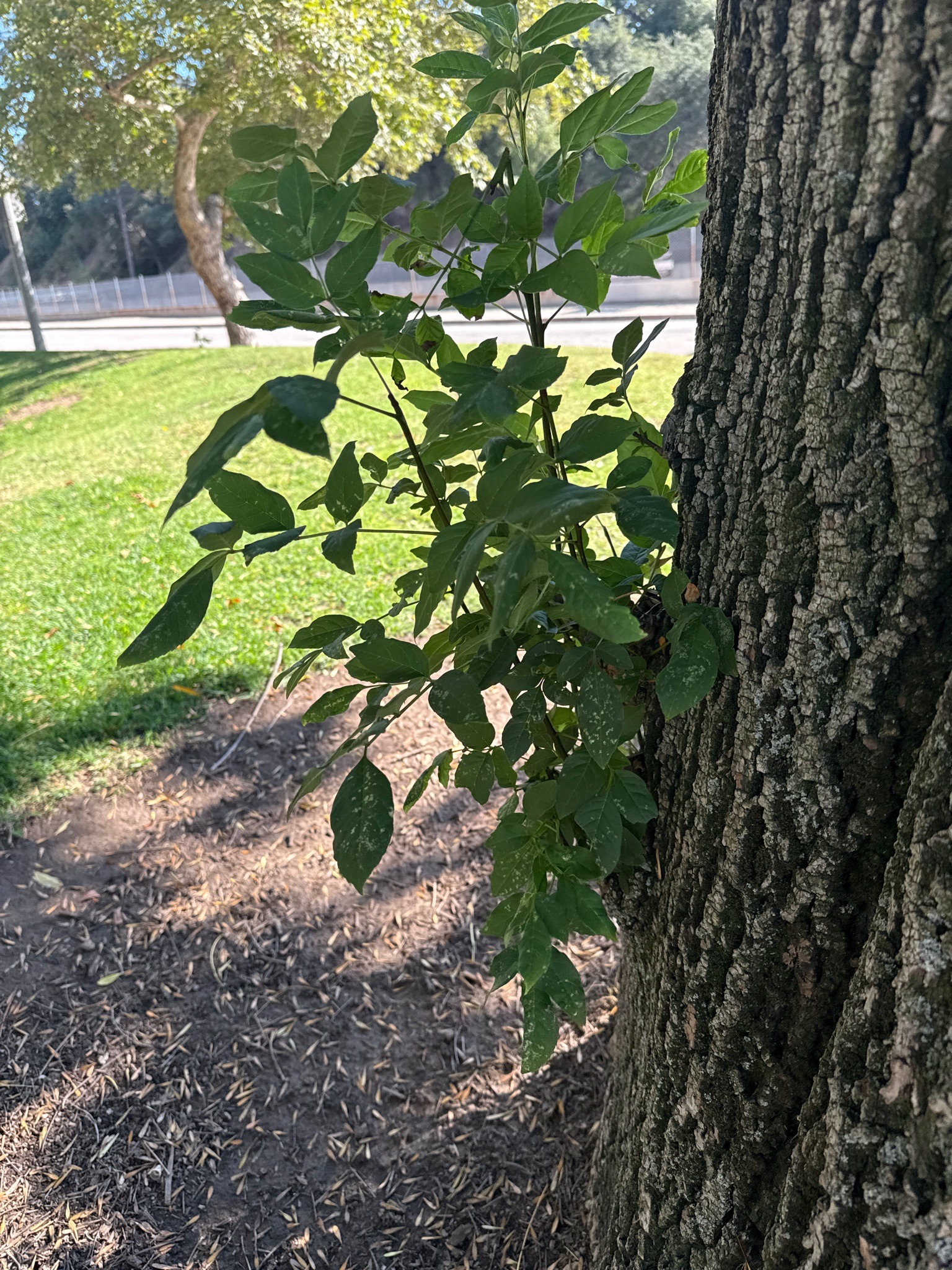
Young sprouts or 'suckers' growing directly from the trunk of a mature ash tree.
Characteristics
Pinnately compound leaves with 5-9 leaflets, opposite branching pattern, and leaflets with slightly serrated edges. The parent tree has deeply furrowed, corky bark characteristic of mature ash trees.
Habitat
Deciduous forests, river valleys, and commonly planted in parks or urban landscapes.
When to Find It
Active growth during spring and summer; deciduous (leaves drop in autumn).
Conservation Status
Variable; many North American Ash species are Critically Endangered due to the Emerald Ash Borer.
Ecological Role
Ash trees provide food for lepidoptera larvae and nesting sites for birds; 'epicormic' growth often signals the tree is under stress from drought or pests.
Easily Confused With
Box Elder (Acer negundo) which is also opposite but usually has 3-5 leaflets; Hickories, which have alternate branching.
Observation Tips
Check the branching pattern; if leaves and stems are directly opposite each other, it is likely an Ash. Look for D-shaped exit holes on the trunk which indicate beetle infestation.
Interesting Facts
Epicormic shoots grow from dormant buds beneath the bark. In many ash trees today, this 'tufted' growth on the trunk is a common sign of a tree trying to survive an Emerald Ash Borer attack.
User Notes
on a tree