Sycamore Leaf
Scientific Name: Platanus occidentalis
Category: tree
Brief Description
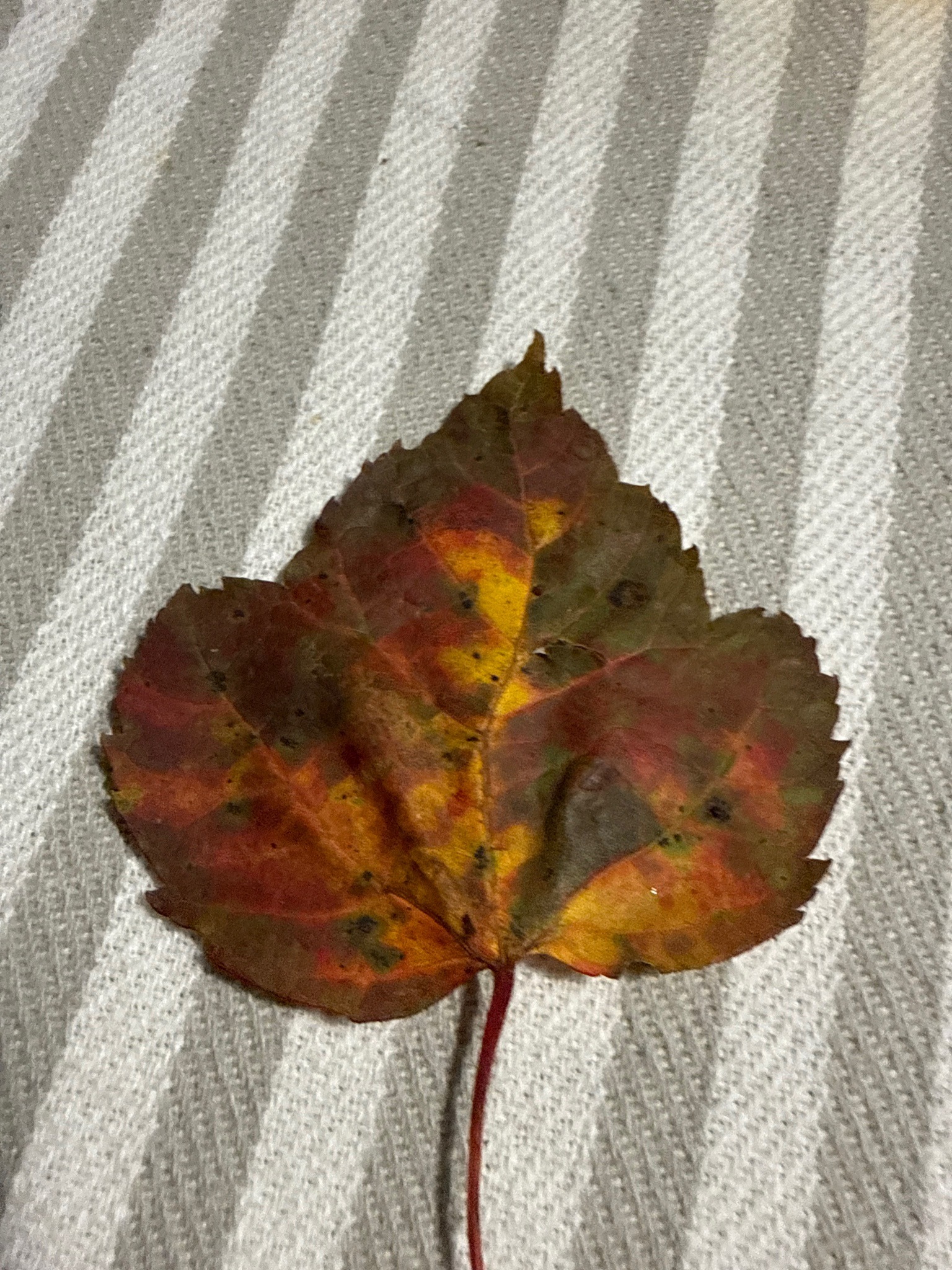
A broad, deciduous leaf with palmate lobes and a distinctive red petiole, showing vibrant autumn colors.
Characteristics
Large, simple leaves with 3 to 5 palmate lobes, coarsely toothed margins, and a prominent red stalk (petiole). Displays mottled fall colors of yellow, orange, red, and brown.
Habitat
Riparian zones, along streams, rivers, floodplains, and moist bottomlands.
When to Find It
Autumn is the prime season for observing these colorful senescent leaves before they drop.
Conservation Status
Least Concern
Ecological Role
Provides canopy cover, leaf litter that supports aquatic and terrestrial detritivores, and nesting sites for wildlife.
Easily Confused With
Maple leaves, which also have palmate lobes but typically deeper sinuses and different serrations.
Observation Tips
Look on the ground beneath large sycamore trees during autumn, or examine their massive trunks with exfoliating bark.
Interesting Facts
American sycamores are among the most massive deciduous trees in North America, known for their distinctive camouflage-like peeling bark.