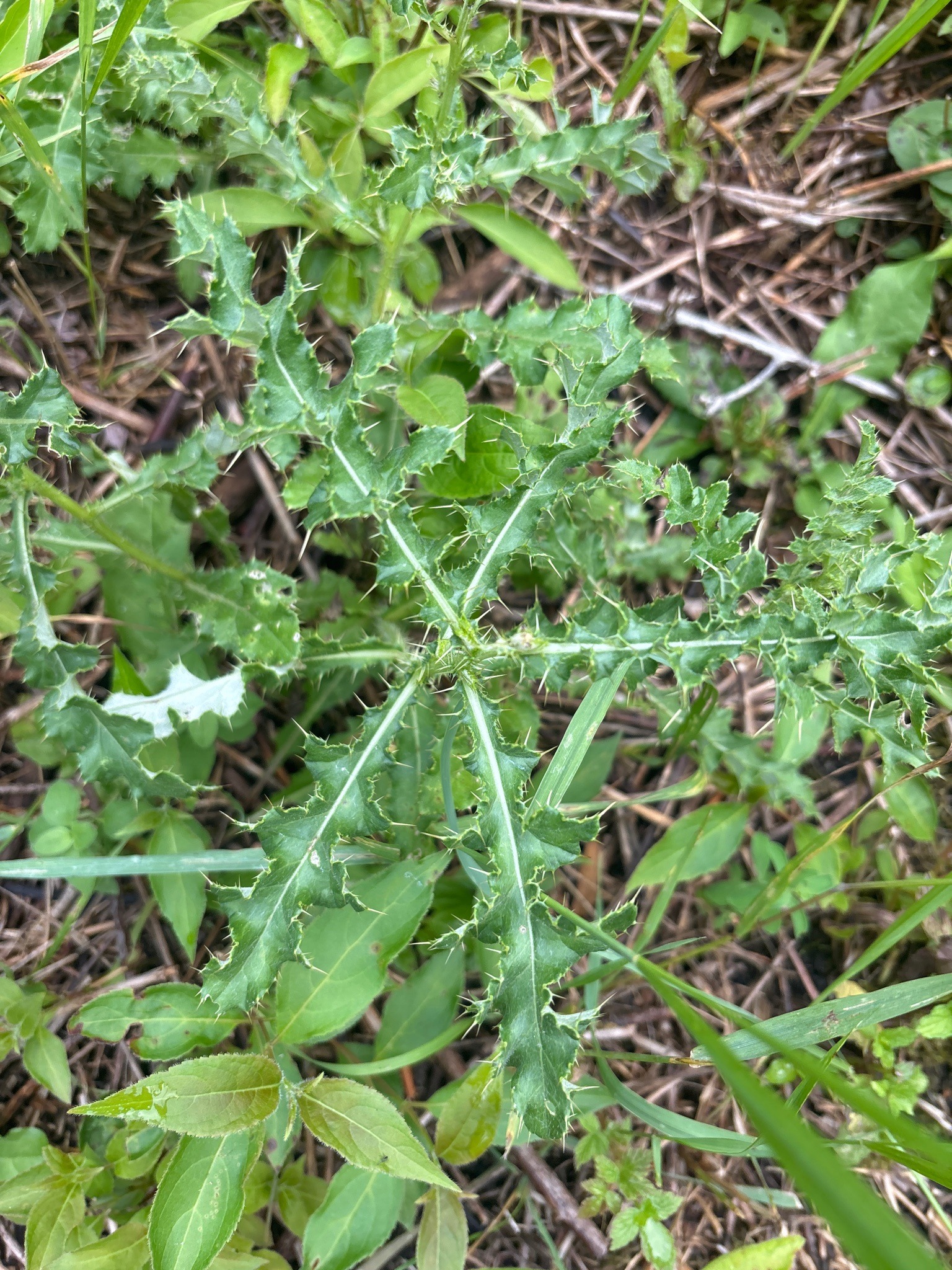
Bull Thistle (Rosette Stage)
Scientific Name: Cirsium vulgare
Category: plant
Brief Description
A biennial plant shown in its first-year vegetative rosette stage, characterized by deeply lobed, prickly green leaves radiating closely from a central crown.
Characteristics
Leaves are lance-shaped to oblong, deeply lobed with bristly, prickly margins, and possess prominent white or pale green veins. The upper surface is typically rough and hairy with small prickles.
Habitat
Disturbed soils, pastures, roadsides, waste areas, and clearings
When to Find It
Grows as a low-profile ground-hugging rosette throughout spring and summer of its first year, bolting and flowering in its second year during summer.
Conservation Status
N/A
Ecological Role
Provides food and nectar sources for various pollinators once mature; however, it is often considered an aggressive invasive weed in agricultural lands.
Easily Confused With
Other thistle species such as Musk Thistle (Carduus nutans) or Canada Thistle (Cirsium arvense); distinguished by leaf texture, hairiness, and spine characteristics.
Observation Tips
Look closely at ground level in open, sunny disturbed areas. Wear thick gloves if attempting to touch or remove them due to the sharp prickles.
Interesting Facts
Bull thistle is native to Europe, western Asia, and northwestern Africa, but has successfully naturalized across North America and much of the world.