Western Honey Bee
Scientific Name: Apis mellifera
Category: insect
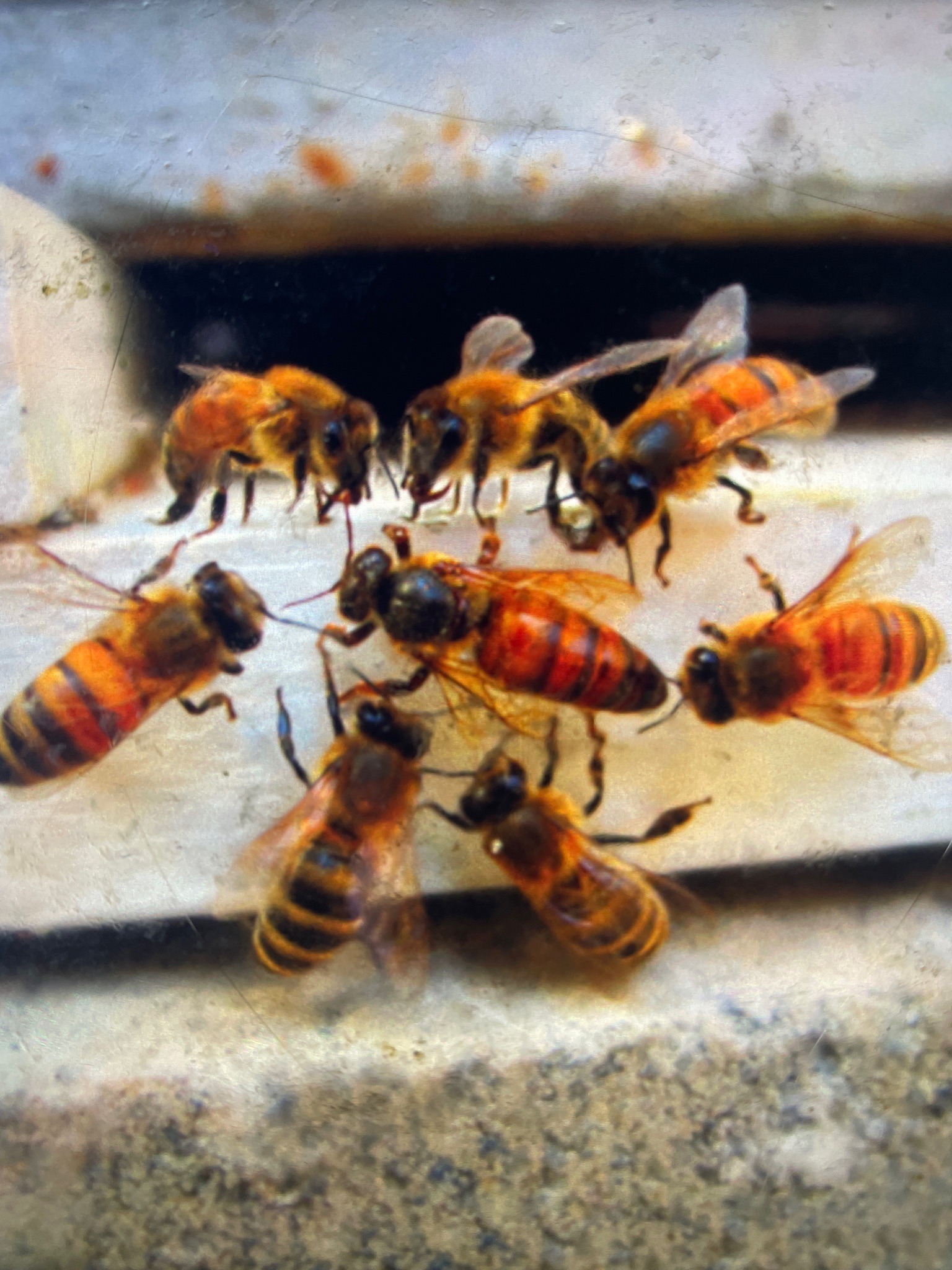
Brief Description
A social flying insect known for its roles in pollination and the production of honey and beeswax. They are easily recognized by their golden-brown and black striped amber bodies.
Characteristics
Fuzzy amber-colored bodies with dark black horizontal bands on the abdomen. They possess four wings, six legs, and a barbed stinger. Workers are about 1.25 cm long.
Habitat
Found in varied environments including meadows, orchards, gardens, and woodlands. Often kept in man-made hives for commercial use.
When to Find It
Most active during daylight hours from spring through autumn when flowers are in bloom.
Conservation Status
Vulnerable (managed populations face Colony Collapse Disorder)
Ecological Role
Vital pollinators for a wide variety of wild plants and approximately one-third of human food crops, significantly supporting global biodiversity.
Easily Confused With
Bumblebees (larger/fuzzier), Hoverflies (no stinger, only two wings), and Wasps (smoother/narrower waists).
Observation Tips
Observe them near flowering plants. Move slowly and avoid wearing strong perfumes to prevent startling them. Do not obstruct the entrance of their hive.
Interesting Facts
Honey bees are the only insect that produces food eaten by humans. A single queen can lay up to 2,000 eggs per day, and they communicate the location of food through a symbolic 'waggle dance'.