Great Horned Owl
Scientific Name: Bubo virginianus
Category: bird
Brief Description
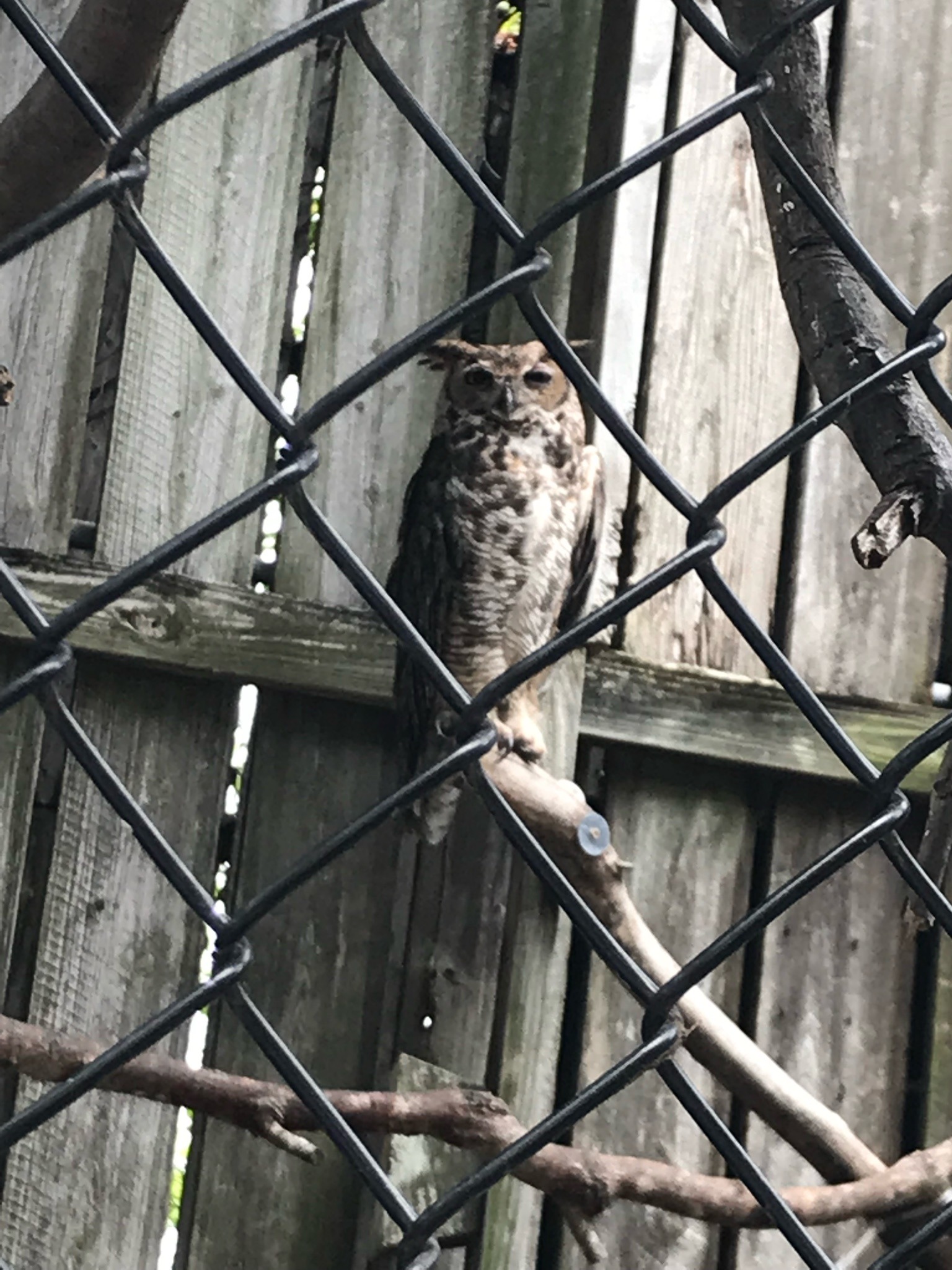
A large, thick-bodied owl with prominent ear tufts and a distinctive facial disk.
Characteristics
Mottled grayish-brown plumage with heavy barring on the belly, prominent feathered ear tufts, large yellow eyes, and a white throat patch.
Habitat
Found in diverse habitats including deciduous and evergreen forests, swamps, deserts, and agricultural areas across North and South America.
When to Find It
Can be observed year-round; most active at dusk and during the night.
Conservation Status
Least Concern
Ecological Role
Top predator that helps control populations of rodents, skunks, and other small to medium-sized mammals and birds.
Easily Confused With
Long-eared Owls are smaller with tufts closer together; Screech-owls are much smaller.
Observation Tips
Listen for their deep, rhythmic hooting at night. During the day, look for them roosting close to tree trunks or being mobbed by crows.
Interesting Facts
They have an incredibly diverse diet and are one of the only animals that regularly eat skunks due to their poor sense of smell.