Saw Palmetto
Scientific Name: Serenoa repens
Category: tree
Brief Description
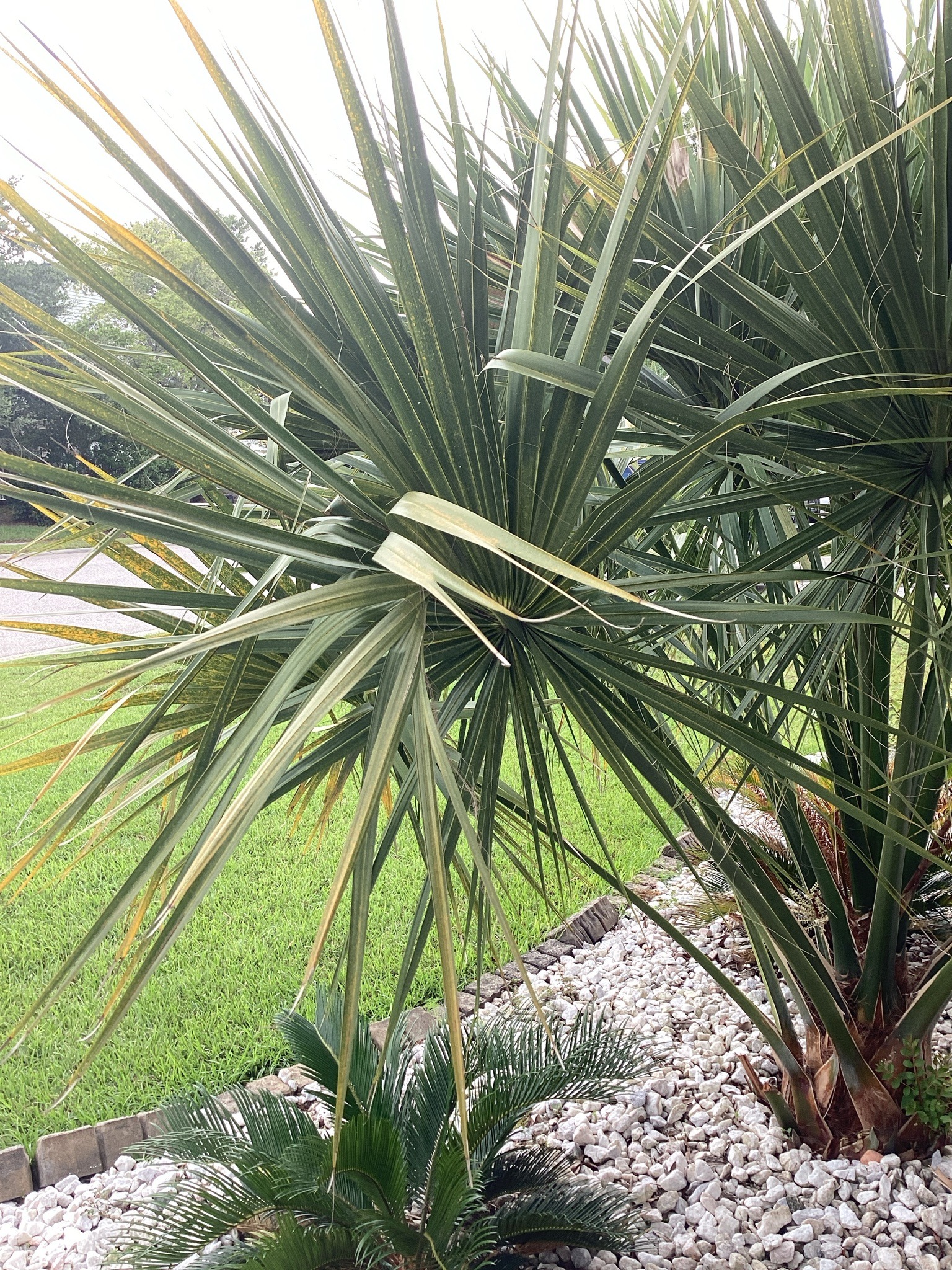
A hardy, slow-growing fan palm known for its sharp, saw-like teeth along the leaf stems and its spreading, shrub-like growth habit.
Characteristics
Large, stiff, fan-shaped fronds that are green or bluish-green. The petioles (leaf stalks) are lined with small, sharp spines resembling a saw blade. It typically has a prostrate, horizontal trunk that grows along the ground.
Habitat
Found in pine flatwoods, coastal dunes, and hammocks. It thrives in well-drained, sandy soils and can tolerate both drought and salt spray.
When to Find It
Green year-round. It typically blooms with white, fragrant flowers in late spring or early summer, followed by black drupe fruits in the fall.
Conservation Status
Least Concern, though large-scale harvesting of berries can impact local ecosystems.
Ecological Role
Provides vital cover and nesting sites for wildlife including birds, reptiles, and mammals. Its flowers are an important nectar source for pollinators, and its berries are a critical food source for black bears and white-tailed deer.
Easily Confused With
Cabbage Palmetto (Sabal palmetto) which grows into a tall tree and lacks the saw-teeth on the leaf stalks; Dwarf Palmetto (Sabal minor) which also lacks spines and has a split midrib in the leaf.
Observation Tips
Be careful when reaching into the plant as the 'teeth' on the leaf stalks can easily cut skin. Look for them in sunny landscapes or natural Florida scrub habitats.
Interesting Facts
Saw palmetto berries have been used for centuries in traditional medicine, and extract from the berries is popularly used today as a supplement for prostate health.
User Notes
The front yard