Coonstriped Shrimp
Scientific Name: Pandalus hypsinotus
Category: other
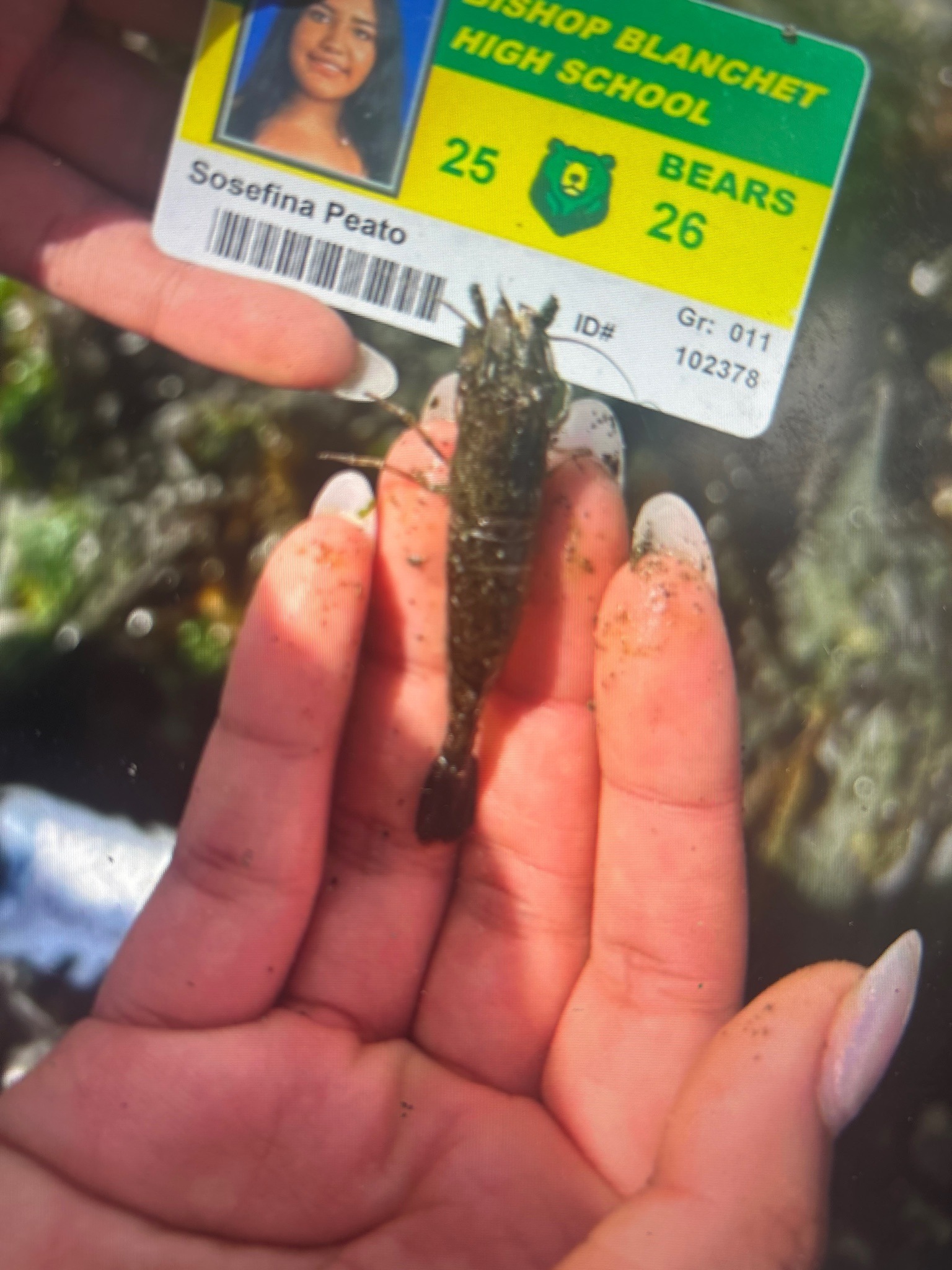
Brief Description
A medium-sized marine crustacean commonly found in tide pools and near-shore waters of the Pacific Northwest.
Characteristics
Recognizable by its brownish-green to mottled coloration, long antennae, and dark diagonal stripes on the abdomen (coonstripes). It has a prominent rostrum (nose-like spike) and a robust body compared to smaller grass shrimp.
Habitat
Intertidal zones, tide pools, and subtidal rocky or muddy bottoms. Found along the Pacific coast from Alaska to California, including Puget Sound.
When to Find It
Visible year-round, but most easily observed in tide pools during extreme low tides.
Conservation Status
Common
Ecological Role
Provides a vital food source for fish, sea birds, and larger marine invertebrates. They act as scavengers and small predators within the benthic ecosystem.
Easily Confused With
Bay Shrimp (Crangon spp.) which are flatter and more camouflaged with sand, or Grass Shrimp (Heptacarpus spp.) which are usually smaller and more translucent.
Observation Tips
Look in rocky tide pools during low tide. Use a small net or observe quietly to see them darting among seaweed. Always handle gently with wet hands to protect their delicate exoskeleton.
Interesting Facts
Coonstriped shrimp are protandrous hermaphrodites, meaning they generally spend the first part of their lives as males and then transform into females as they grow larger.
User Notes
Puget Sound