Basswood Leaf
Scientific Name: Tilia americana
Category: tree
Brief Description
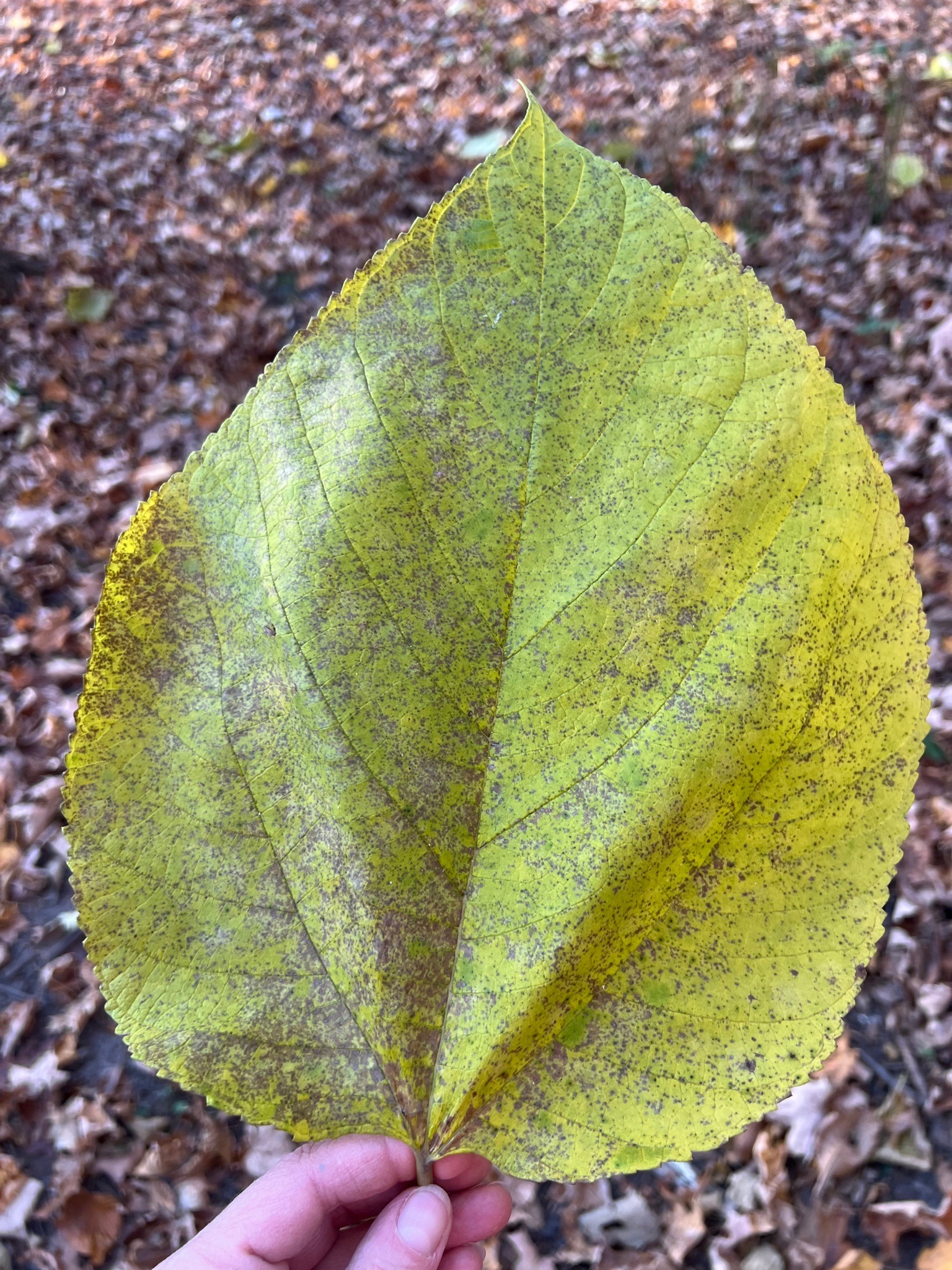
A large, heart-shaped (cordate) leaf characteristic of the basswood or linden tree, showing fine serrations along the margin and a distinctive asymmetric base.
Characteristics
Large, broadly heart-shaped leaves ranging from 10 to 20 cm long, with sharply serrated margins, prominent pinnate venation, and a characteristically unequal or oblique leaf base where the petiole attaches.
Habitat
Rich, moist woods, bottomlands, and slopes with well-drained soils, often found in mixed deciduous forests across eastern and central North America.
When to Find It
Spring through autumn; leaves emerge light green in spring, turn vibrant yellow in autumn before dropping.
Conservation Status
Least Concern
Ecological Role
Provides food for various wildlife, including caterpillars and other insects, while its flowers are a major nectar source for bees producing high-quality honey.
Easily Confused With
Leaves of Eastern Redbud (Cercis canadensis) or Catalpa, but basswood leaves have distinctive sharply toothed edges and an asymmetric base.
Observation Tips
Look up into the canopy of deciduous forests in summer for dense shade, or inspect the forest floor in autumn for fallen yellow leaves.
Interesting Facts
Basswood lumber is soft and lightweight, historically carved into duck decoys and woodenware. The inner bark was also used by Indigenous peoples to make cordage and rope.