Marsh Rabbit
Scientific Name: Sylvilagus palustris
Category: mammal
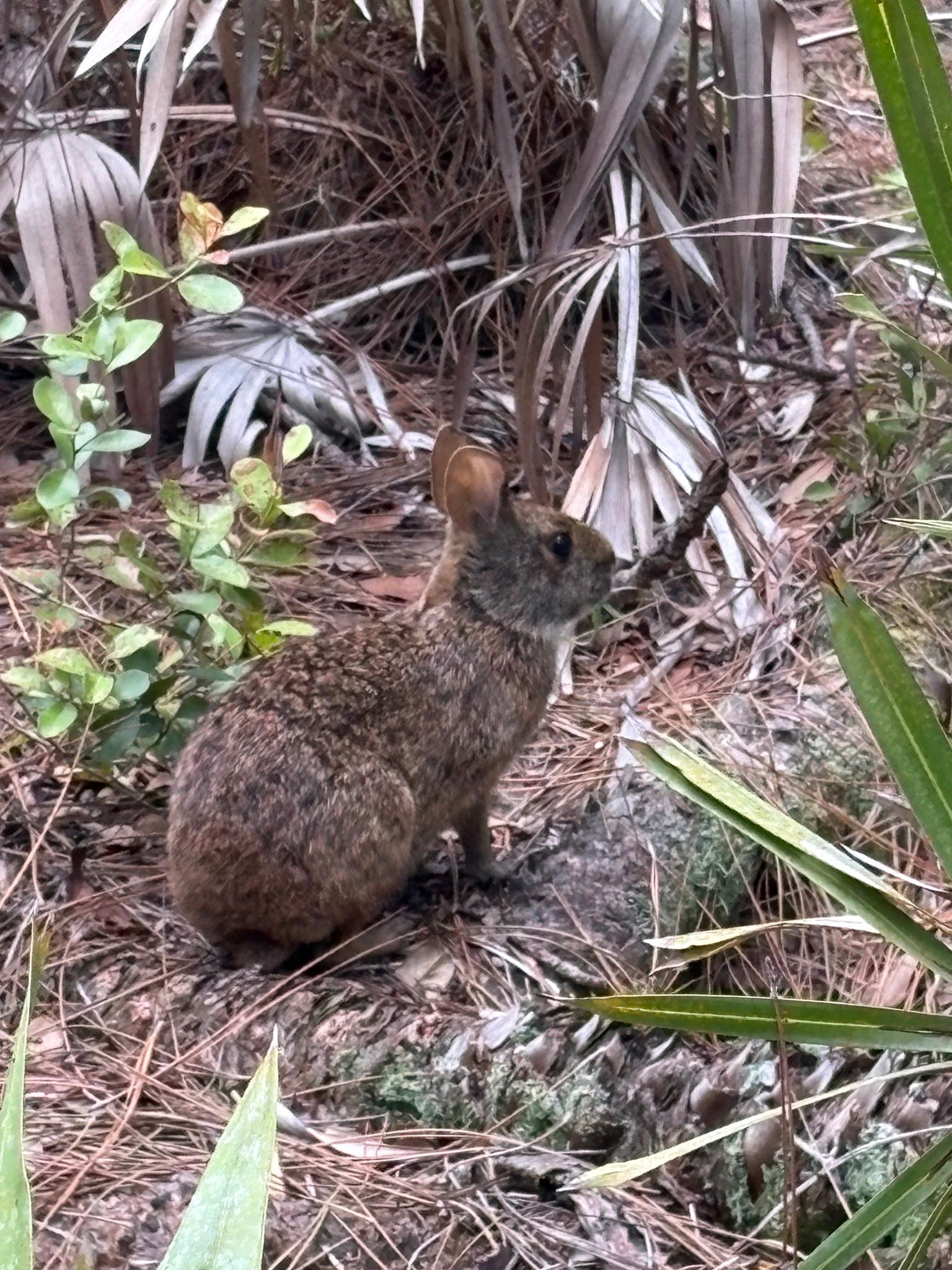
Brief Description
A small, dark-furred rabbit with short ears and legs, frequently found in wet, brushy habitats near water.
Characteristics
Smaller than the eastern cottontail with shorter ears and legs. Its fur is dark reddish-brown with a grizzled appearance. The tail is small and brownish, lacking the bright white 'cotton' underside of other species.
Habitat
Freshwater and brackish marshes, wet prairies, pinelands, and coastal scrub. It is typically found in dense vegetation near water.
When to Find It
Active year-round, most visible during crepuscular hours (dawn and dusk) or at night.
Conservation Status
Varies by subspecies; the Lower Keys marsh rabbit is endangered, while the mainland species is generally stable.
Ecological Role
A key prey species for many predators including hawks, owls, snakes, and bobcats. They help manage vegetation growth through grazing.
Easily Confused With
Eastern Cottontail (Sylvilagus floridanus) - distinguished by the cottontail's longer ears, larger size, and bright white underside of the tail.
Observation Tips
Look for them near the edges of marshes or dense palmetto thickets. They are strong swimmers and may jump into water to escape threats. Move slowly and quietly during dawn or dusk.
Interesting Facts
Marsh rabbits are strong swimmers and are often observed in the water. Unlike many other rabbits, they frequently walk on all fours instead of hopping.