Anhinga
Scientific Name: Anhinga anhinga
Category: bird
Brief Description
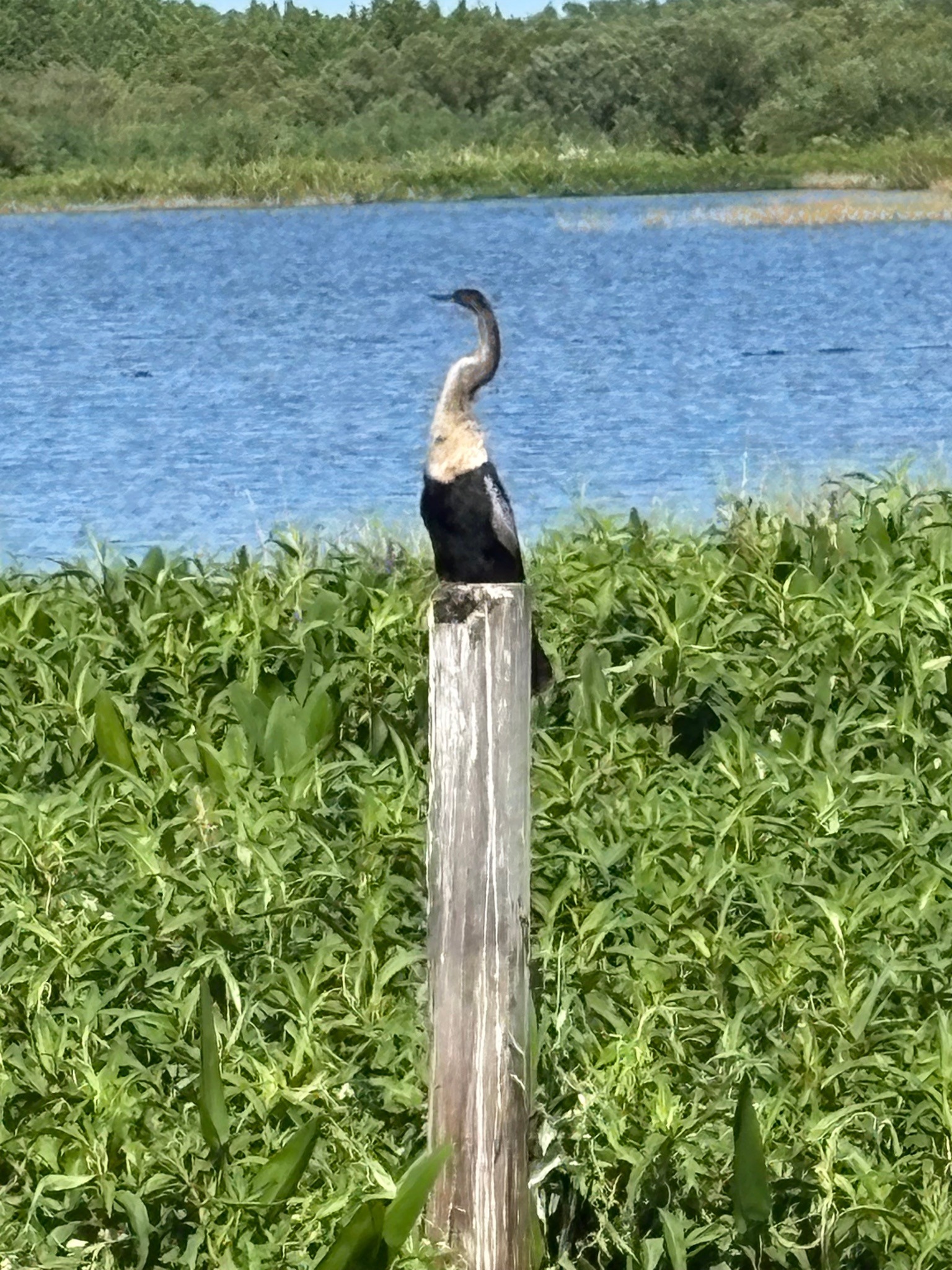
A large water bird known for its long, snake-like neck and sharp, pointed bill, often seen perched with wings spread to dry.
Characteristics
Long S-shaped neck, pointed dagger-like bill, black body plumage with silver-white streaks on the upper wings. The tail is long and fan-shaped. Males are mostly black, while females and juveniles have a pale tan or buff-colored head and neck.
Habitat
Freshwater swamps, lakes, marshes, and slow-moving rivers with plenty of vegetation and perching spots.
When to Find It
Year-round resident in the southern United States and tropics; active throughout the day.
Conservation Status
Least Concern
Ecological Role
As an apex predator in its aquatic niche, it helps regulate fish and invertebrate populations. Its presence often indicates a healthy wetland ecosystem.
Easily Confused With
Double-crested Cormorant: Distinguished by its hooked bill (Anhingas have straight, pointed bills) and shorter tail. Cormorants lack the silver-white wing patterns.
Observation Tips
Look for them on sun-exposed branches or posts near water, especially after they have been diving, as they must dry their feathers to fly effectively.
Interesting Facts
Often called the 'Snakebird' because when it swims, only its long neck and head are visible above the water, resembling a snake. Unlike most water birds, their feathers are not waterproof, which helps them dive deeper but necessitates 'sun-drying' sessions.