Domestic Horse
Scientific Name: Equus caballus
Category: mammal
Brief Description
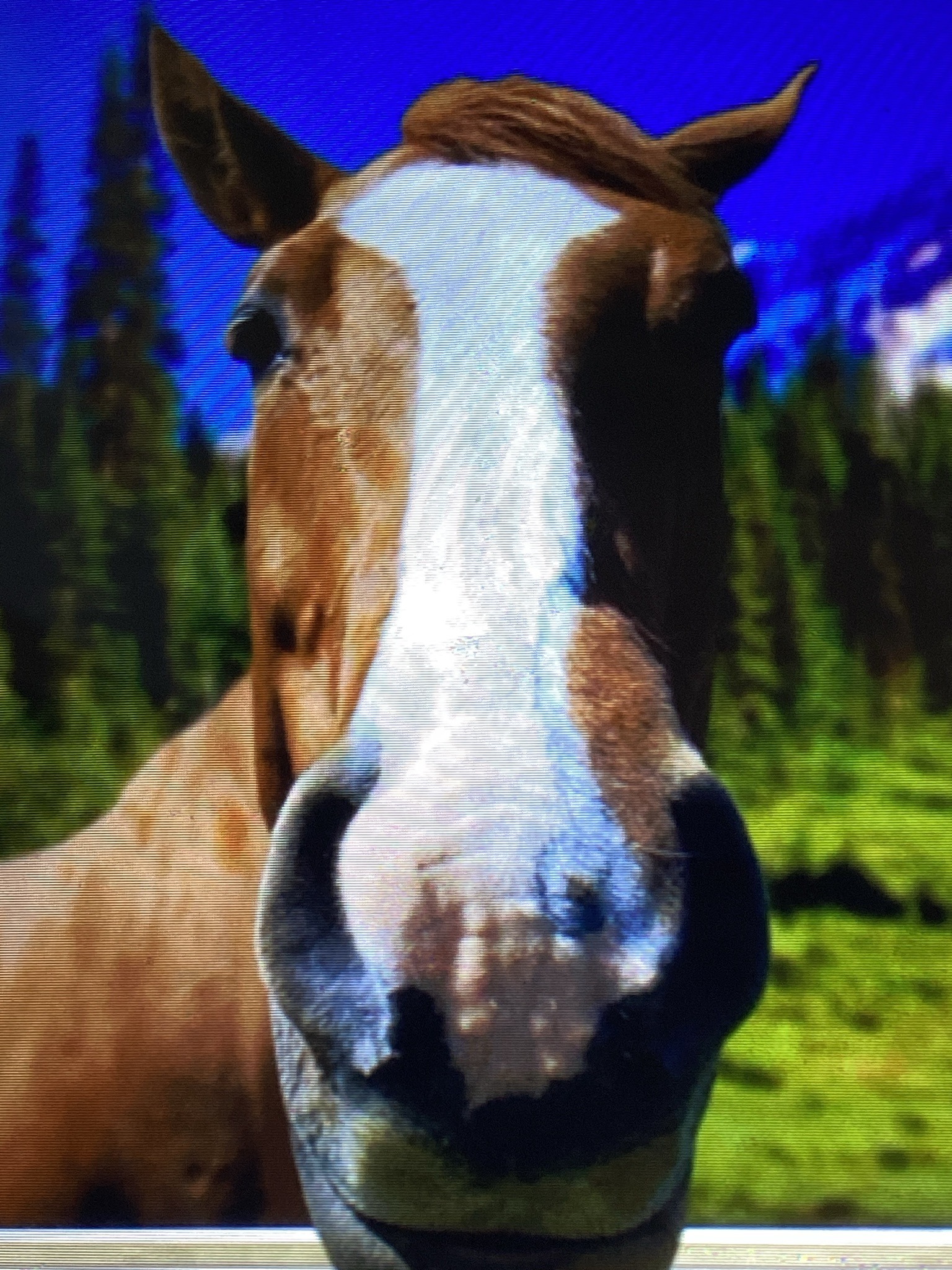
A close-up view of a domestic chestnut horse with a prominent white blaze down its face standing outdoors against a backdrop of green pine trees.
Characteristics
Large odd-toed ungulate mammal with a long neck, mane, large nostrils, mobile ears, and prominent eyes set on the sides of the head. This individual shows a bright chestnut coat with a broad white facial marking (blaze).
Habitat
Pastures, grasslands, open plains, and managed agricultural lands or stables globally.
When to Find It
Active year-round; active during both daytime and crepuscular hours.
Conservation Status
Domesticated (Not Evaluated / Least Concern)
Ecological Role
As large herbivores, horses help manage grassland vegetation through grazing, which can maintain open habitats and disperse plant seeds across large areas.
Easily Confused With
Donkeys (Equus asinus) and Mules, which typically have much larger ears and different vocalizations, or wild equids like Zebras (striped) and Przewalski's horse.
Observation Tips
Approach horses calmly and avoid walking directly behind them where they have a visual blind spot to prevent startling them.
Interesting Facts
Horses have a nearly 360-degree field of vision due to the lateral placement of their eyes, with only two small blind spots directly in front of and behind them.