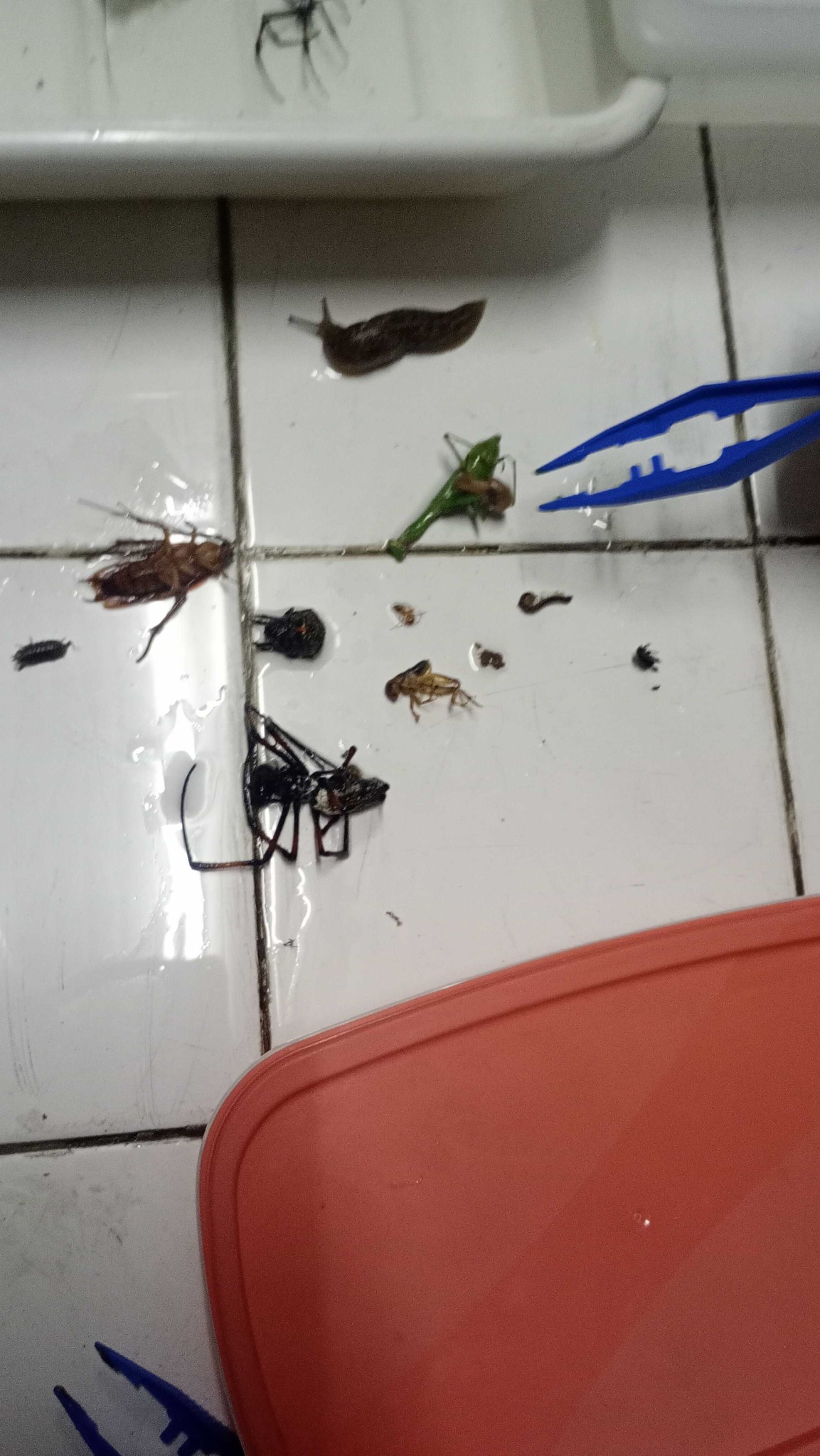
Black Widow Spider and assorted invertebrates
Scientific Name: Latrodectus mactans (Northern Black Widow)
Category: other
Brief Description
A collection of various invertebrates, including a black widow spider, cockroach, slug, and woodlouse, likely gathered for study or as prey.
Characteristics
The black widow is identified by its shiny black body and a characteristic red hourglass marking on the underside of the abdomen. Other subjects include a large brown cockroach and a dark terrestrial slug.
Habitat
Temperate and tropical regions; often found in dark, sheltered areas like garages, woodpiles, and crawl spaces.
When to Find It
Most active during warmer months; often found indoors in fall as temperatures drop.
Conservation Status
N/A
Ecological Role
Spiders are vital predators that control insect populations; slugs and woodlice contribute to decomposition and nutrient cycling.
Easily Confused With
False black widows (Steatoda grossa) look similar but lack the red hourglass and have a more purplish-brown hue.
Observation Tips
Exercise extreme caution around black widow spiders as their bite is venomous; use tools like the blue tweezers shown to handle specimens safely.
Interesting Facts
The venom of a black widow spider is reported to be 15 times stronger than that of a rattlesnake, though they rarely bite humans unless disturbed.