Coast Redwood
Scientific Name: Sequoia sempervirens
Category: tree
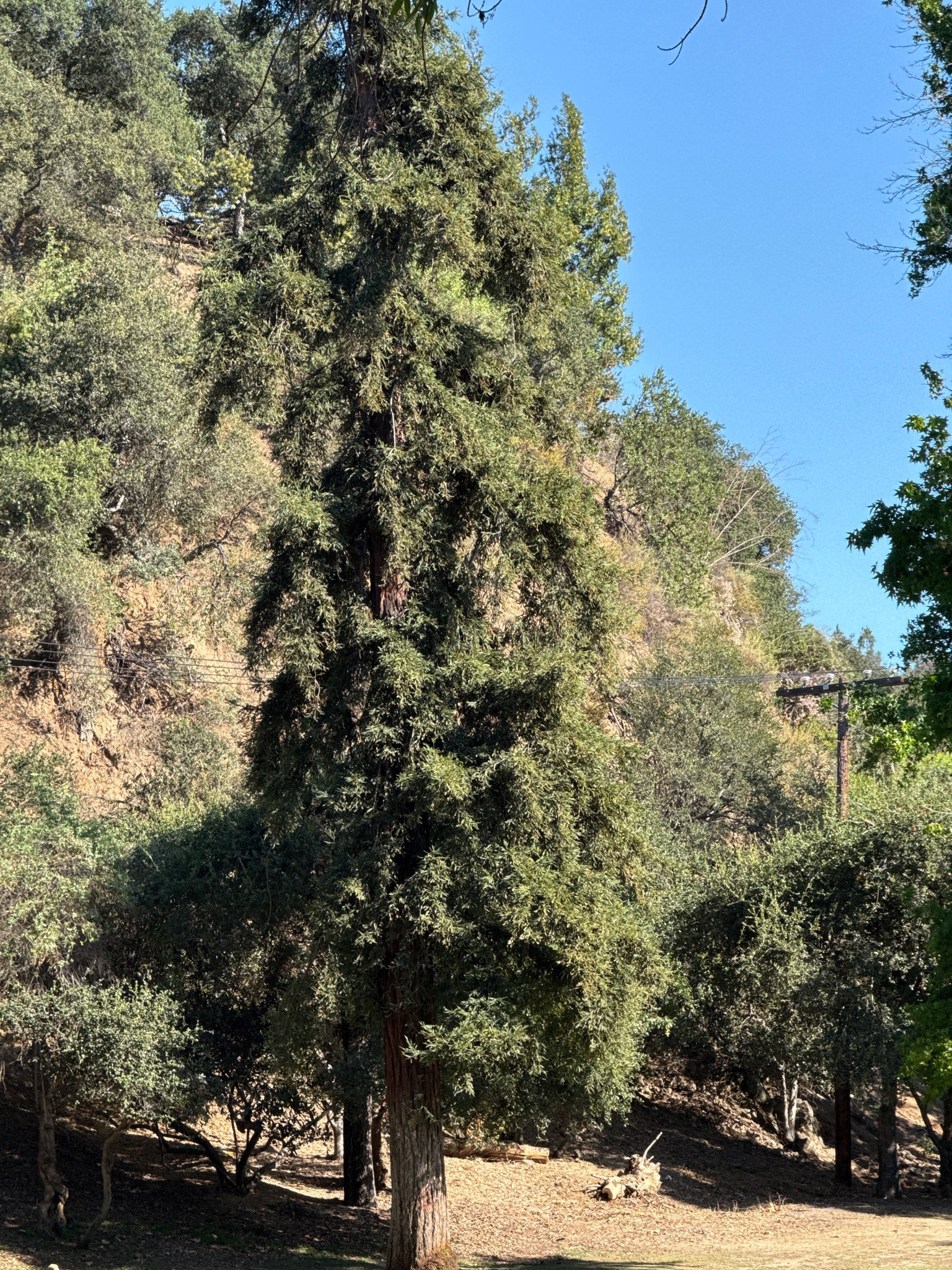
Brief Description
A tall, evergreen coniferous tree known for reaching massive heights and having thick, reddish-brown bark.
Characteristics
Fibrous, thick, reddish-brown bark that provides fire resistance; flat, needle-like leaves arranged in two rows; small woody cones about 1 inch long.
Habitat
Prefer cool, moist coastal climates with frequent fog, typically found in valleys and on slopes within the coastal fog belt.
When to Find It
Evergreen; visible year-round. Growth occurs mostly in spring and summer.
Conservation Status
Endangered (IUCN Red List) due to historical logging and current climate change stressors.
Ecological Role
Provides critical habitat for endangered species like the marbled murrelet; sequesters massive amounts of carbon; fog drip from their needles provides water to the forest floor.
Easily Confused With
Giant Sequoia (Sequoiadendron giganteum) which has awl-shaped leaves and larger cones; Port Orford Cedar which has scale-like leaves.
Observation Tips
Look for the distinctive reddish bark and look up to see the towering canopy. Be careful not to disturb the sensitive root systems by staying on marked trails.
Interesting Facts
Redwoods can live for over 2,000 years and are the tallest trees on Earth, with some individuals surpassing 380 feet in height.