American Sycamore
Scientific Name: Platanus occidentalis
Category: tree
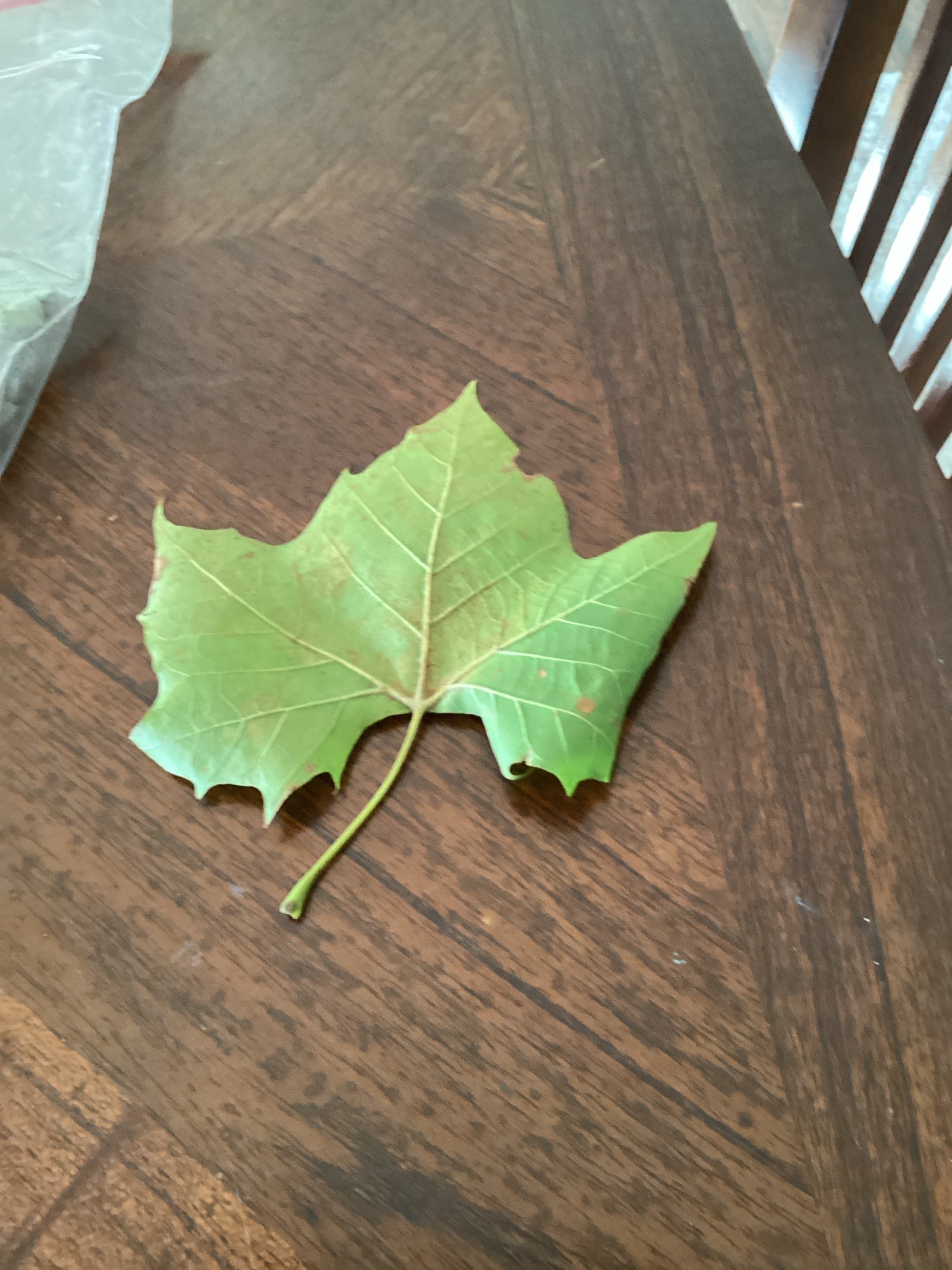
Brief Description
A large deciduous tree easily recognized by its distinctive mottled, peeling bark and broad, palmately lobed leaves with coarse teeth.
Characteristics
Leaves are simple, alternate, typically 10 to 20 cm wide with 3 to 5 shallow lobes and coarse teeth along the margins. The petiole base is hollow and encloses the bud for the next growing season.
Habitat
Commonly found along streambanks, river floodplains, and moist bottomlands where rich, damp soils are present.
When to Find It
Spring through autumn; brilliant yellow-brown foliage in autumn before dropping its leaves.
Conservation Status
Least Concern
Ecological Role
Provides nesting sites and shelter for cavity-nesting birds and mammals. The large leaves and canopy contribute important organic matter to aquatic and riparian ecosystems.
Easily Confused With
London Planetree (Platanus x acerifolia), which often has deeper sinuses and is commonly planted as an urban street tree.
Observation Tips
Look along rivers, streams, and woodland trails in eastern and central North America, especially noting the stark white upper branches of mature trees.
Interesting Facts
Sycamores are among the most massive trees in eastern North America, capable of growing to immense trunk diameters.
User Notes
I found it on a trail