Indian Ash Tree
Scientific Name: Lannea coromandelica
Category: tree
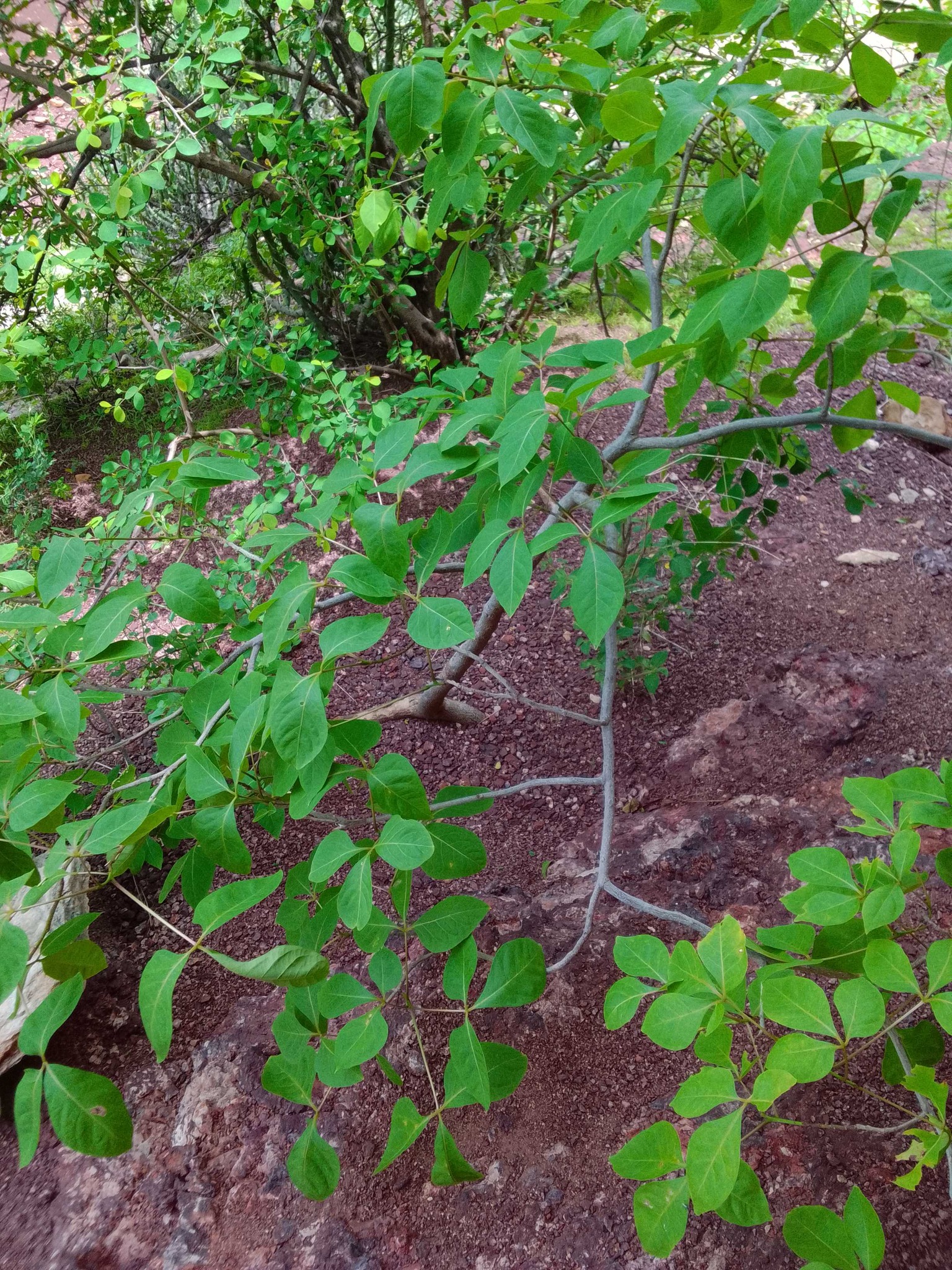
Brief Description
A medium-sized deciduous tree with compound leaves, often found in rocky and dry forested regions.
Characteristics
Bark is typically grey and smooth to slightly rough, flaking in older trees. Leaves are pinnately compound, usually with 3 to 7 leaflets arranged alternately on the rachis. Leaflets are ovate to oblong-lanceolate with entire margins.
Habitat
Dry deciduous forests, scrub forests, and rocky hillsides.
When to Find It
Loses its leaves during the dry season, flowering and leafing out with the onset of monsoon rains.
Conservation Status
Least Concern
Ecological Role
Provides food and habitat for various insects, birds, and herbivores. The bark and gum are often utilized by local wildlife and traditional medicine.
Easily Confused With
Other dry-forest leguminous or anacardiaceous trees; distinguished by its specific leaflet count and smoothish grey bark.
Observation Tips
Look for them in tropical dry deciduous forest trails, especially during the monsoon when foliage is lush and green.
Interesting Facts
The bark yields a gum known as Jhingan gum, and the wood is often used for light construction, packing cases, and fuel.