Eastern Chipmunk
Scientific Name: Tamias striatus
Category: mammal
Brief Description
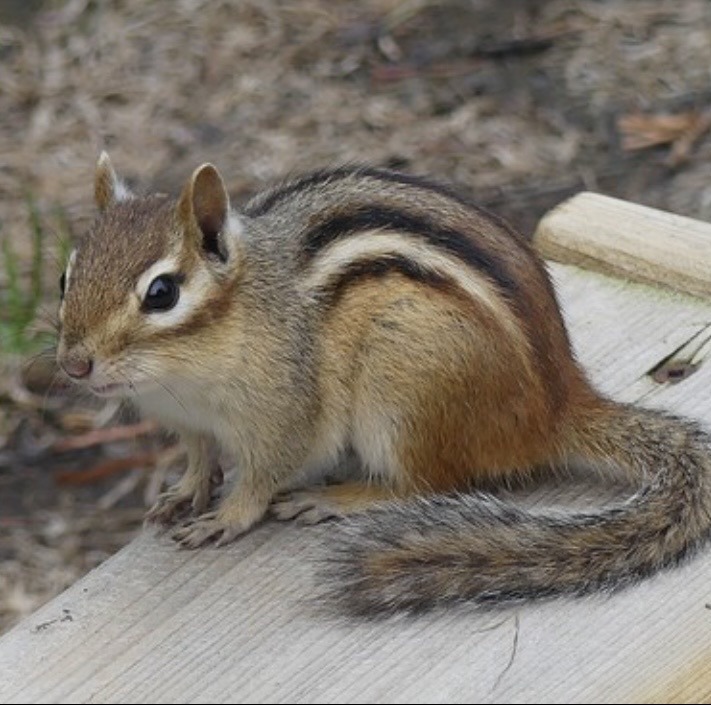
A small, ground-dwelling rodent easily recognized by the prominent black and white stripes running along its back and face.
Characteristics
Features reddish-brown fur with five dark brown or black longitudinal stripes interspersed with two lighter stripes on its back. Head markings include two lighter stripes running above and below the eye. It has internal cheek pouches used for transporting food.
Habitat
Deciduous forests, brushy areas, rocky outcrops, and suburban yards where cover such as logs, stone walls, or brush piles is available.
When to Find It
Active from spring through autumn. They undergo periods of torpor during winter rather than true hibernation, occasionally waking to feed from stored caches.
Conservation Status
Least Concern
Ecological Role
Acts as an important seed disperser for various trees and shrubs. They also serve as prey for a wide variety of raptors, snakes, and mammalian carnivores.
Easily Confused With
Least Chipmunk (Neotamias minimus), which is smaller, generally inhabits more arid or coniferous regions, and has stripes that continue onto the base of the tail.
Observation Tips
Look and listen for their sharp, high-pitched 'chip' vocalizations around stone walls, woodpiles, or forest edges. Move slowly and quietly to observe them foraging.
Interesting Facts
An eastern chipmunk's underground burrow system can be over 10 feet long with multiple entrances, a main nesting chamber, and separate chambers for storing food and waste.