Ash Tree
Scientific Name: Fraxinus species
Category: tree
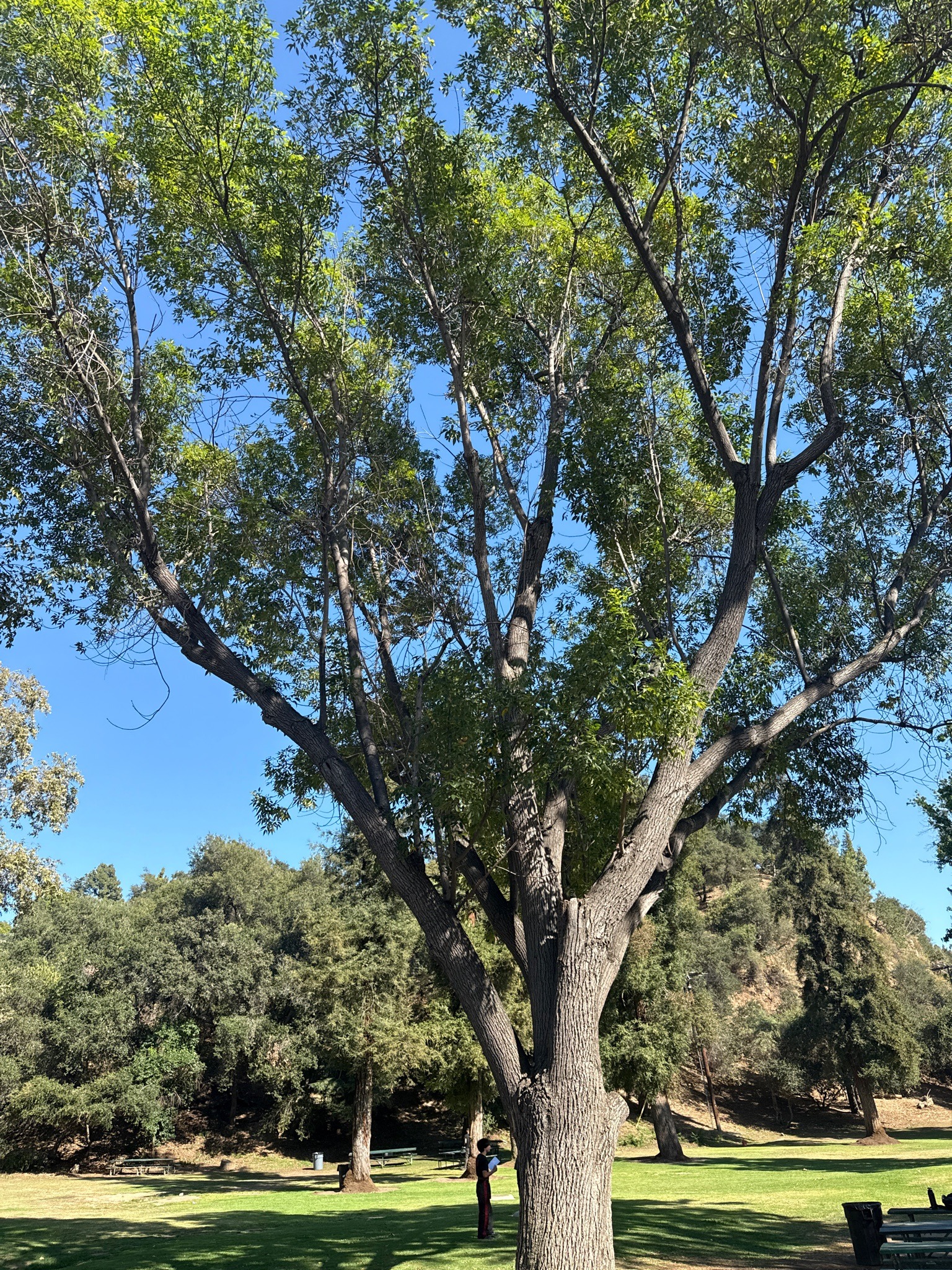
Brief Description
A large deciduous tree known for its compound leaves and oppositely branched twigs, commonly used in landscaping and parks.
Characteristics
Features compound leaves with 5-9 leaflets with serrated or smooth margins. The bark is typically greyish-brown with deep diamond-shaped fissures on mature specimens. Branches grow in an opposite pattern.
Habitat
Thrives in moist, well-drained soils; commonly found in river valleys, forests, and suburban landscapes across North America.
When to Find It
Deciduous; sets green leaves and winged seeds (samaras) in summer, with leaves turning yellow or purple in autumn.
Conservation Status
Varies; many North American species are currently Critically Endangered due to the invasive Emerald Ash Borer.
Ecological Role
Provides habitat for various bird species and food for caterpillars of several moth and butterfly species. Helps in urban heat reduction and air filtration.
Easily Confused With
Hickory trees (Carya) have similar compound leaves but their branching is alternate rather than opposite. Black Walnut has significantly more leaflets per leaf.
Observation Tips
Look for the distinctive diamond pattern on the bark and check the twigs to ensure the buds and leaves are growing directly opposite one another on the stem.
Interesting Facts
Ash wood is famously used to make baseball bats and electric guitar bodies because it is strong, lightweight, and resonant.
User Notes
i saw it at the rose bowl during summer