Windmill Palm
Scientific Name: Trachycarpus fortunei
Category: tree
Brief Description
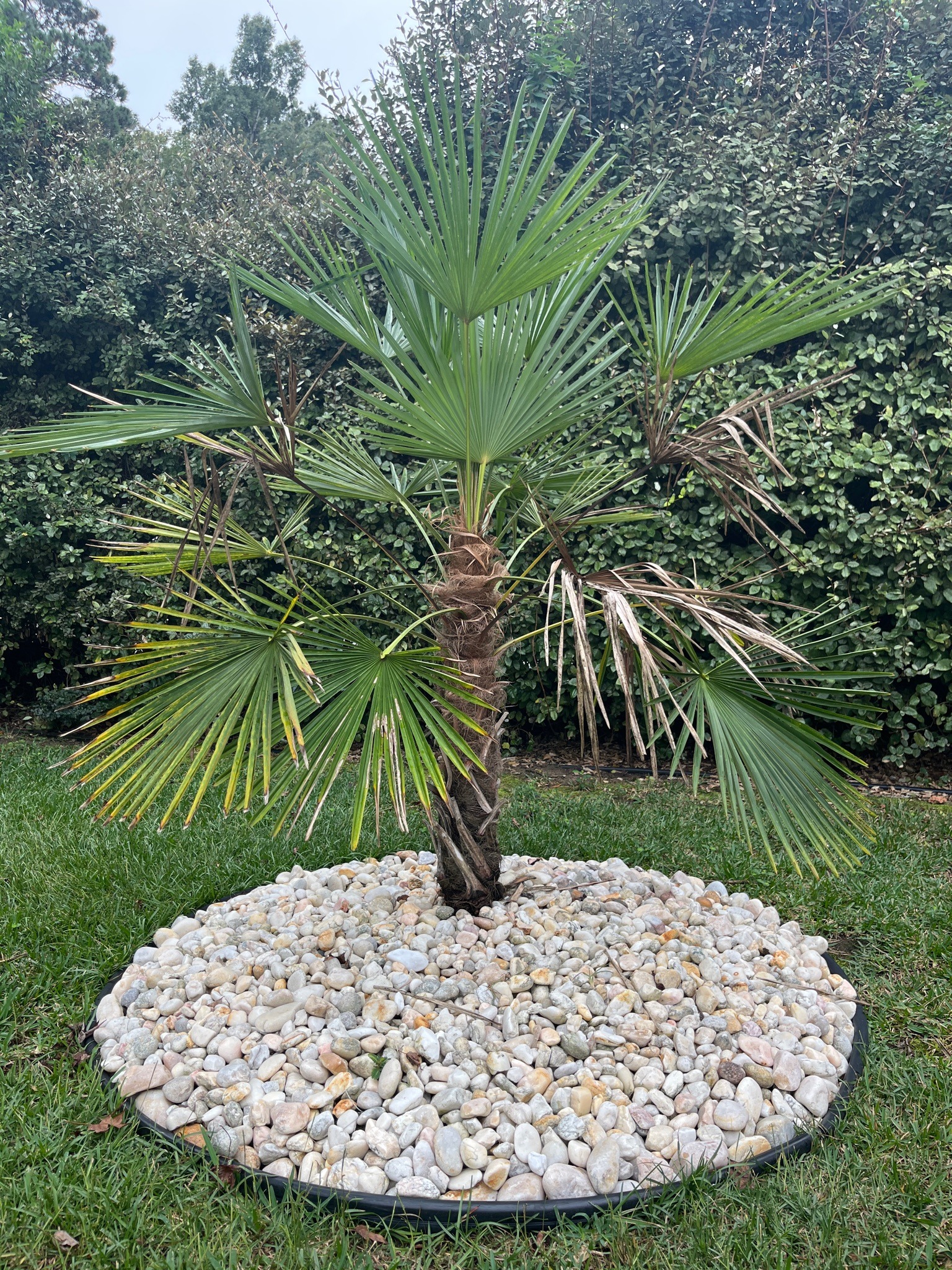
A small to medium-sized evergreen fan palm recognized by its slender trunk covered in a dense, dark brown fibrous network and rigid palmate leaves.
Characteristics
Features a single, slender trunk densely wrapped in persistent, coarse, dark brown leaf sheaths and fibers. The leaves are fan-shaped (palmate), deeply divided into stiff, drooping segments, and typically measure 50 to 90 cm across, radiating from the top of the stem.
Habitat
Native to mountainous regions of central and eastern China, but widely cultivated in temperate and subtropical gardens and landscapes worldwide.
When to Find It
Evergreen, providing year-round foliage; best observed during spring and summer when new vibrant green fronds emerge.
Conservation Status
Least Concern
Ecological Role
Provides shelter and nesting sites for small birds and insects in urban and suburban landscapes.
Easily Confused With
Can be confused with other fan palms such as Washingtonia robusta or Sabal palmetto; distinguished by the dense, hairy brown fiber covering the trunk of Trachycarpus fortunei and the lack of sharp teeth or a prominent midrib (costapalmate structure).
Observation Tips
Look for landscaped gardens, parks, and botanical collections in temperate zones where tropical palms cannot survive.
Interesting Facts
The windmill palm is exceptionally cold-hardy for a palm tree, capable of surviving frosts and freezing winter temperatures down to -15°C or lower.