Bugleweed
Scientific Name: Ajuga reptans
Category: plant
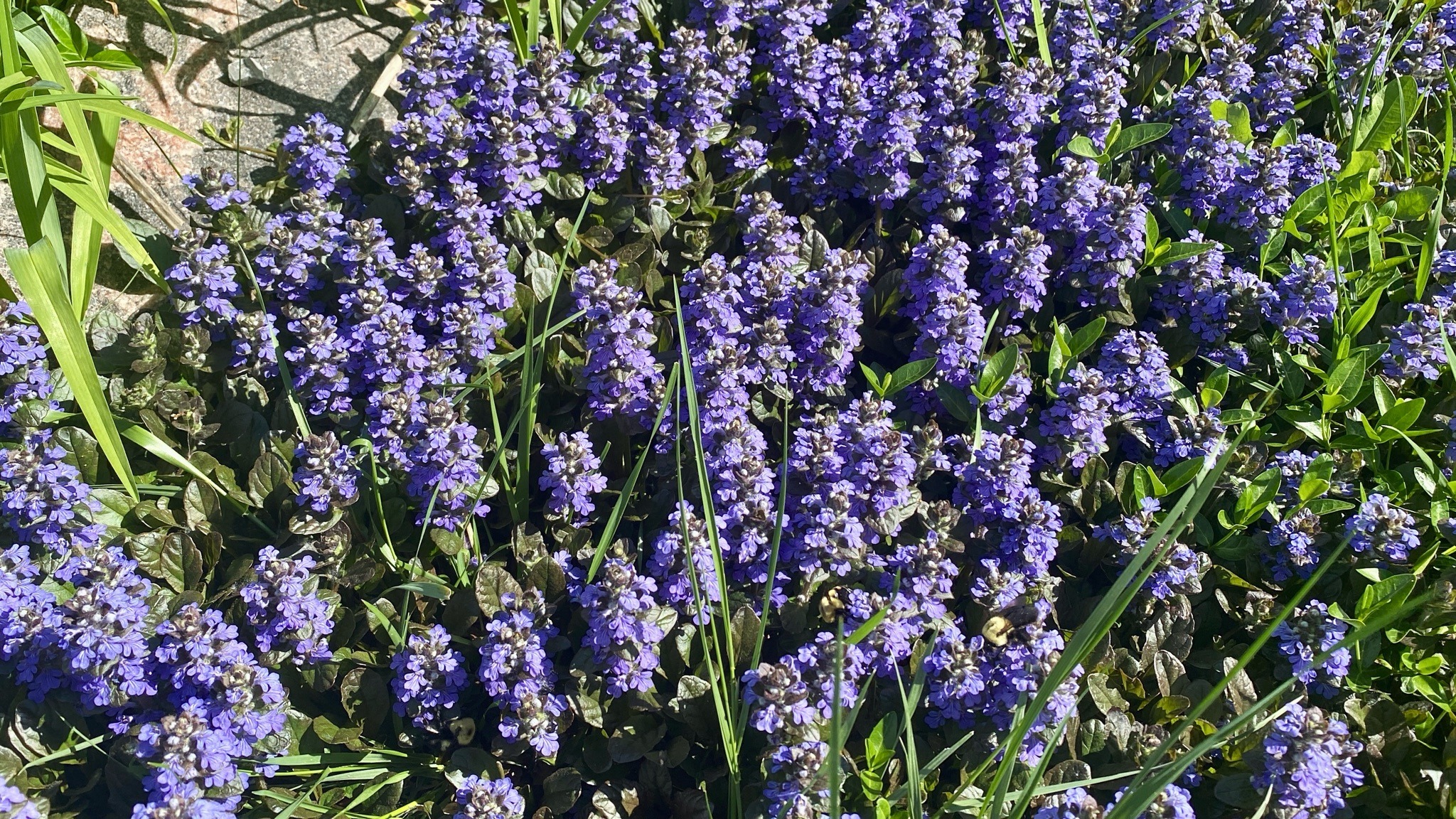
Brief Description
A low-growing, spreading perennial evergreen herb often used as a groundcover, belonging to the mint family.
Characteristics
Features dark green to bronze-tinted spatulate leaves that form a dense mat. It produces upright spikes (4-8 inches tall) of small, tubular, blue or violet-purple flowers.
Habitat
Typically found in moist woods, fields, and gardens; it prefers partial shade but can adapt to full sun with enough moisture.
When to Find It
Flowers primarily in late spring to early summer (May to June).
Conservation Status
Not listed (commonly cultivated; can be invasive in North America).
Ecological Role
Provides an early nectar source for bees and butterflies. Because it spreads rapidly via runners (stolons), it can be used to prevent erosion but may become invasive in some North American ecosystems.
Easily Confused With
Self-heal (Prunella vulgaris), which has more oval leaves and less aggressive spreading runners; Ground Ivy (Glechoma hederacea), which has rounder, scalloped leaves and individual flowers rather than dense spikes.
Observation Tips
Look for these in damp, shady garden borders or the edges of woodlands. In Ontario, they are common in suburban landscapes as garden escapes.
Interesting Facts
The name 'reptans' refers to its creeping habit. In traditional herbal medicine, it was once used to treat respiratory disorders and as a mild astringent for wounds.
User Notes
Head Lake, Ontario