Common Gallinule
Scientific Name: Gallinula galeata
Category: bird
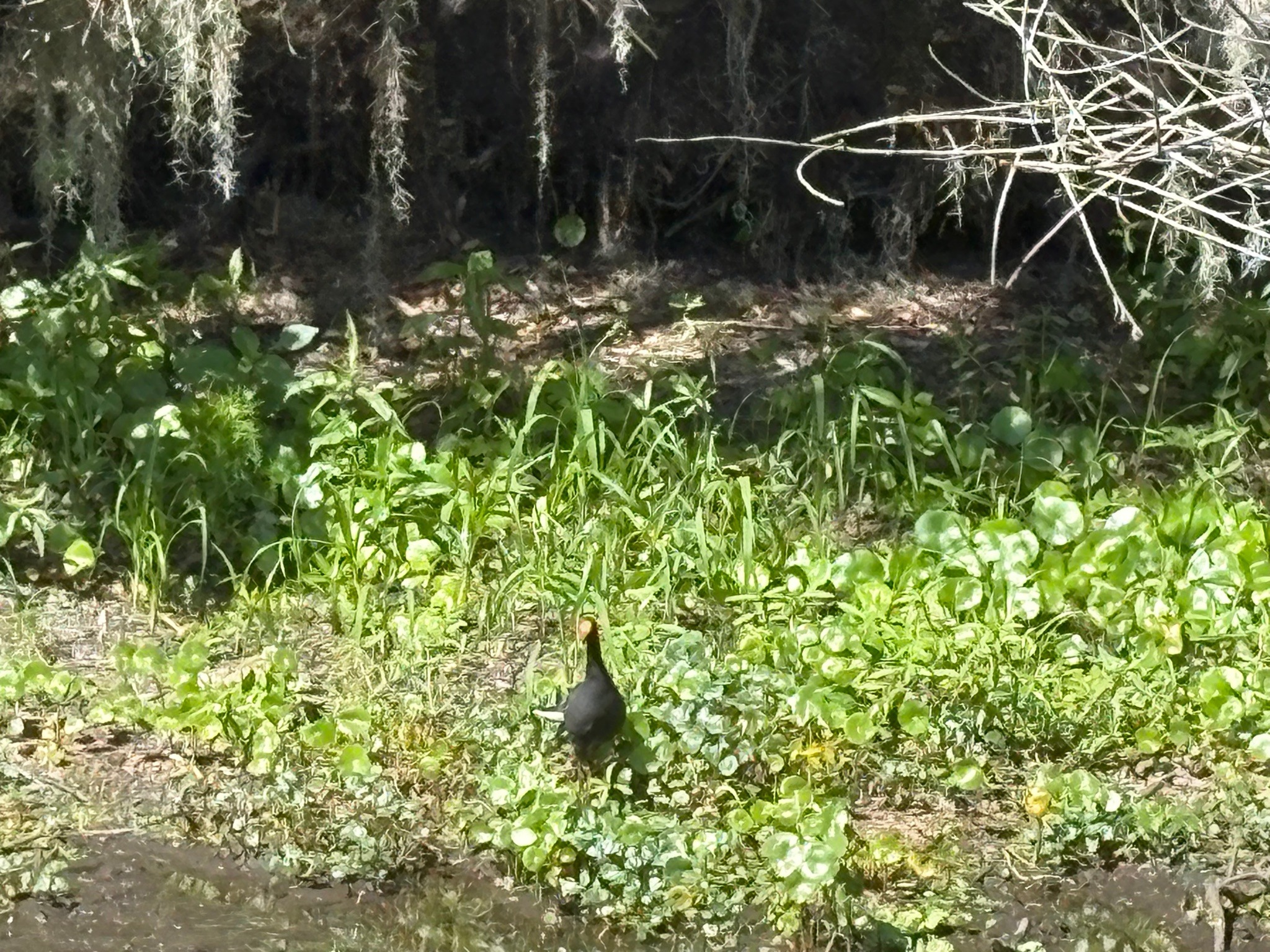
Brief Description
A medium-sized, dark waterbird often seen swimming or walking on floating vegetation in wetlands.
Characteristics
This bird has charcoal gray or blackish plumage with a white stripe along its flanks and white outer tail feathers. It is most easily identified by its bright red frontal shield (forehead plate) and matching red bill with a yellow tip. Long, greenish-yellow legs and unwebbed feet with long toes allow it to walk on marsh vegetation.
Habitat
Freshwater marshes, ponds, lakes, and canals with thick emergent vegetation or floating mats. Found across the Americas, ranging from Canada to Argentina.
When to Find It
In the southern United States and further south, they are year-round residents. Northern populations migrate south for the winter. Best observed during daylight hours near the water's edge.
Conservation Status
Least Concern
Ecological Role
As omnivores, they help regulate populations of aquatic insects and vegetation. They serve as a food source for larger wetland predators like alligators, snakes, and hawks.
Easily Confused With
The American Coot (Fulica americana) is very similar but has a white bill and frontal shield instead of red. The Purple Gallinule (Porphyrio martinica) is much more colorful with purple-blue plumage and bright yellow legs.
Observation Tips
Look for them along the edges of reeds and lily pads. They are often vocal with a wide variety of laughs, clucks, and croaks. Use binoculars to spot the red bill against dark vegetation.
Interesting Facts
Common Gallinules do not have webbed feet like ducks; instead, they have very long toes that distribute their weight so they can walk across lily pads and other floating plants without sinking.