Wood Frog
Scientific Name: Lithobates sylvaticus
Category: other
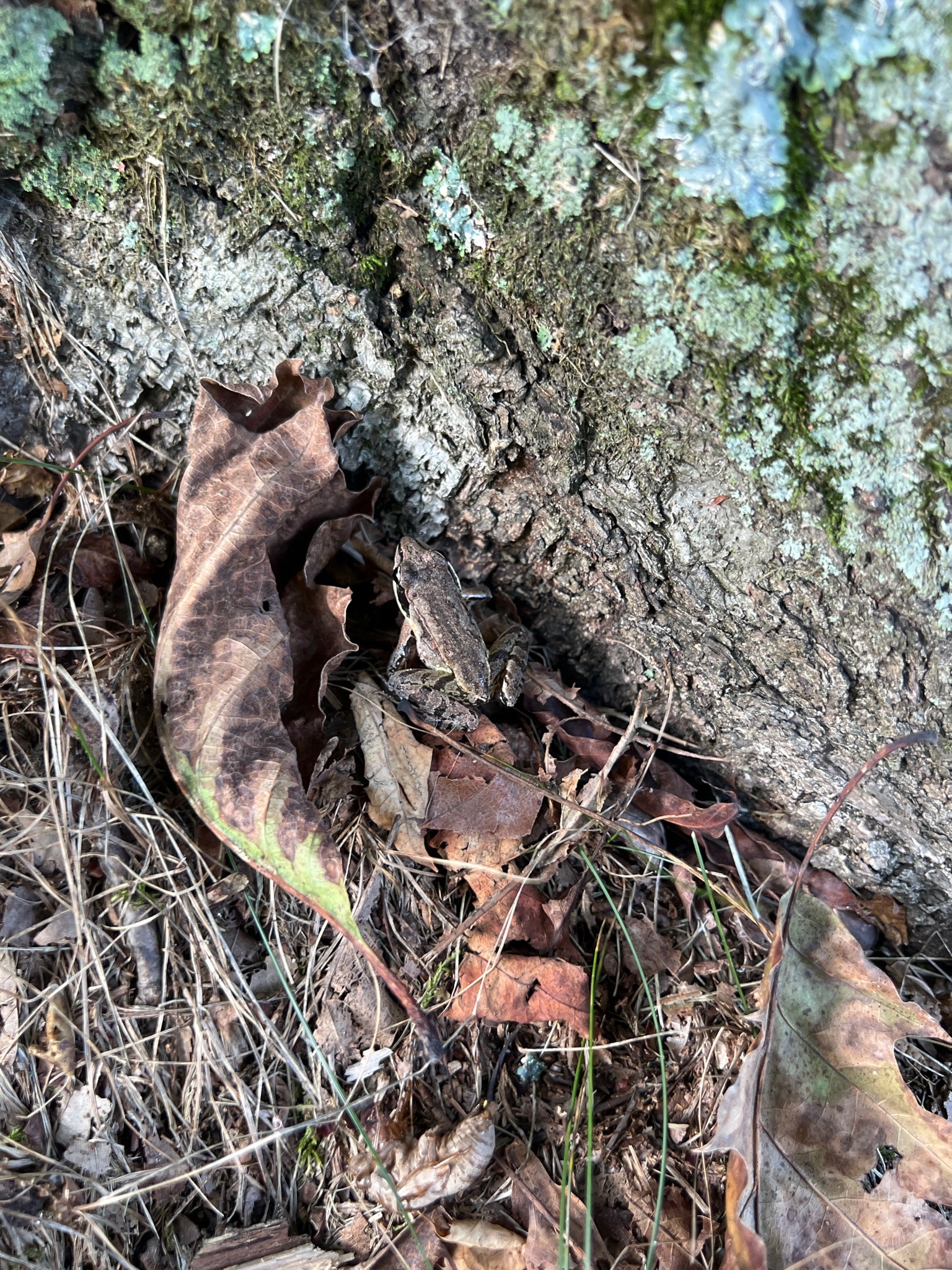
Brief Description
A small frog well-adapted to cold climates, easily recognized by the dark 'robber's mask' over its eyes.
Characteristics
Ranges from 1.5 to 2.75 inches in length. Coloration can vary from tan, brown, to reddish-brown with dark brown or black patches. The most distinct feature is the dark mask-like marking extending from the snout through the eye to the tympanum.
Habitat
Found in moist woodlands, damp forests, bogs, and around temporary woodland ponds (vernal pools) used for breeding.
When to Find It
Most active during spring and summer; breeds very early in spring right after ice melts. Spends winters buried under leaf litter and soil, surviving freezing temperatures by using glucose as a natural antifreeze.
Conservation Status
Least Concern, though local populations face threats from habitat fragmentation and loss of vernal pools.
Ecological Role
Acts as both predator (consuming various insects and invertebrates) and prey (food source for birds, snakes, and small mammals). Vernal pool breeding links aquatic and terrestrial ecosystems.
Easily Confused With
Leopard Frogs and Pickerel Frogs, which have distinct spots rather than a plain or subtly marked back, and lack the prominent dark eye mask of the Wood Frog.
Observation Tips
Look along forest floors near decaying logs and leaf litter, especially after a rain. In early spring, listen for their distinctive 'quacking' calls near woodland ponds.
Interesting Facts
Wood Frogs are famous for their ability to survive being frozen solid during the winter, where up to 60-70% of their body water turns to ice and their heart completely stops beating.