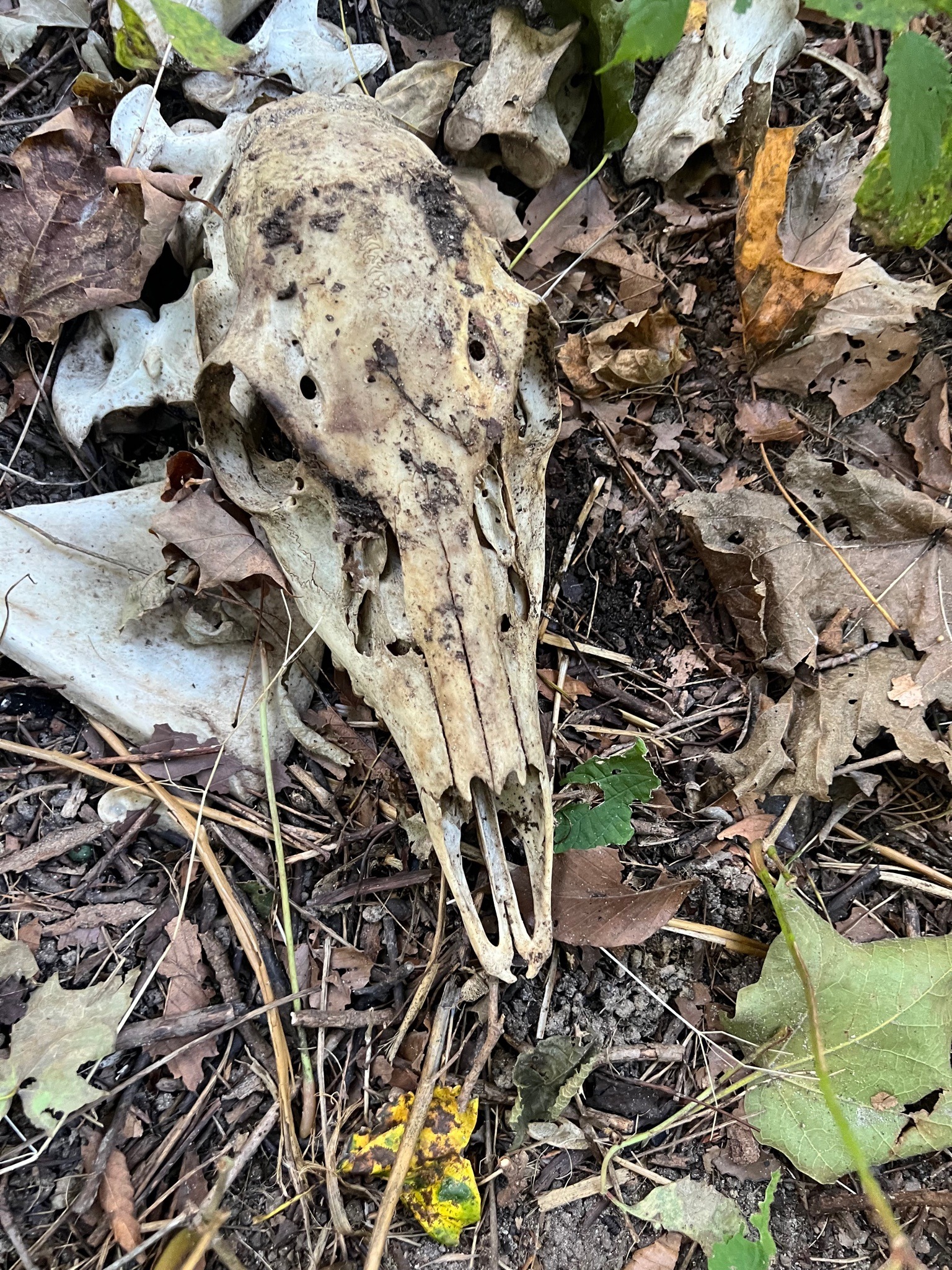
White-tailed Deer Skull
Scientific Name: Odocoileus virginianus
Category: mammal
Brief Description
An animal skull resting among leaf litter, featuring the elongated snout and characteristic dental structure of an herbivorous ungulate.
Characteristics
Elongated nasal region, lack of upper incisors (typical of ruminants), large eye sockets (orbits), and broad flat molars adapted for grinding plant material.
Habitat
Forests, woodlands, brushy fields, and edge habitats where deer populations reside.
When to Find It
N/A
Conservation Status
Least Concern
Ecological Role
Bones decompose slowly, returning calcium, phosphorus, and other minerals to the soil and providing resources for small rodents and insects that chew on antlers and bones.
Easily Confused With
Skulls of other medium-to-large mammals like sheep or domestic goats, which can be distinguished by horn cores or different dental and cranial proportions.
Observation Tips
Look carefully on the forest floor, near streams, or under dense brush where animals may have died or predators left remains.
Interesting Facts
Deer do not have upper front teeth; instead, they have a tough dental pad that helps them tear vegetation against their lower teeth.