Big Sagebrush
Scientific Name: Artemisia tridentata
Category: plant
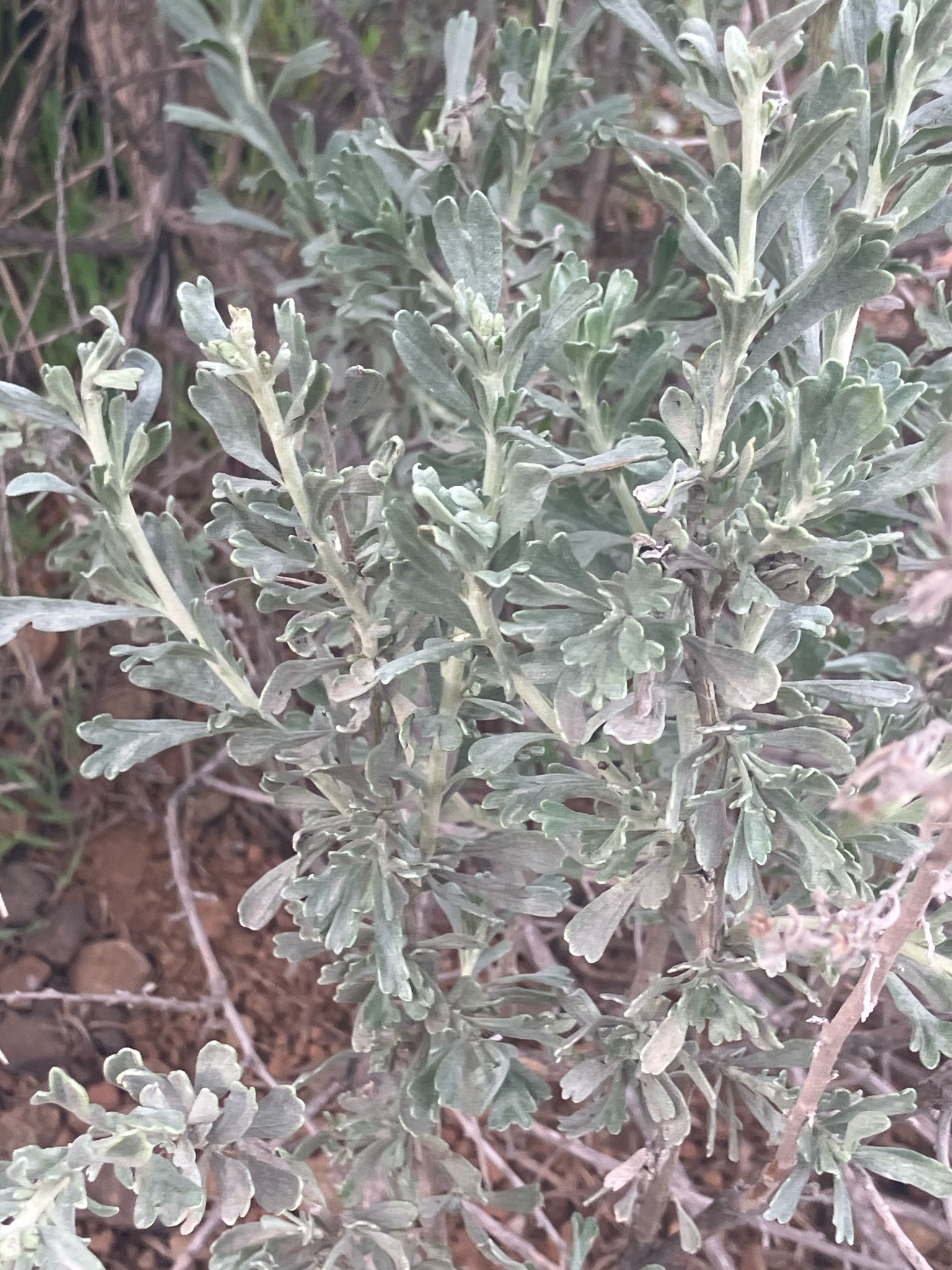
Brief Description
A hardy, aromatic woody shrub known for its silvery-grey-green foliage and association with the American West.
Characteristics
Evergreen shrub with silver-grey leaves that are wedge-shaped and typically have three lobes (teeth) at the outer tip. The foliage is covered in fine, silky hairs and emits a strong, pungent fragrance when crushed.
Habitat
Arid and semi-arid basins, plains, and mountain slopes with well-drained, deep soils.
When to Find It
Visible year-round; blooms in late summer through autumn with small, yellowish flowers.
Conservation Status
Generally common, but threatened in many areas by invasive species like cheatgrass, wildfire, and habitat fragmentation.
Ecological Role
A keystone species that provides critical food and cover for wildlife, including the Greater Sage-Grouse and Mule Deer. It helps stabilize soil and cycles nutrients in desert ecosystems.
Easily Confused With
Rabbitbrush (Chrysothamnus) which has narrower leaves and bright yellow flowers, or Silver Wormwood (Artemisia ludoviciana) which is more herbaceous rather than woody.
Observation Tips
Gently rub a leaf between your fingers to experience its characteristic sharp, clean scent. Look for it in open landscapes throughout the Intermountain West.
Interesting Facts
Big Sagebrush is not a true sage (Salvia) but is actually a member of the sunflower family (Asteraceae). Native American tribes have used it for centuries for medicinal, ceremonial, and practical purposes.