Gymnopilus mushroom
Scientific Name: Gymnopilus sp.
Category: fungi
Brief Description
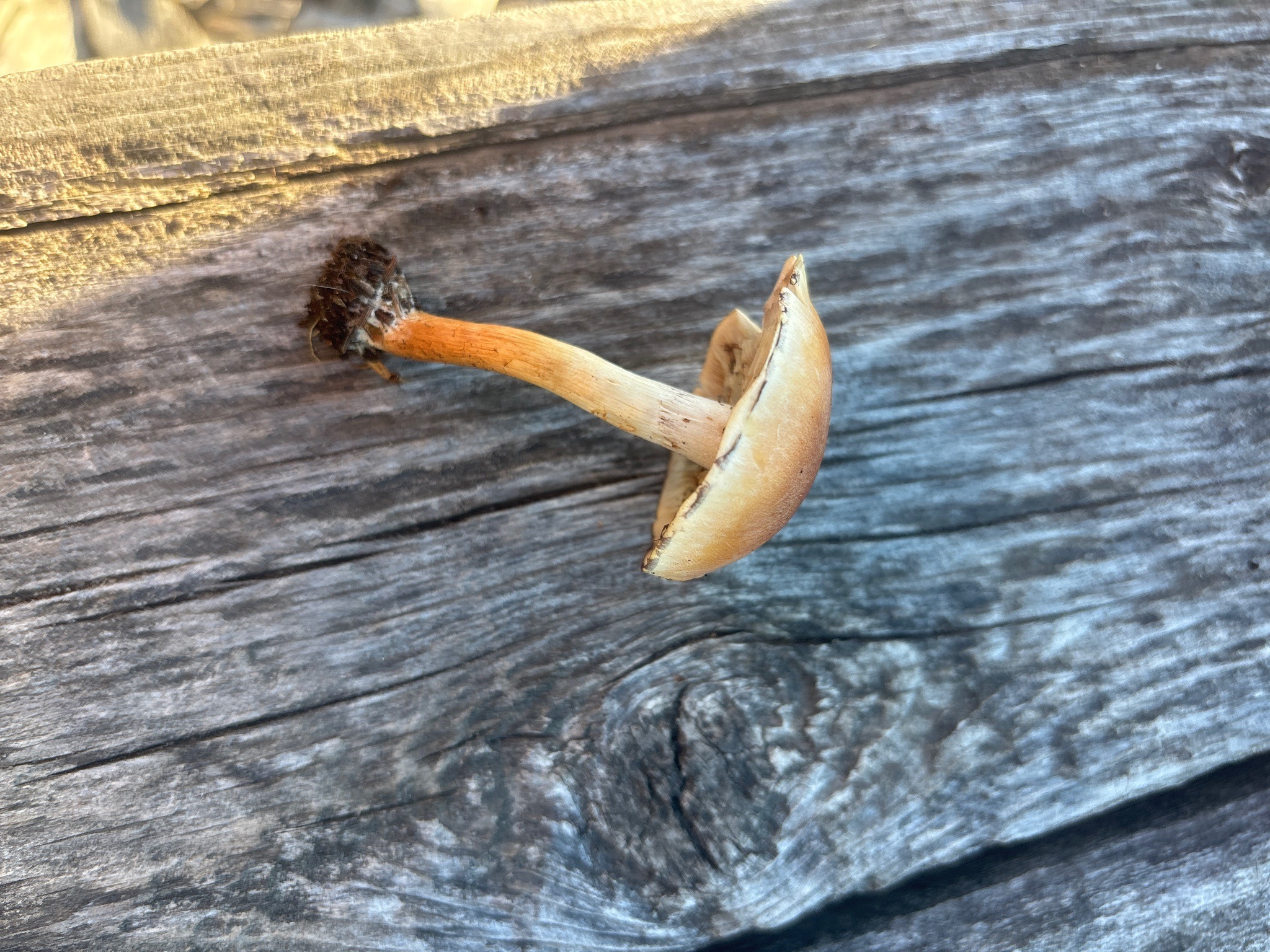
A small orange-brown mushroom resting on weathered wood, characterized by a convex cap, a central stipe, and rusty-brown spore prints typically associated with this genus.
Characteristics
Caps are generally yellowish-brown to orange-brown, often convex to flat. Stipes are fibrous, sometimes with remnants of a partial veil or fibrillose zone. Spore prints are rusty orange to brown.
Habitat
Often found growing on dead wood, logs, stumps, or woody debris in forest environments.
When to Find It
Most commonly observed during autumn and late summer after periods of rain, though some species fruit throughout the year in temperate climates.
Conservation Status
N/A
Ecological Role
Acts as a saprotroph, breaking down lignin and cellulose in dead wood to recycle nutrients back into the forest ecosystem.
Easily Confused With
Can be confused with other small brown or orange wood-decaying mushrooms, including toxic Galerina species. Distinguish by checking spore print color (rust-brown vs brown), stem features, and habitat.
Observation Tips
Look closely at decaying logs and stumps in wooded areas, especially after rain. Handle with care and wash hands after touching wild fungi.
Interesting Facts
Many species in the genus Gymnopilus contain bitter compounds, and some species are known to produce psychoactive substances such as psilocybin.