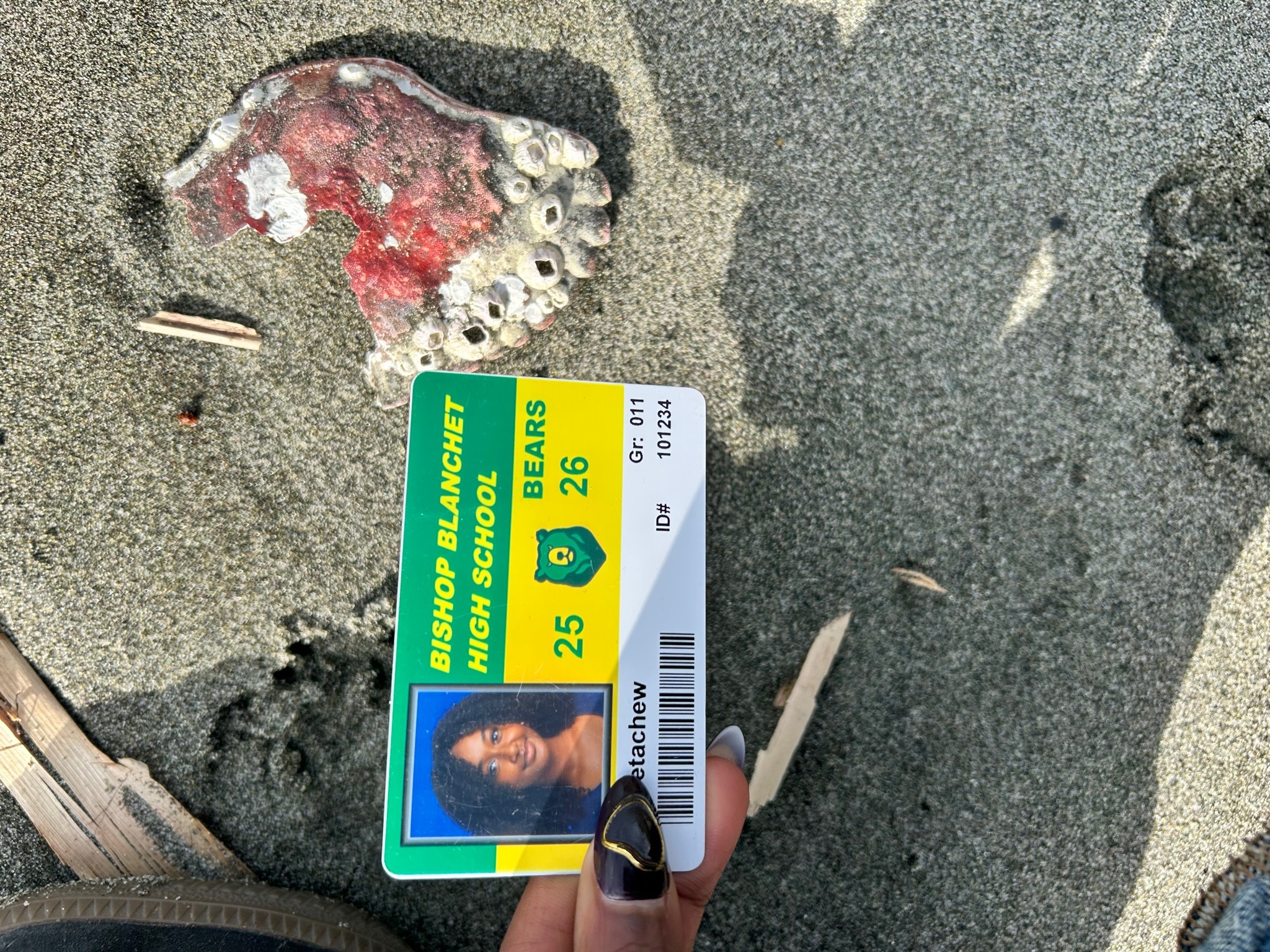
Abylone shell with Barnacles
Scientific Name: Haliotis rufescens (Abalone) / Balanomorpha (Barnacles)
Category: shell
Brief Description
A section of a red abalone shell with several acorn barnacles attached, resting on dark beach sand.
Characteristics
The shell section shows a vibrant pinkish-red interior and a rough exterior. Small, white, volcano-shaped calcareous plates belonging to barnacles are firmly attached to the outer surface.
Habitat
Intertidal and subtidal rocky reefs along the coastline.
When to Find It
Year-round; best seen at low tide.
Conservation Status
Red Abalone are often subject to strict fishing regulations due to population declines.
Ecological Role
Abalones are important grazers and a food source for sea otters, while barnacles are filter feeders that provide texture to marine substrates.
Easily Confused With
Other mollusk shells like mussels or limpets; distinguished by the specific iridescent red hue and unique respiratory pore structure of abalone.
Observation Tips
Look in tide pools or along the high-tide line after a storm. Avoid disturbing live specimens attached to rocks.
Interesting Facts
Abalone shells are exceptionally strong because they are composed of microscopic calcium carbonate tiles stacked like bricks and glued together with a protein 'mortar'.