Bloody Cranesbill
Scientific Name: Geranium sanguineum
Category: plant
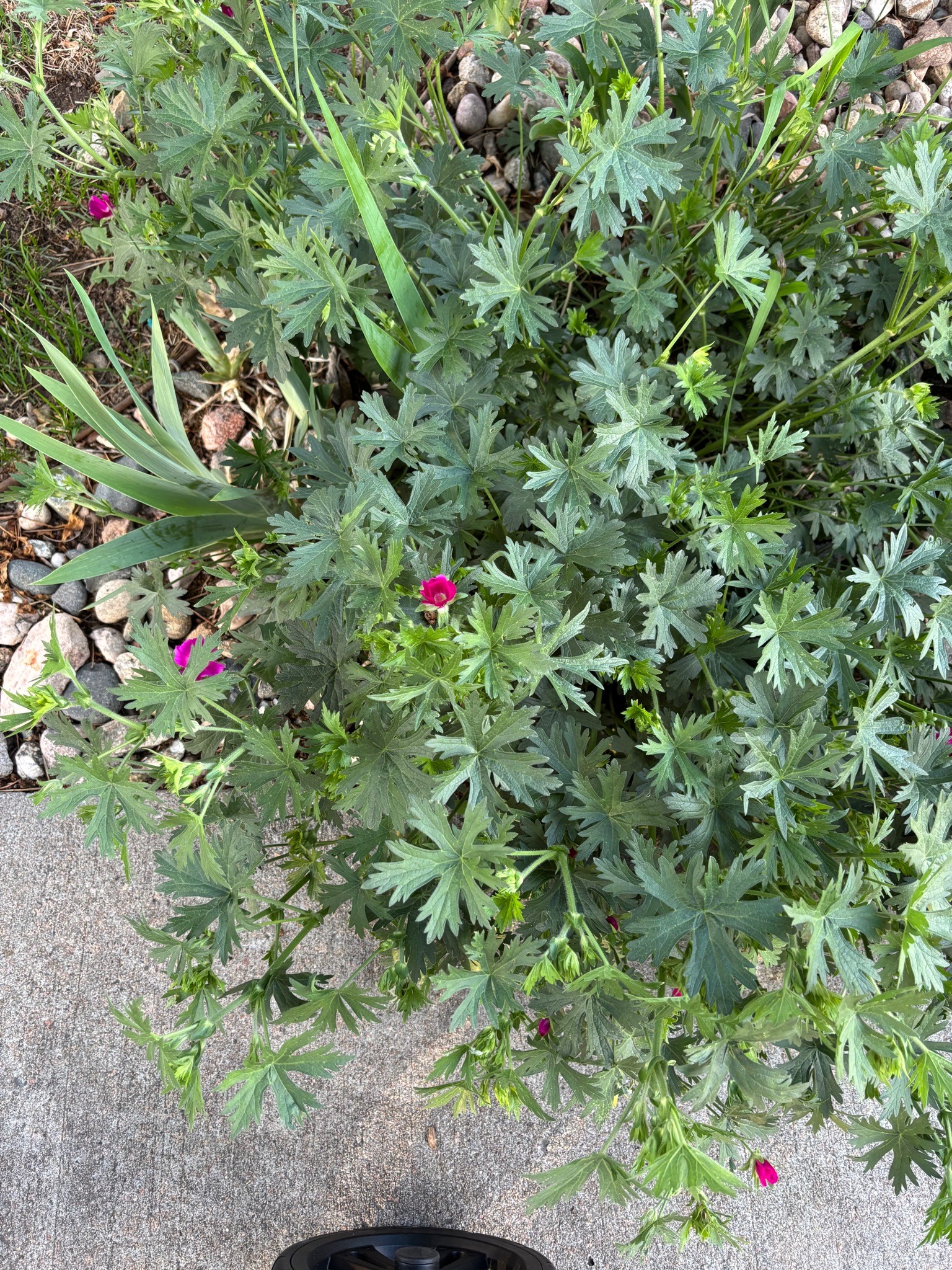
Brief Description
A hardy, mounding perennial wildflower known for its deeply lobed leaves and bright magenta flowers.
Characteristics
Features circular, palmately lobed leaves divided into 5-7 segments. Flowers are solitary, five-petaled, and typically vivid magenta or purple-pink. The foliage often turns blood-red in the autumn.
Habitat
Dry grasslands, rocky slopes, open woods, and sand dunes. Frequently used in cultivated gardens as groundcover.
When to Find It
Flowering typically occurs from late spring through mid-summer (May to August).
Conservation Status
N/A
Ecological Role
Provides a nectar source for various pollinators, including bees and butterflies. Its dense growth provides habitat for small invertebrates.
Easily Confused With
Other wild geraniums (Geranium maculatum) which usually have less deeply cut leaves and paler pink flowers, or Wood Cranesbill (Geranium sylvaticum) which grows taller with more upright flower clusters.
Observation Tips
Look for the distinctive 'crane-like' seed pods that develop after flowering, which gives the plant its common name.
Interesting Facts
The species name 'sanguineum' and the common name 'bloody' refer to the way the foliage turns a striking crimson color in the fall.