Portuguese Laurel
Scientific Name: Prunus lusitanica
Category: tree
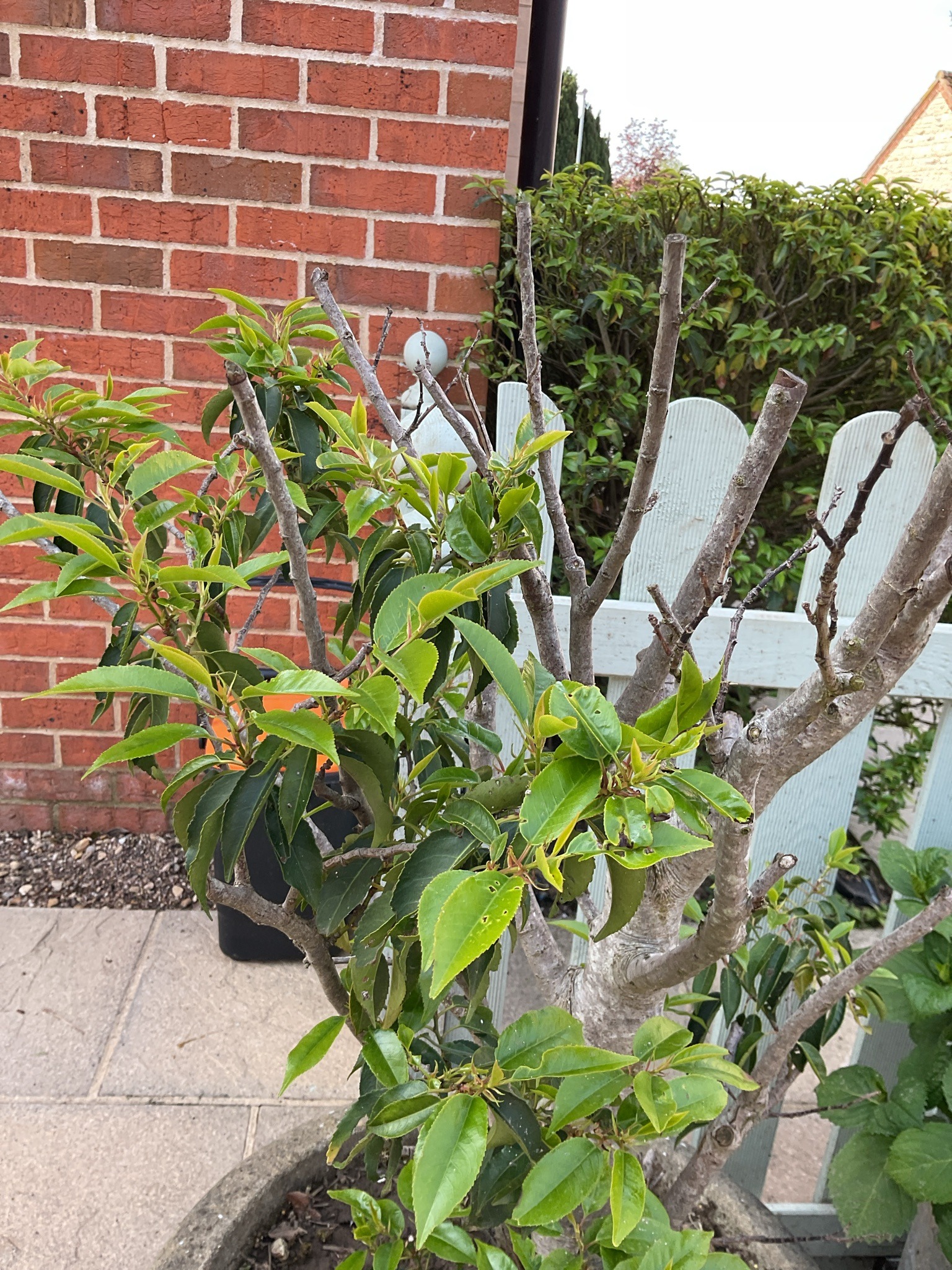
Brief Description
An evergreen shrub or small tree commonly used for hedging, featuring dark green glossy leaves and red-tinted stems.
Characteristics
Glossy, dark green, oval leaves with finely serrated margins. The stems (petioles) are notably reddish-pink. It produces small, fragrant white flowers in slender racemes followed by small dark purple berries.
Habitat
Typically found in moist, well-drained soils; often planted in gardens, parks, and as privacy screens.
When to Find It
Evergreen; flowers in early summer (June); fruits ripen in late summer or autumn.
Conservation Status
Least Concern
Ecological Role
Provides dense year-round cover for nesting birds. The flowers are attractive to bees and butterflies, while the berries provide a food source for birds in autumn.
Easily Confused With
Cherry Laurel (Prunus laurocerasus) - Distinguishable by larger, broader, lighter green leaves and lack of distinct red stems. Bay Laurel (Laurus nobilis) - Distinguishable by aromatic leaves and different flowering structure.
Observation Tips
Look for the diagnostic red stems to differentiate it from other laurel species. In garden settings, identify it by its dense habit and pointed leaf tips.
Interesting Facts
Despite its common name, it is actually a member of the rose family (Rosaceae). It is more drought-tolerant than the common Cherry Laurel once established.