Marsh Harrier
Scientific Name: Circus aeruginosus
Category: bird
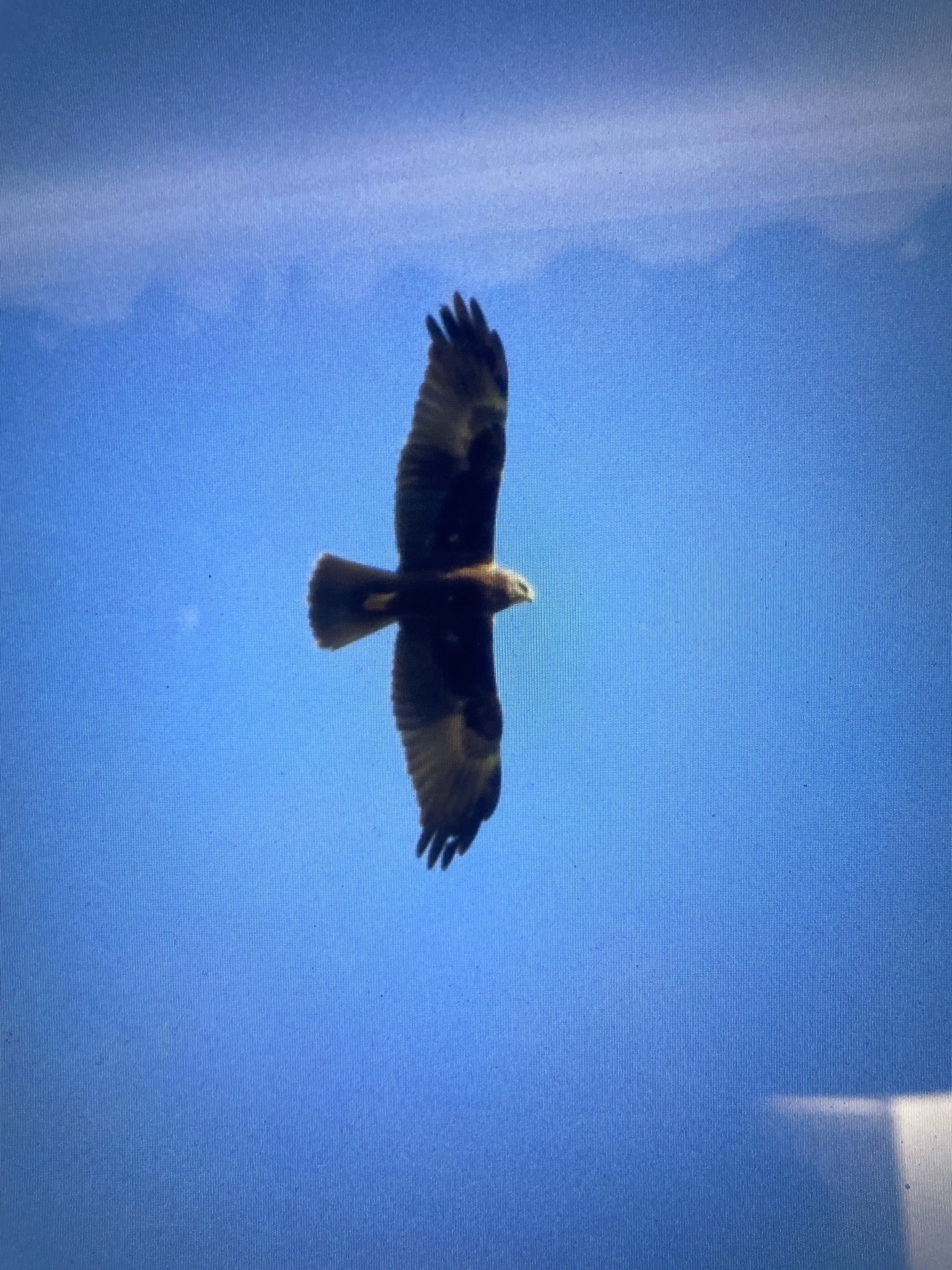
Brief Description
A large bird of prey soaring with wings held in a shallow V-shape, commonly found near wetlands and marshes.
Characteristics
Adult females are mostly brown with a creamy-yellow crown and throat. Males have grey wings and tail, brown back, and reddish underparts. Long wings and tail with a characteristic dihedral (V-shape) when flying low over reedbeds.
Habitat
Wetlands, marshes, reedbeds, fens, and adjacent agricultural land.
When to Find It
Present year-round in suitable UK wetlands like Pagham Harbour, with numbers augmented by migrants in winter.
Conservation Status
Green-listed in the UK, recovering well after historical declines due to persecution and pesticides.
Ecological Role
Top-tier avian predator that helps regulate populations of small mammals, birds, and amphibians in wetland ecosystems.
Easily Confused With
Hen Harrier and Montagu's Harrier; distinguished by larger size, broader wings, and different plumage patterns (especially the pale crown on females).
Observation Tips
Look over extensive reedbeds and marshes, especially mid-morning to afternoon when thermals are active. Use binoculars or a spotting scope as they often hunt at a distance.
Interesting Facts
Marsh Harriers almost completely disappeared from the UK by the late 19th century due to habitat loss and persecution, dropping to a single breeding pair in the 1970s, but have made a remarkable conservation comeback.
User Notes
Pagham