Paper Wasp Nest
Scientific Name: Polistes spp.
Category: insect
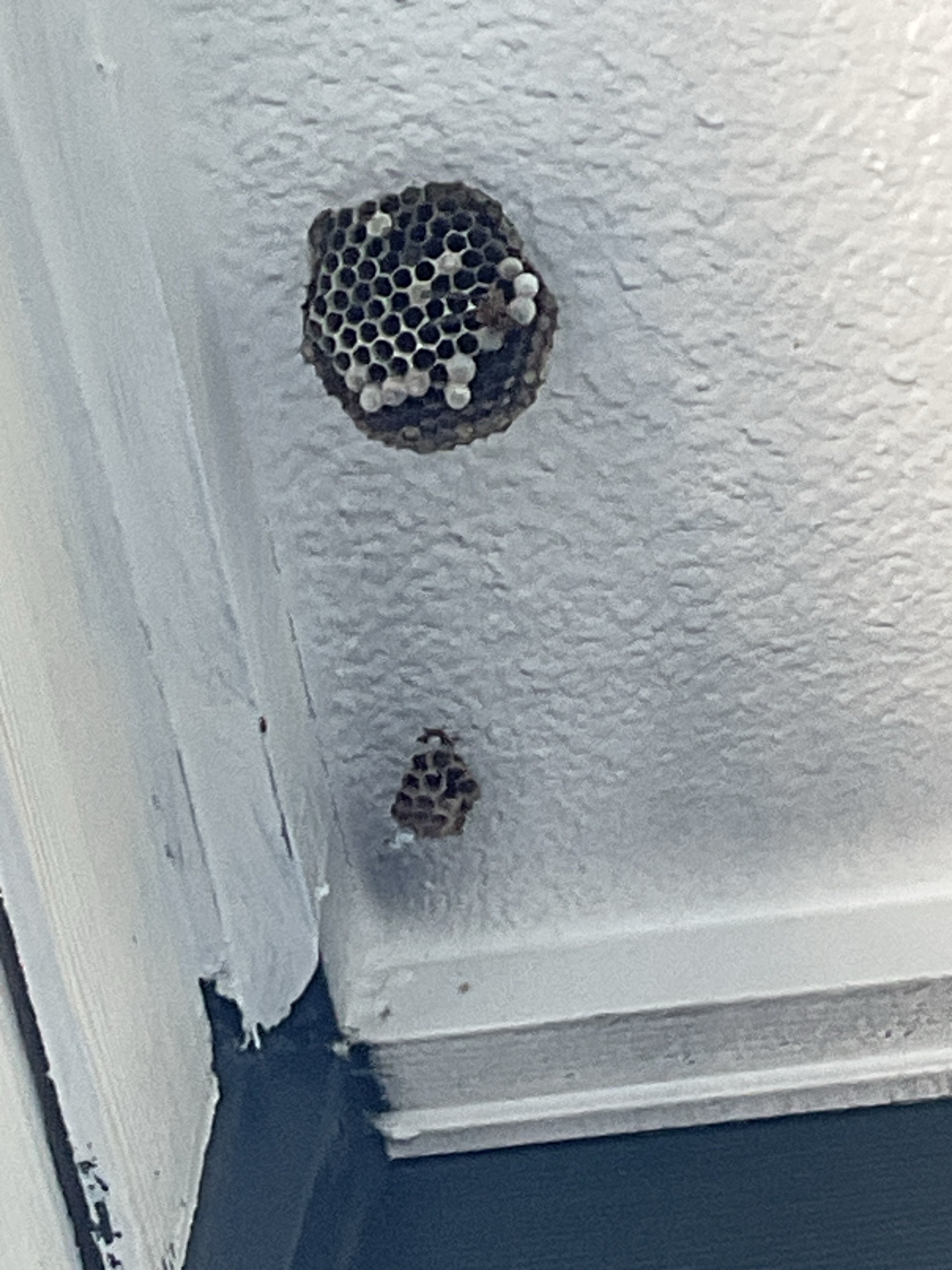
Brief Description
An open, umbrella-shaped paper nest constructed by paper wasps, featuring distinct hexagonal cells exposed to the open air.
Characteristics
Made of a gray or brown papery material created from chewed wood and plant fibers mixed with saliva. Unlike yellowjacket or hornet nests, paper wasp nests are single-layered with open honeycomb cells pointing downward, lacking an outer protective envelope.
Habitat
Found attached to sheltered vertical surfaces such as tree branches, rock overhangs, eaves of buildings, porch ceilings, and window frames.
When to Find It
Active primarily from spring through late autumn. Nests are typically started by a single queen in spring and grow through the summer before dying off in winter.
Conservation Status
N/A
Ecological Role
Paper wasps act as important natural predators of garden pests such as caterpillars and flies, helping to control insect populations while also serving as occasional pollinators.
Easily Confused With
Yellowjacket or bald-faced hornet nests, which are enclosed in a large, round, papery envelope with a single entrance hole rather than having exposed hexagonal cells.
Observation Tips
Observe from a safe distance using binoculars or a telephoto lens to avoid provoking the colony, as paper wasps can sting defensively if their nest is threatened.
Interesting Facts
Paper wasps were among the first insects to make paper, chewing wood into a pulp long before humans invented papermaking technology.