Snake Plant
Scientific Name: Dracaena trifasciata
Category: plant
Brief Description
A hardy evergreen perennial succulent known for its upright, sword-shaped leaves with unique patterns.
Characteristics
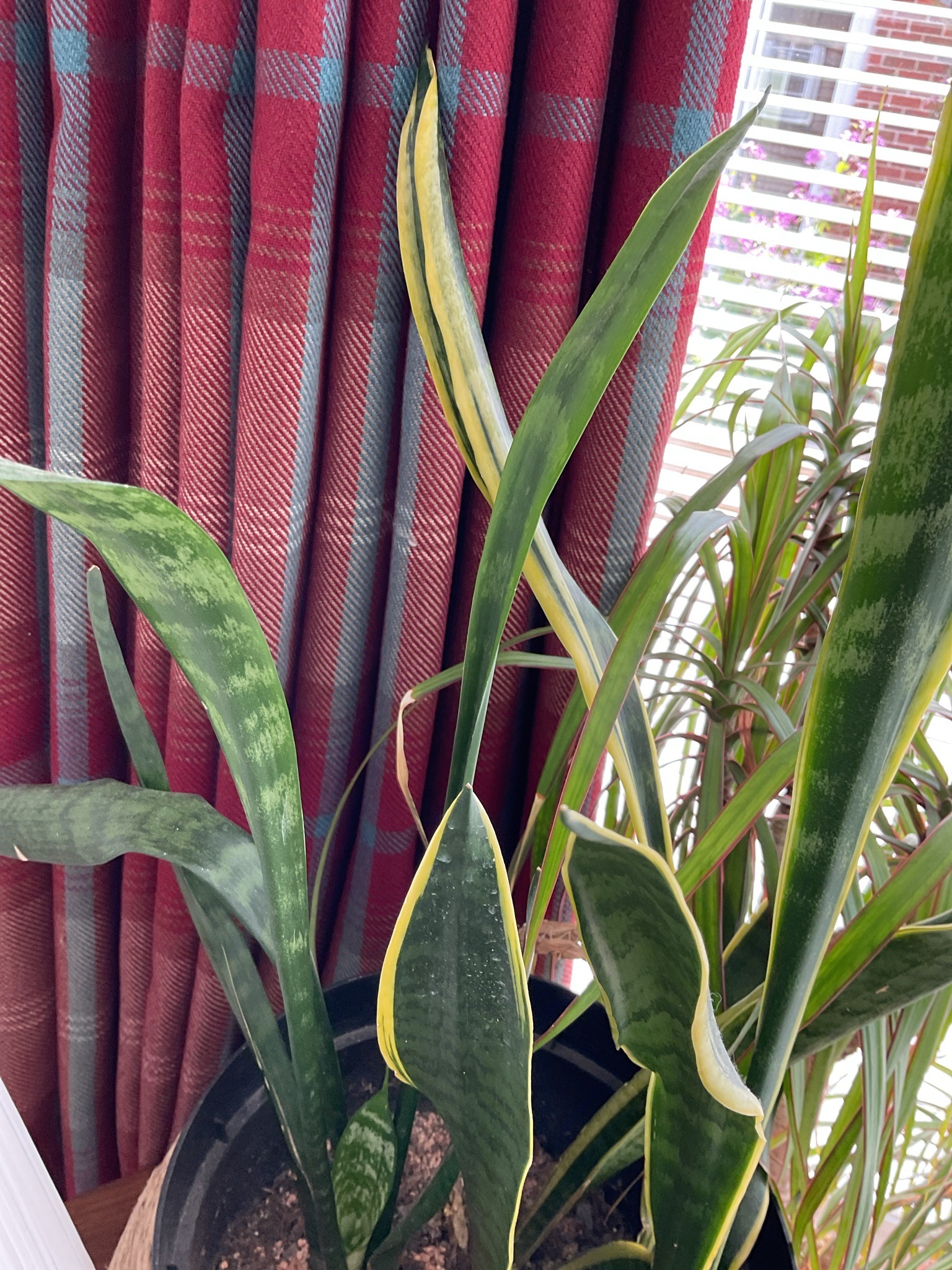
Stiff, sword-like leaves that grow vertically from a basal rosette. Features dark green cross-banding and, in cultivars like 'Laurentii', yellow leaf margins. Leaves are fleshy and can grow up to 3 feet tall.
Habitat
Typically found in dry, rocky habitats or open forests in tropical regions; widely grown globally as a low-maintenance indoor houseplant.
When to Find It
Perennial; indoors it remains green year-round. It may bloom with small, greenish-white fragrant flowers in spring, though rarely in indoor settings.
Conservation Status
Not Evaluated (Least Concern in many areas where it is widespread).
Ecological Role
Known for its ability to filter indoor air by removing toxins like formaldehyde and benzene. In its native range, it provides cover for small fauna.
Easily Confused With
Cast-iron plant (Aspidistra elatior) which has broader, softer leaves without the banding, or Aloes which have thicker, spined leaf edges.
Observation Tips
As a houseplant, keep it in well-draining soil and avoid overwatering, especially in winter. It thrives in various light conditions from low light to direct sun.
Interesting Facts
Formerly classified as Sansevieria trifasciata, it is also colloquially known as 'Mother-in-law's tongue'. It is unique for its ability to perform Crassulacean Acid Metabolism (CAM), meaning it releases oxygen at night.