Olive Tree
Scientific Name: Olea europaea
Category: tree
Brief Description
An evergreen tree known for its silvery foliage and edible fruit, commonly found in Mediterranean-style climates like California.
Characteristics
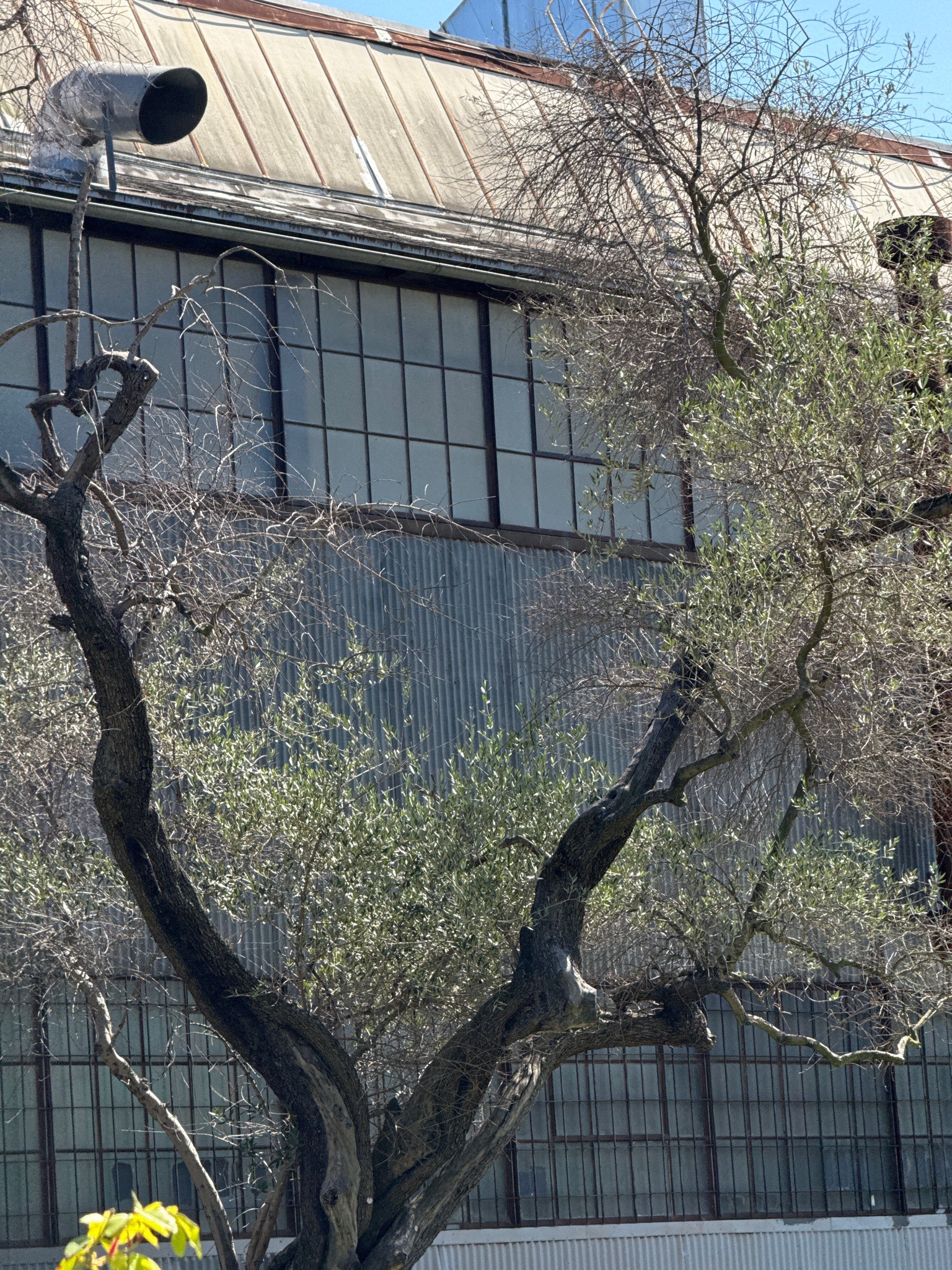
Twisted, gnarled trunks that become more deeply fissured with age. Small, leathery, lance-shaped leaves that are dark green above and silvery-gray underneath.
Habitat
Thrives in full sun and well-drained soil; very drought-tolerant and common in coastal or dry interior valleys.
When to Find It
Evergreen foliage year-round; typically flowers in spring with fruit ripening in late fall or winter.
Conservation Status
Least Concern; widely cultivated globally.
Ecological Role
Provides food for birds and beneficial insects; long-lived and fire-resistant once established.
Easily Confused With
Russian Olive (Elaeagnus angustifolia), which has more elongated leaves and thorns, or Willow trees, which have thinner, more flexible branches.
Observation Tips
Look for the characteristic silver shimmer of the leaves when the wind blows and the dark, oily fruit on the ground during winter months.
Interesting Facts
Olive trees are incredibly long-lived; some specimens in the Mediterranean are estimated to be over 2,000 years old. They have been symbols of peace and wisdom since ancient times.
User Notes
hollywood forever cemetery