Sandhill Crane
Scientific Name: Antigone canadensis
Category: bird
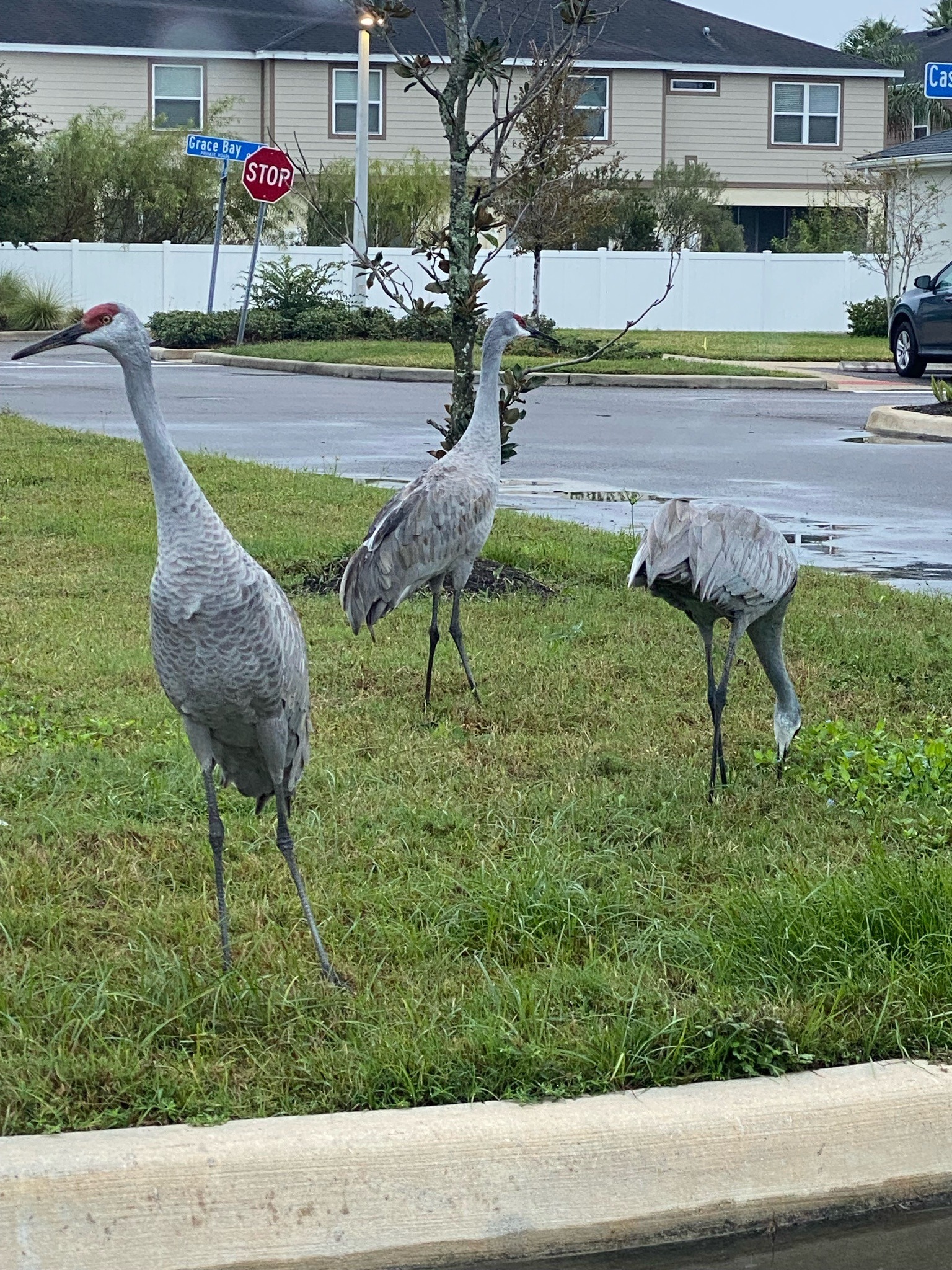
Brief Description
A large, tall, gray crane with a distinctive red forehead and white cheeks, known for its loud, bugling call and elaborate dancing.
Characteristics
Large-bodied with long necks and legs; gray plumage often stained with rusty mud; bald red forehead; white cheeks; long, pointed black bill; bustle-like feathers over the rump.
Habitat
Open grasslands, wetlands, marshes, bogs, and increasingly found in suburban lawns and golf courses in certain regions like Florida.
When to Find It
Found year-round in Florida and parts of the South; migratory populations are seen in northern states during spring and summer and in southern states during winter.
Conservation Status
Least Concern (though some subspecies like the Mississippi Sandhill Crane are Endangered)
Ecological Role
Omnivores that help control insect and small vertebrate populations; they also disperse seeds and are indicators of healthy wetland ecosystems.
Easily Confused With
Whooping Cranes (much larger, pure white feathers with black wing tips) and Great Blue Herons (fly with their necks tucked in a 'S' shape, whereas cranes fly with necks extended).
Observation Tips
Best observed in early morning or late afternoon in open fields. Maintain distance to avoid disturbing their natural behavior; do not feed them as they can becomes aggressive toward humans.
Interesting Facts
Sandhill Cranes are known for their 'dancing' displays used in courtship and social bonding, which involve stretching their wings, pumping their heads, bowing, and leaping into the air.