Chestnut Oak Leaf
Scientific Name: Quercus montana
Category: tree
Brief Description
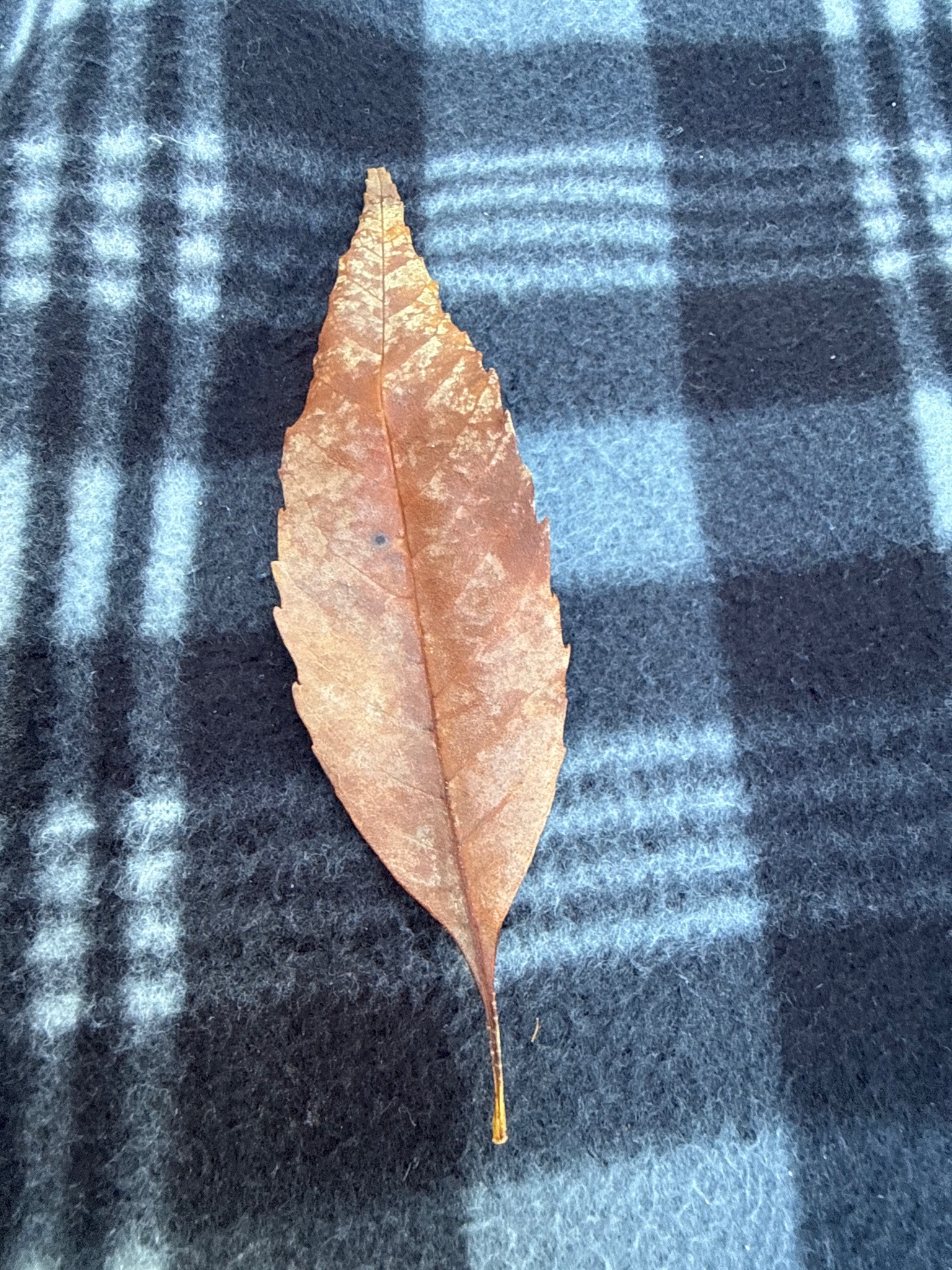
A fallen, brown autumn leaf from a Chestnut Oak tree, characterized by its oblong shape and wavy, scalloped margins.
Characteristics
The leaf is elongated and elliptical with prominent, rounded, wavy teeth or lobes along the edges. In autumn, it turns from a leathery dark green to a yellowish-brown or orange-brown hue. The texture is somewhat thick and coarse.
Habitat
Typically found in dry, rocky ridges and upland forests where soil is well-drained and acidic.
When to Find It
Leaves are green in spring and summer, turning brown and falling in mid-to-late autumn.
Conservation Status
Least Concern
Ecological Role
Provides food for various moth larvae and its acorns are a vital food source for wildlife like deer, turkeys, and squirrels. It also contributes to the forest floor litter layer.
Easily Confused With
Swamp White Oak (Quercus bicolor) and Chinkapin Oak (Quercus muehlenbergii). Chestnut Oak leaves are distinguished by deeper, coarser scallops and their preference for dry, rocky soil versus the wetter habitats favored by Swamp White Oaks.
Observation Tips
Look for these leaves on the forest floor in late October or November in the Appalachian region. They are easiest to identify by checking the corresponding bark of nearby trees, which is dark and deeply furrowed into thick ridges.
Interesting Facts
The Chestnut Oak is sometimes called the 'Rock Oak' because of its ability to thrive in extremely stony, rocky terrain where other trees struggle to grow.