Pennsylvania Smartweed
Scientific Name: Persicaria pensylvanica
Category: plant
Brief Description
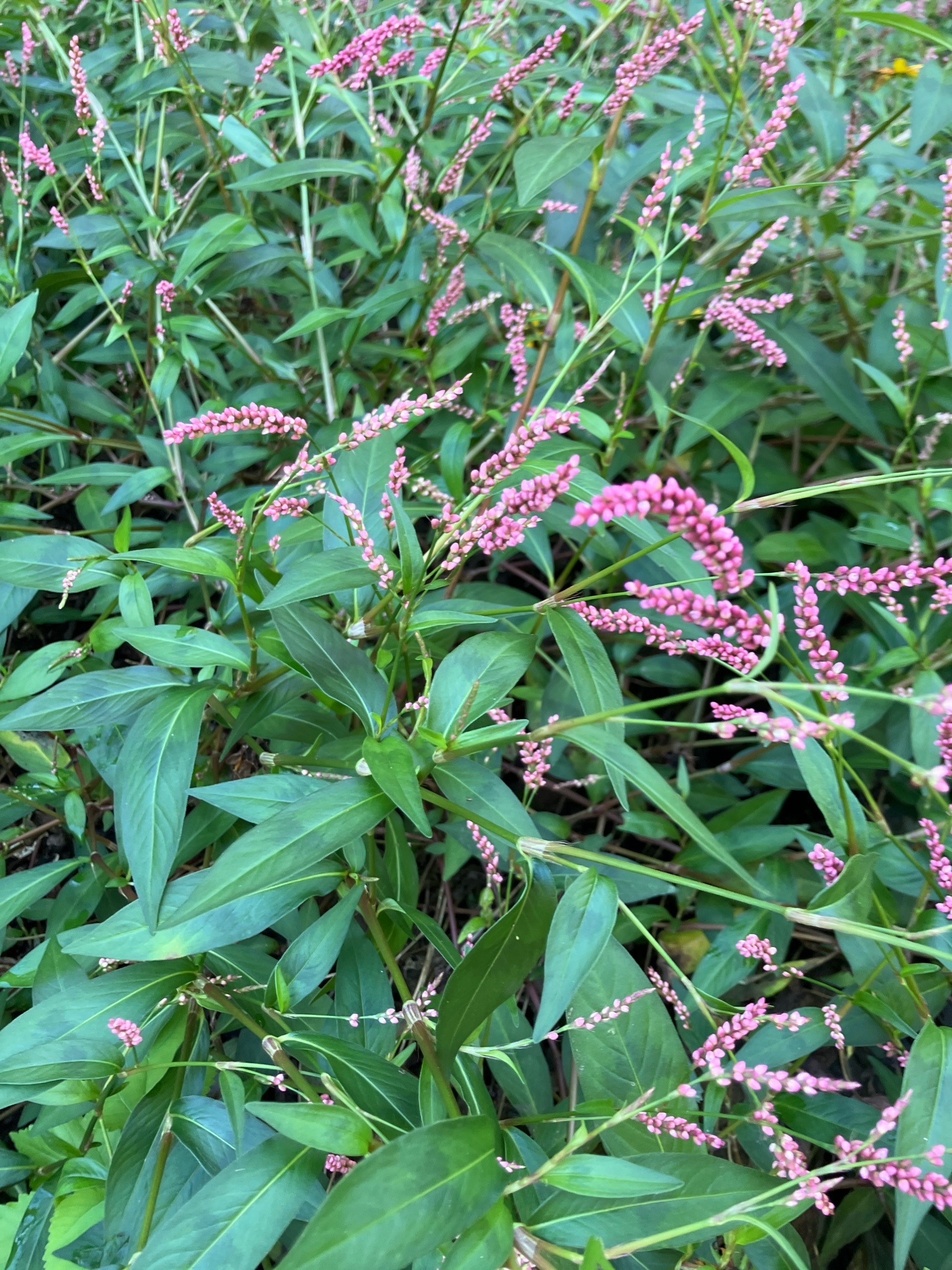
Pennsylvania Smartweed is a common wetland and ditch-dwelling annual herb featuring alternate lance-shaped leaves, swollen jointed stems, and dense spikes of pink to reddish flowers.
Characteristics
Stems are often swollen at the nodes, smooth or sparsely glandular, growing up to 1-2 meters tall. Leaves are lanceolate, sometimes marked with a dark triangular or V-shaped spot. Flowers lack petals but have showy petal-like sepals arranged in terminal, erect to slightly nodding spikes of bright pink or rose color.
Habitat
Wetlands, marshes, wet meadows, roadside ditches, pond margins, and damp disturbed soils.
When to Find It
Blooms from mid-summer through autumn (July to October).
Conservation Status
Secure / Least Concern
Ecological Role
Provides valuable food for waterfowl, upland game birds, and small mammals who eat the seeds, while the flowers supply nectar for various native pollinators.
Easily Confused With
Other smartweeds and knotweeds in the genus Persicaria, such as Ladysthumb (Persicaria maculosa) which typically has a prominent dark blotch on the leaves, and Water Pepper (Persicaria hydropiper) which has a pungent, acrid taste.
Observation Tips
Look in damp, sunny or partly shaded areas near water bodies. Observe flower structures closely with a hand lens to check for glandular dots on the flower stalks.
Interesting Facts
The common name 'smartweed' comes from the irritating, acrid juice found in the leaves of some related species in the same family, which can cause a smarting sensation on sensitive skin.