American Elderberry
Scientific Name: Sambucus canadensis
Category: plant
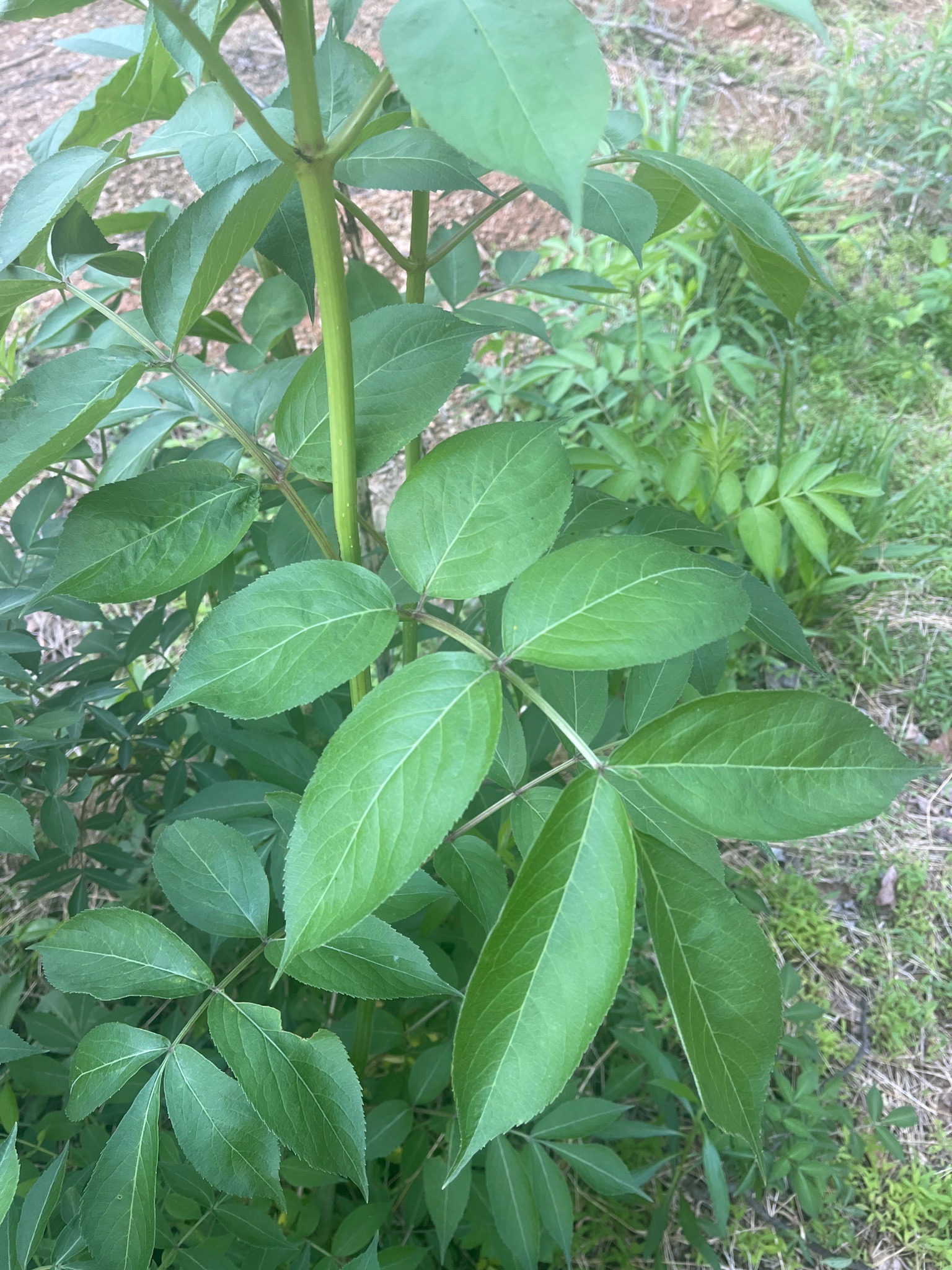
Brief Description
A deciduous large shrub or small tree known for its compound leaves, white flower clusters, and dark purple berries.
Characteristics
Opposite, pinnately compound leaves usually with 5-11 leaflets. Leaflets are elliptical with serrated (toothed) margins. Stems have a white pith and prominent lenticels (pores).
Habitat
Commonly found in moist soils, sunny forest edges, wetlands, ditches, and along stream banks.
When to Find It
Flowers in late spring to early summer; fruits ripen in late summer to autumn. Leaves are most vibrant in spring and summer.
Conservation Status
Common / Least Concern
Ecological Role
Highly important for wildlife; flowers provide nectar for pollinators, and berries are a critical food source for numerous bird species and small mammals.
Easily Confused With
Often confused with Water Hemlock (highly toxic), which has doubly compound leaves and a hollow stem. Also resembles Red Elderberry (Sambucus racemosa) which has red berries and a brown pith.
Observation Tips
Look for it in wet, sunny clearings. Check the stem's pith; a white spongy center is a key identifier for the American species.
Interesting Facts
The berries and flowers are edible when cooked or processed, but the leaves, stems, and raw berries contain cyanogenic glycosides and can be toxic if consumed unprepared.