Shrubby Cinquefoil
Scientific Name: Dasiphora fruticosa
Category: plant
Brief Description
A hardy deciduous subshrub known for its bright yellow, five-petaled flowers and compound leaves with distinct leaflets.
Characteristics
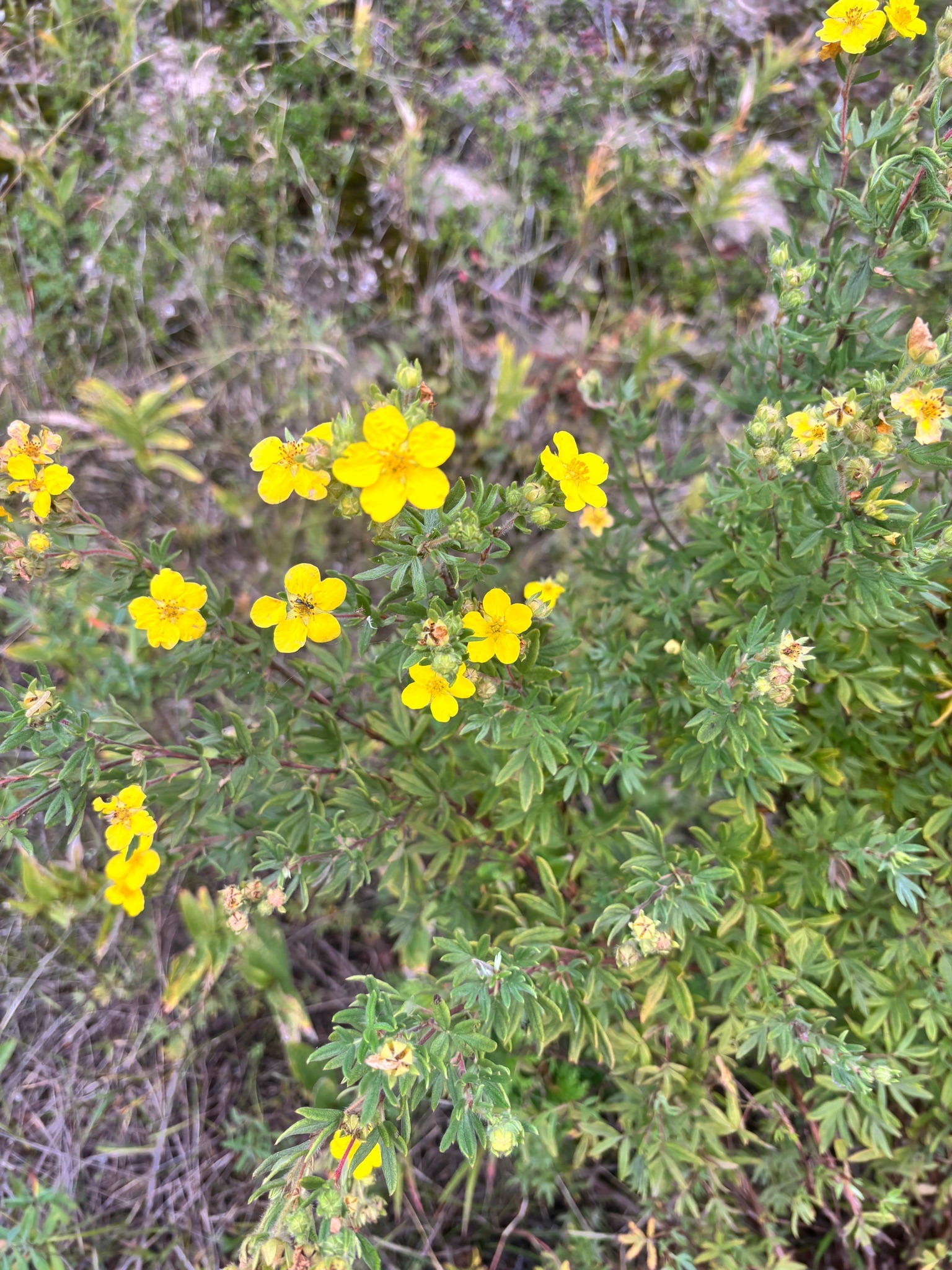
Features small, bright yellow flowers about 2.5 cm across, typically with 5 rounded petals and numerous stamens. Leaves are alternate and pinnately compound, usually divided into 3 to 7 narrow, dark green leaflets with hairy undersides. The bark on older stems tends to shred.
Habitat
Found in damp thickets, fens, moist meadows, rocky slopes, limestone cliffs, and tundra environments.
When to Find It
Flowers primarily from early summer through early autumn, blooming most profusely during sunny daytime hours.
Conservation Status
Least Concern, widespread and stable across its native northern hemisphere range.
Ecological Role
Provides nectar for various pollinators, including bees and butterflies, and serves as food and cover for small wildlife and browsing herbivores in northern ecosystems.
Easily Confused With
Can be confused with other cinquefoils (Potentilla species), but Shrubby Cinquefoil is distinguished by its woody, shrubby habit rather than being purely herbaceous.
Observation Tips
Look for them in limestone-rich soils or open, damp areas during summer months. They make popular ornamental garden plants and are easy to spot along woodland edges and trails.
Interesting Facts
Historically, the dried leaves of Shrubby Cinquefoil have been used by Indigenous peoples to make an herbal tea, and the plant is valued in horticulture for its extreme winter hardiness and long blooming period.