Black Locust (Leaf/Branch)
Scientific Name: Robinia pseudoacacia
Category: tree
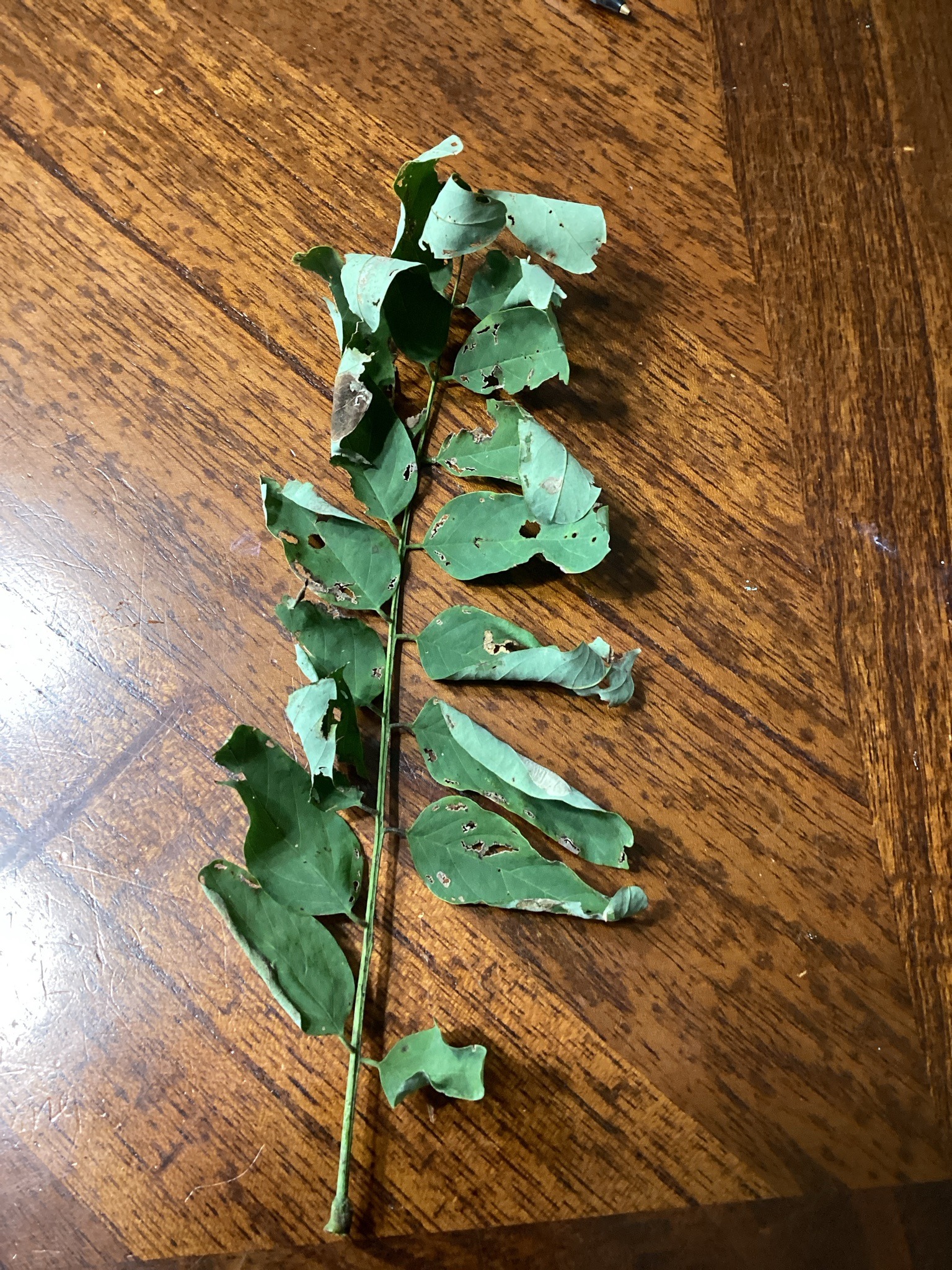
Brief Description
A pinnately compound leaf branch belonging to the Black Locust tree, characterized by alternate leaflets with smooth margins and rounded or notched tips.
Characteristics
Pinnately compound leaves usually with 7 to 21 oval leaflets. Leaflets are dark green above, paler underneath, with smooth edges and occasionally a tiny notch at the apex. Twigs and branches often feature paired thorns at the nodes, though they may not be prominently displayed on this specific detached leaf rachis.
Habitat
Found in open woods, disturbed areas, forest edges, along streams, and roadsides. Native to the southeastern United States but widely naturalized across North America and other temperate regions.
When to Find It
Active with leaves from spring through autumn, dropping foliage in late fall.
Conservation Status
Secure
Ecological Role
Nitrogen-fixing tree that enriches poor soils. Flowers provide abundant nectar for pollinators like bees, and the wood and foliage offer cover and browse for various wildlife.
Easily Confused With
Honey Locust (Gleditsia triacanthos) which has once and twice-pinnately compound leaves and enormous branched thorns, or other compound-leaved legumes. Distinguished by Black Locust's simple rounded leaflets and lack of branched thorns.
Observation Tips
Look for distinctive deeply furrowed, dark bark on mature trees and hanging clusters of fragrant white flowers in late spring.
Interesting Facts
Black locust wood is extremely dense, heavy, and rot-resistant, making it highly valued for fence posts, boatbuilding, and outdoor construction without needing chemical treatments.