Weeping Willow
Scientific Name: Salix babylonica
Category: tree
Brief Description
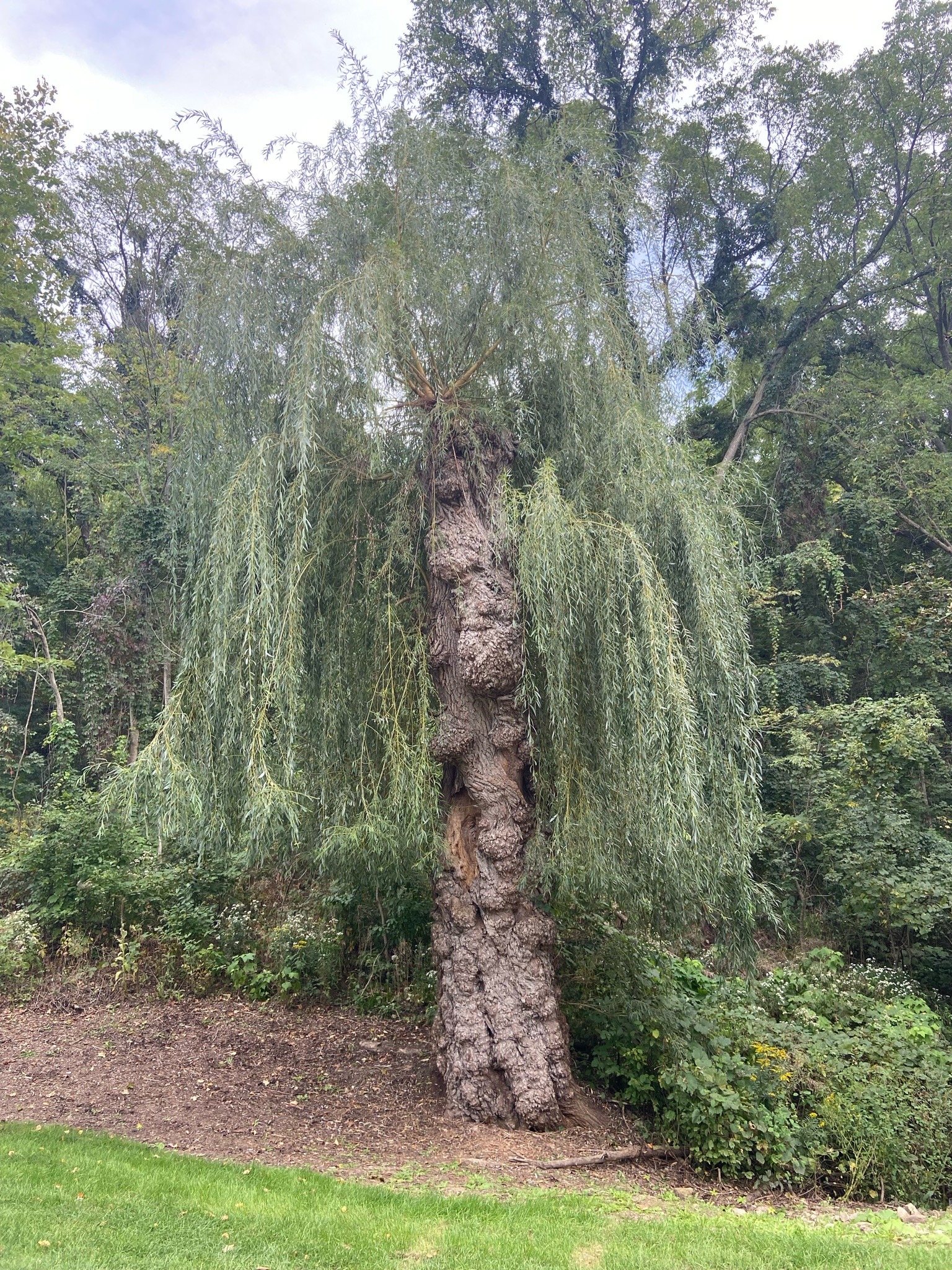
A medium to large deciduous tree easily recognized by its dramatic weeping habit with long, slender drooping branches and narrow green leaves.
Characteristics
Features a stout trunk heavily covered in rough, gnarled bark and large burls in older specimens. Branches cascade downward towards the ground. Leaves are lanceolate, finely toothed, light green above and glaucous below.
Habitat
Typically found along watercourses, streams, rivers, and lakesides, preferring moist, well-drained soils and full sun exposure.
When to Find It
N/A
Conservation Status
Least Concern
Ecological Role
Provides essential riparian habitat, stabilizes riverbanks against erosion, and offers early-season nectar sources for pollinators.
Easily Confused With
Hybrid weeping willows such as Salix x sepulcralis; distinguished by subtle differences in branchlet color and twig growth patterns.
Observation Tips
Look for them planted in parks, cemeteries, and along bodies of water where their cascading silhouette stands out.
Interesting Facts
Despite the species name 'babylonica', the weeping willow is actually native to dry areas of northern China, spreading along ancient trade routes.
User Notes
White Chapel Cemetery (sept 19/26)