Scots Pine
Scientific Name: Pinus sylvestris
Category: tree
Brief Description
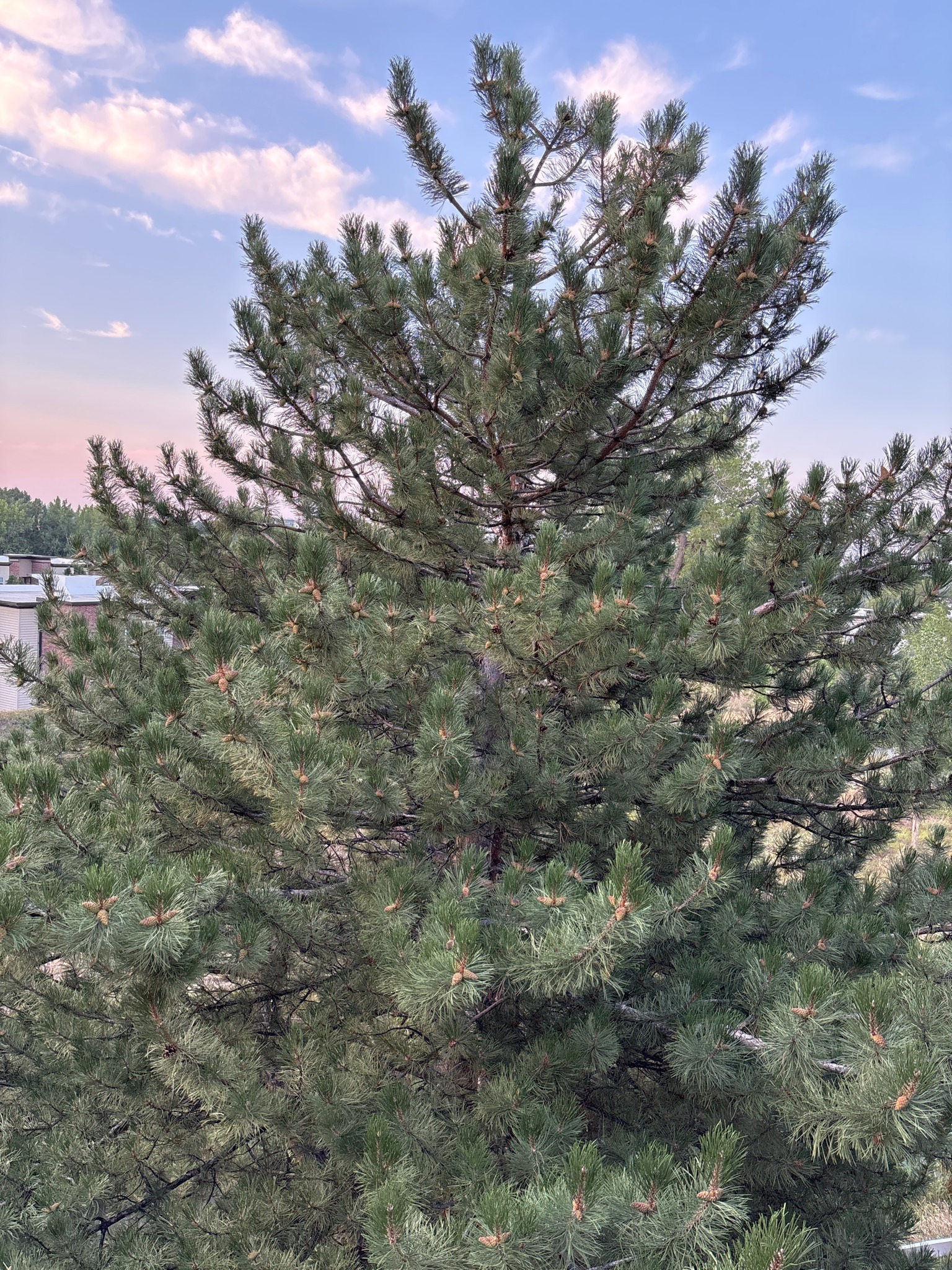
A large evergreen conifer tree characterized by its scaly orange-red bark on the upper trunk, blue-green needles in bundles of two, and small cones.
Characteristics
Grows up to 35 meters tall with a straight trunk and a rounded or flattened crown. Needles are stiff, twisted, 2-7 cm long, and blue-green. Bark is distinctive orange-red and flaky on the upper trunk and thick, fissured, and grey-brown at the base.
Habitat
Native to vast taiga and temperate forests, thriving in acidic, poor soils, peat bogs, and rocky outcrops, but widely planted globally in parks and forestry.
When to Find It
Evergreen year-round; spring brings new bright green shoots and pollen release, while cones mature over a two-year cycle.
Conservation Status
Least Concern
Ecological Role
Provides crucial habitat, food, and shelter for numerous species of birds, mammals, and insects, and helps stabilize poor soils.
Easily Confused With
Can be confused with other two-needled pines like the Lodgepole Pine, but distinguished by its distinct orange-red upper bark.
Observation Tips
Look up at the upper canopy to spot the vibrant orange-red bark peeling away, which is the most reliable field mark.
Interesting Facts
Scots Pine is the only pine tree native to the British Isles and is one of the most widely distributed pine species in the world.