Barred Owl
Scientific Name: Strix varia
Category: bird
Brief Description
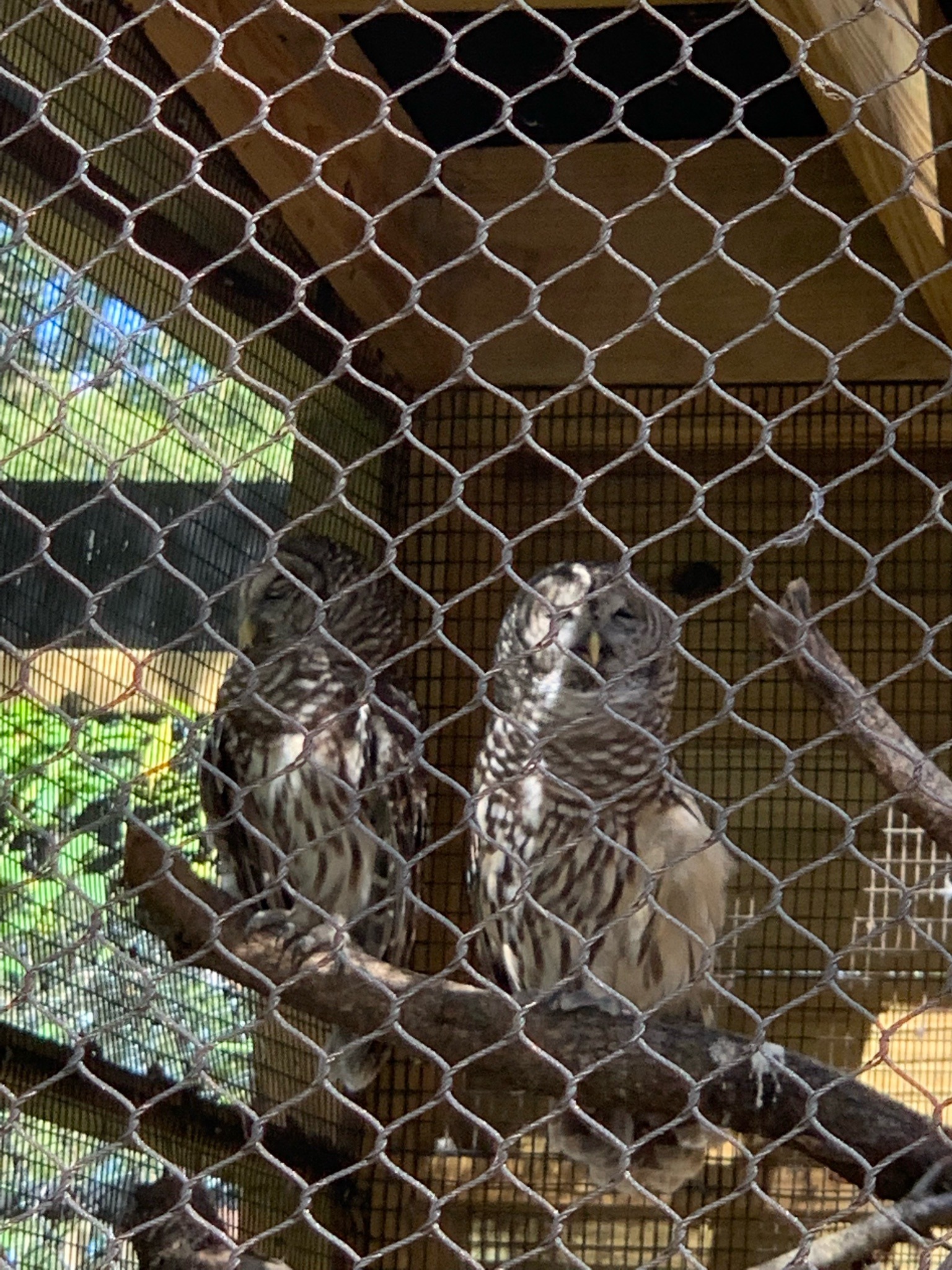
A large, stocky owl with a rounded head and no ear tufts, recognizable by its distinctive brown-and-white barring and dark eyes.
Characteristics
Features horizontal brown bars on the chest and vertical brown streaks on the belly. It has a pale face with dark rings around dark brown eyes and a yellow bill.
Habitat
Large, mature forests often near water, including swamps, marshes, and riparian woods. Found throughout Eastern North America and increasingly the Pacific Northwest.
When to Find It
Non-migratory and active year-round; most easily heard at night or dawn and dusk calling 'who cooks for you'.
Conservation Status
Least Concern (increasing population), though they are an invasive threat to Spotted Owls in the West.
Ecological Role
An apex predator that controls populations of small mammals, amphibians, and reptiles; serves as an indicator species for old-growth forest health.
Easily Confused With
Spotted Owl (smaller, with spots instead of vertical bars) and Great Horned Owl (which has ear tufts and yellow eyes).
Observation Tips
Listen for their distinct call in dense forests near dusk. In enclosures, maintain a quiet distance and avoid using flash photography to respect their sensitive vision.
Interesting Facts
Barred Owls are highly vocal and known for their 'duetting' between pairs, which can sound like a chaotic series of hoots, cackles, and screams.