Plane Tree Leaf
Scientific Name: Platanus
Category: tree
Brief Description
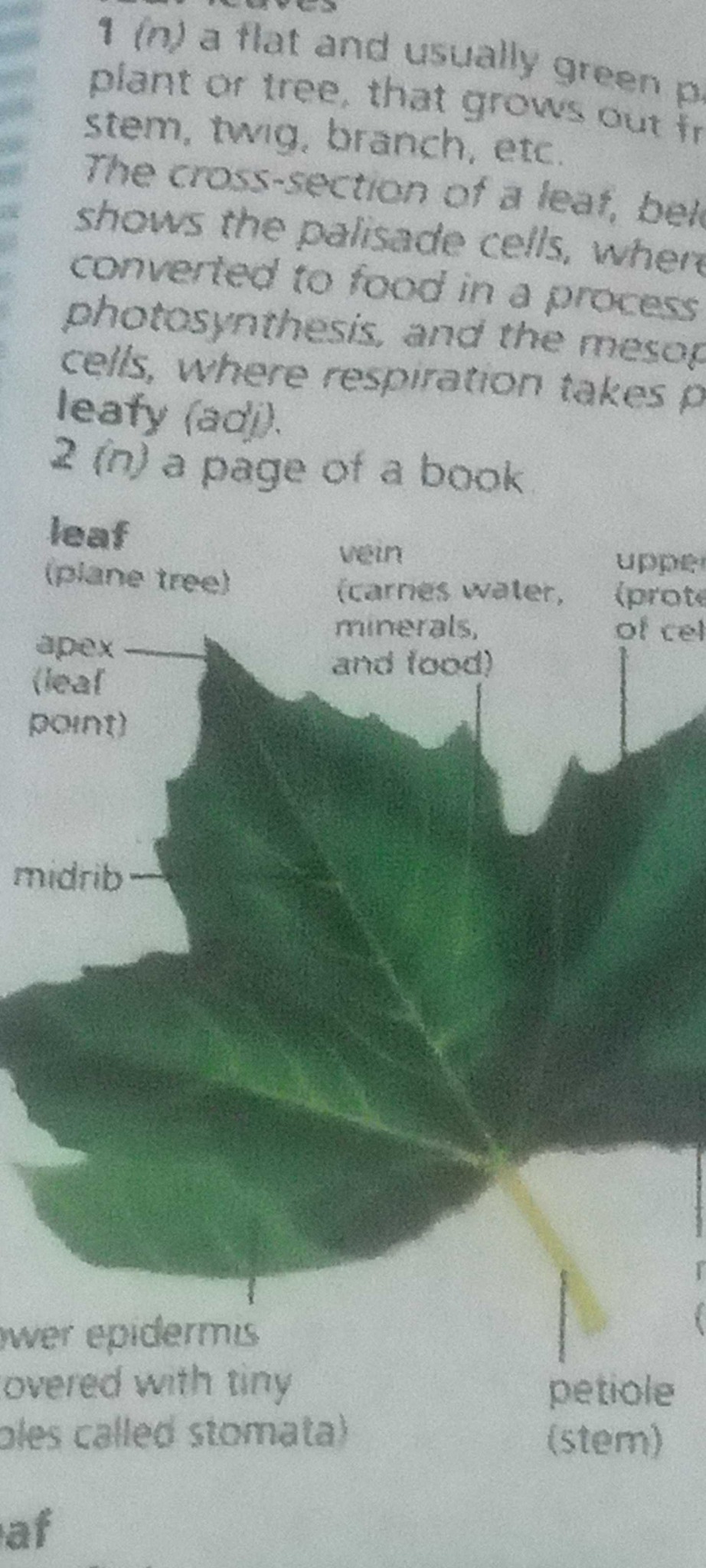
A diagram and photograph of a plane tree leaf in a dictionary or textbook, showing anatomical features such as the apex, midrib, veins, petiole, and lower epidermis.
Characteristics
Broad, palmately lobed green leaf with prominent veins radiating from the base, a pointed apex, and a distinct petiole (stem).
Habitat
Temperate forests, urban parks, and along riversides where plane trees and sycamores grow.
When to Find It
Leaves are typically green and vibrant in spring and summer, turning golden-brown and shedding in autumn.
Conservation Status
N/A
Ecological Role
Leaves are the primary site of photosynthesis for trees, converting sunlight into energy while producing oxygen and absorbing carbon dioxide.
Easily Confused With
Maple tree leaves, which also have palmate lobes but often have sharper, more numerous points and different venation patterns.
Observation Tips
Look up at the canopy of plane trees or examine fallen leaves on the ground during autumn to observe leaf structures like veins and petioles closely.
Interesting Facts
Plane trees are very resilient to urban pollution, making them a popular choice for planting along city streets and in parks.