Black-staining Polypore
Scientific Name: Meripilus sumstinei
Category: fungi
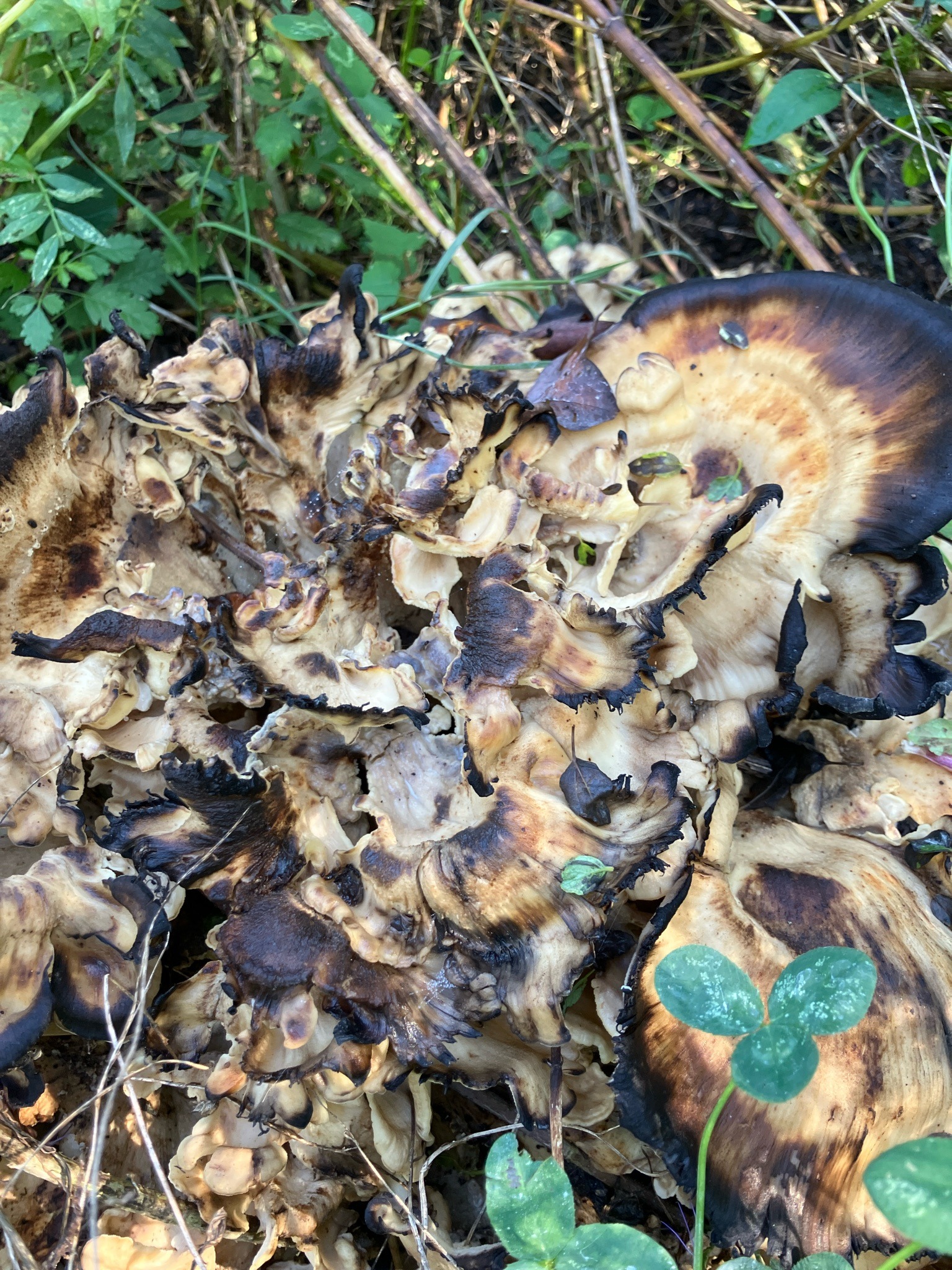
Brief Description
A large, overlapping cluster of fleshy, fan-shaped caps that rapidly stain black when bruised or aged.
Characteristics
Forms massive rosettes up to 50 cm across consisting of numerous overlapping caps. The upper surface is whitish to tan or dark brown, velvety to smooth. Pores are white and bruise black instantly. Flesh is white and watery-tough when fresh, turning black when cut.
Habitat
Found growing terrestrially at the base of hardwood trees, particularly oaks, or from buried roots.
When to Find It
Summer to autumn
Conservation Status
N/A
Ecological Role
Acts as a saprotrophic and parasitic fungus, causing white rot in the roots and base of hardwood trees, thus cycling nutrients back into the forest ecosystem.
Easily Confused With
Bondarzewia berkeleyi (Berkeley's polypore) which does not stain black, and Grifola frondosa (Hen of the Woods) which has smaller, grey-brown fronds and does not bruise black.
Observation Tips
Look around the bases of mature deciduous trees in late summer and autumn. Gently touch the pore surface to observe the characteristic black bruising reaction.
Interesting Facts
The black staining reaction is an enzymatic process activated when the cells are damaged, which helps protect the fungus from certain predators.