Bat (Microbat)
Scientific Name: Order Chiroptera (Suborder Microchiroptera)
Category: mammal
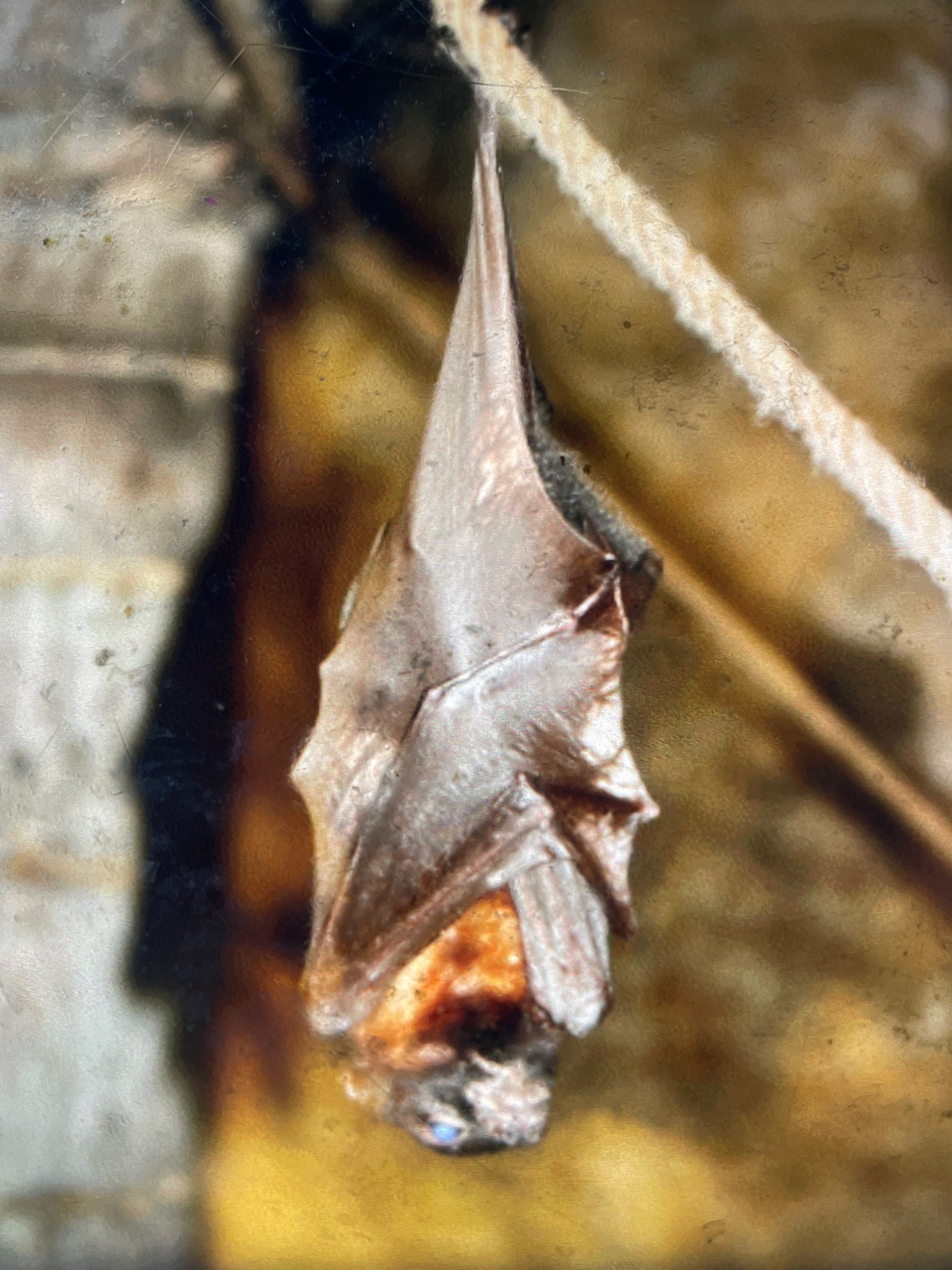
Brief Description
A small nocturnal flying mammal hanging upside down in a roosting position, likely resting or hibernating.
Characteristics
Leathery wings folded tightly around the body, hanging by claws on the hind feet, brownish fur, and a characteristic upside-down posture. High surface-to-volume ratio in wings.
Habitat
Caves, hollow trees, crevices in rocks, and human-made structures like attics, bridges, or barns. Found worldwide except for extreme polar regions.
When to Find It
Nocturnal; most active during warm months. Many species hibernate or migrate during winter.
Conservation Status
Varies by species; many are protected due to threats like White-nose Syndrome and habitat loss.
Ecological Role
Crucial for insect control (consuming thousands of pests nightly), pollination of many plant species, and seed dispersal.
Easily Confused With
Large moths or cocoons; distinguished by the presence of fur, vertebrate skeletal structure in the wings, and visible ears/face upon closer inspection.
Observation Tips
Avoid disturbing roosting bats as it can cause them to burn vital fat reserves during hibernation. Observe from a distance with dim, red-filtered light to minimize disturbance.
Interesting Facts
Bats are the only mammals capable of true sustained flight. They use echolocation to navigate and hunt in total darkness.