Purpleleaf Plum
Scientific Name: Prunus cerasifera 'Pissardii'
Category: tree
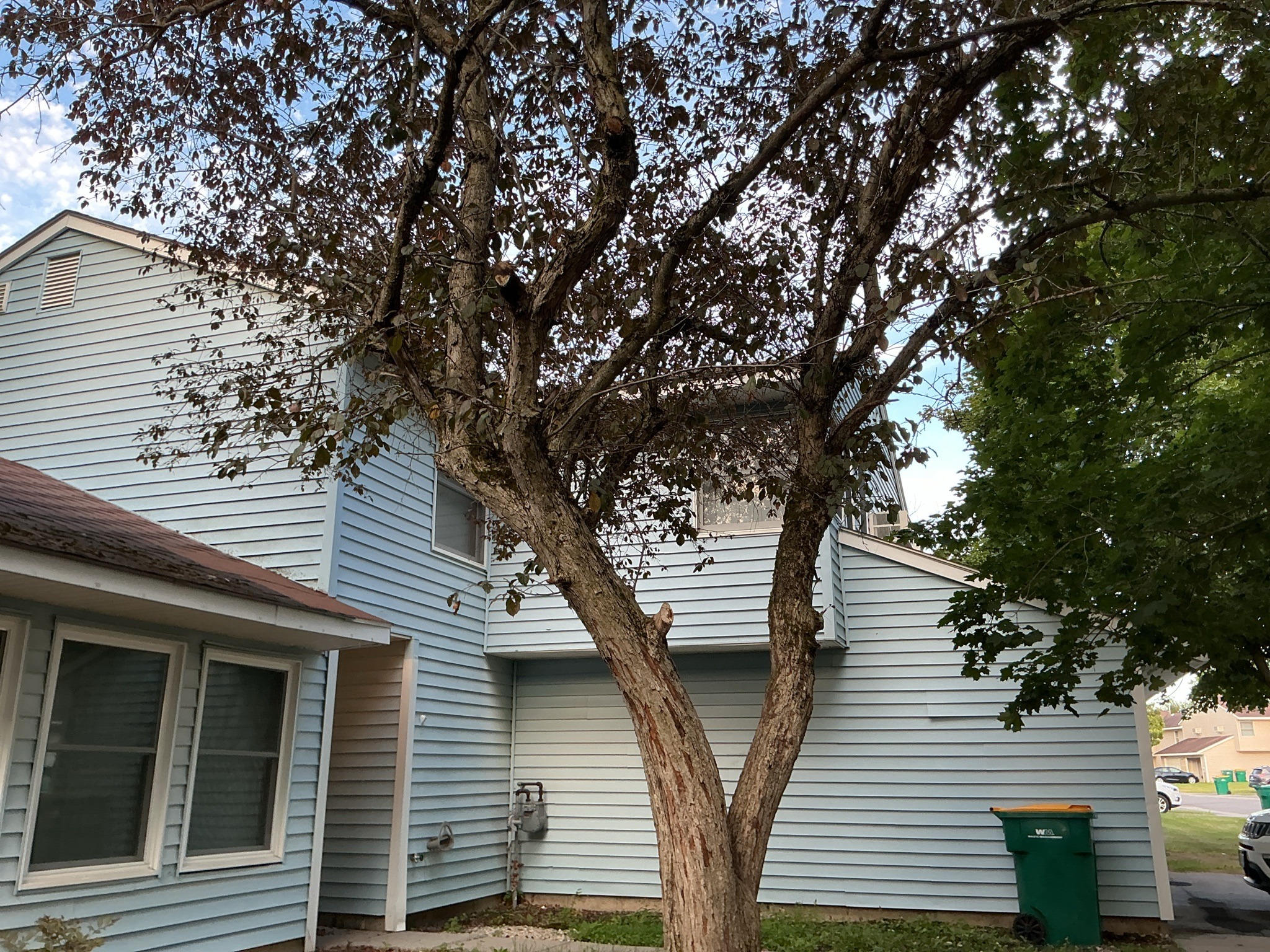
Brief Description
A small-to-medium sized deciduous tree known for its dark reddish-purple foliage and early spring flowers.
Characteristics
Distinctive deep purple to maroon serrated leaves, dark brown to blackish flaky bark, and a rounded, spreading canopy. It produces small, white-to-light-pink five-petaled flowers in early spring.
Habitat
Commonly found in residential landscapes, parks, and urban environments. It prefers well-drained soil and full sun.
When to Find It
Leaves emerge in spring and stay purple through summer. Small drupe fruits may appear in late summer. Best observed in early spring for blooms.
Conservation Status
N/A
Ecological Role
Provides early nectar for pollinators like bees and serves as a nesting site for small birds. The fruit is consumed by various bird species and mammals.
Easily Confused With
Purple-leaf cultivars of Sand Cherry (Prunus x cistena) which are smaller and more shrub-like, or Copper Beech (Fagus sylvatica 'Purpurea') which has smooth grey bark and different leaf shapes.
Observation Tips
Look for the tree's dark foliage against green neighbors for easy spotting. Check for black knot fungus (a lumpy black growth on branches) which is a common health issue for this species.
Interesting Facts
This cultivar was originally discovered in Persia (modern-day Iran) in the late 19th century and sent to France. It is one of the most common ornamental flowering trees in North America.
User Notes
Identify